0%

China Top Custom Sodium Ion Battery Pack Manufacturer

Sodium-ion technology is moving from laboratory discussion to practical energy storage. Our work focuses on Custom Sodium-Ion Battery Packs for mobility, backup power, industrial equipment, and renewable systems. Each project begins with the application, not a standard catalog. We review voltage, capacity, peak current, charging conditions, operating temperature, and available installation space. A battery pack should fit the real environment. It should not merely look suitable on paper.

Our engineering process combines cell selection, battery management system design, structural protection, thermal planning, and production traceability. We examine connector placement, enclosure materials, vibration exposure, and service access. Prototype packs can undergo capacity checks, charge and discharge testing, insulation inspection, temperature monitoring, and protection-function verification. These details help identify weaknesses before volume production. Small details matter.

As an experienced China-based manufacturer, we support design communication, sample development, manufacturing coordination, and quality documentation. Our team can discuss cylindrical or pouch cell formats, communication interfaces, custom wiring, display functions, and mounting requirements. However, sodium-ion solutions are still developing. Not every application will benefit from changing chemistry. Energy density, system size, cost targets, and local requirements must be reviewed honestly. A strong proposal may still need revision after testing. That is normal. We believe reliable partnerships depend on evidence, clear limitations, and measurable improvement. Through practical engineering and careful verification, Custom Sodium-Ion Battery Packs can become safer, more serviceable, and better matched to tomorrow’s energy needs.
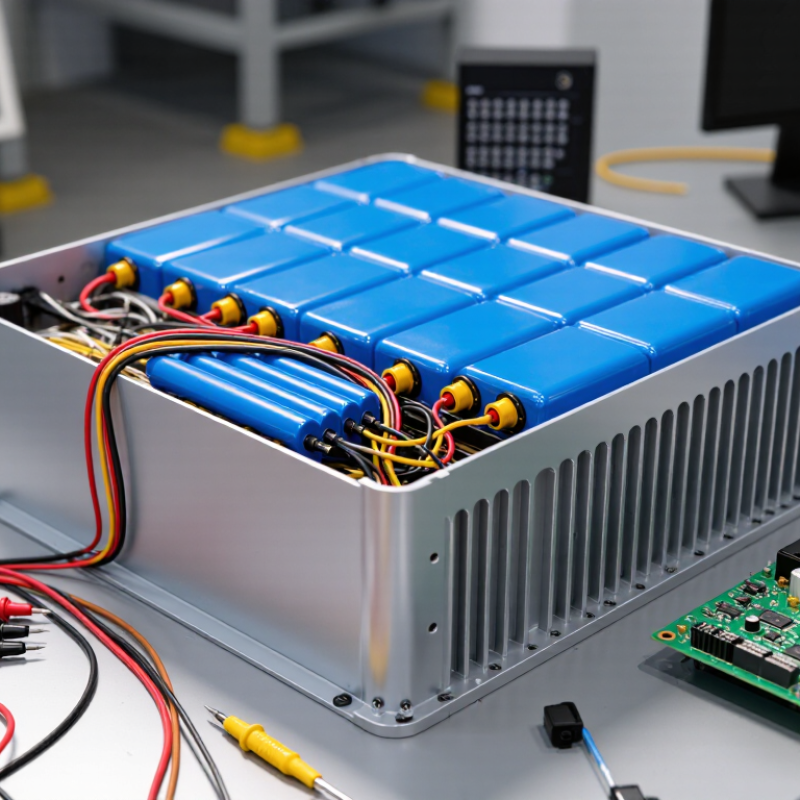
China Top Custom Sodium Ion Battery Pack Manufacturer

Sodium-Ion Battery Pack Fundamentals and Key Advantages

China Top Custom Sodium Ion Battery Pack Manufacturer

Sodium-ion battery packs move sodium ions between a cathode and an anode during charging and discharge. Hard carbon is a common anode material. The electrolyte carries ions while the separator prevents direct internal contact. A battery management system monitors voltage, temperature, current, and cell balance. These details decide whether a pack performs reliably in real equipment, not just in laboratory testing.

Sodium is widely available, which can reduce dependence on scarce mineral resources. This chemistry also offers stable performance in colder conditions. That matters for outdoor lighting, backup systems, low-speed vehicles, and regional energy storage. Safety can improve because sodium-ion cells generally tolerate certain abuse conditions better than some high-energy alternatives. Still, sodium-ion packs usually provide lower energy density than lithium-ion packs. The enclosure may need more space.

During pack evaluation, engineers should check thermal behavior, charging limits, vibration resistance, and capacity retention. A practical design also needs suitable fuses, connectors, insulation, and a correctly programmed BMS. One overlooked cable can create trouble. Customization is useful when the load profile, installation space, and operating temperature are clearly measured. Early test results can look promising, yet long-term cycling may reveal unexpected capacity loss. That uncertainty deserves honest reporting and repeated verification.

Custom Battery Pack Design for Different Application Requirements

China Top Custom Sodium Ion Battery Pack Manufacturer

Custom battery pack design must begin with the application, not a standard cell size. Sodium-ion cells usually provide lower energy density than lithium-ion cells, but they can perform reliably across demanding temperature ranges. The International Energy Agency reported that sodium-ion technology may improve supply-chain flexibility because sodium is widely available. This advantage matters for backup power, low-speed vehicles, storage cabinets, and outdoor equipment.

A custom pack can balance capacity, voltage, weight, cooling, and installation space. For a 48-volt storage system, engineers may configure cells for stable voltage and add a battery management system with overcharge, over-discharge, and temperature protection. Enclosure design also matters. A sealed aluminum case can protect electronics from dust and moisture, while reinforced terminals reduce vibration damage. Small details matter.

Not every project needs maximum capacity. Sometimes, safer operation and longer cycle life matter more. BloombergNEF’s 2024 Battery Price Survey placed the global lithium-ion battery average at 115 dollars per kilowatt-hour, creating a useful cost benchmark for alternative chemistries. However, sodium-ion pricing still depends on scale, materials, and production maturity. That uncertainty deserves attention. Testing should include thermal cycling, vibration, capacity retention, and abnormal charging conditions. IEC-based evaluation can support consistent quality, although certification requirements vary by market. A well-designed sodium-ion pack is not simply a group of cells. It is a measured response to real operating conditions.

Manufacturing Process and Quality Control in China

China Top Custom Sodium Ion Battery Pack Manufacturer

Manufacturing Process and Quality Control in China

Reliable sodium ion battery packs begin with controlled material inspection. Engineers verify cell capacity, internal resistance, dimensions, and batch consistency before assembly. During production, automated equipment mixes electrodes, applies coatings, and controls drying temperature. Operators then stack or wind cells in clean areas. Laser welding creates stable connections, while insulation protects every joint. Each pack receives a battery management system matched to its voltage, current, and thermal requirements. Traceable records connect raw materials with finished units. This improves accountability.

Quality control continues after assembly. Technicians test charging, discharging, insulation resistance, communication functions, and temperature behavior. Samples may undergo vibration, humidity, and overcurrent testing. Real production is never perfectly uniform. A small variation in coating thickness can affect capacity. Engineers must investigate it instead of hiding it. That habit supports more reliable decisions. Factory teams should also review failed samples, update work instructions, and calibrate testing equipment regularly. Certification targets and transport requirements must be checked for each market.

Tips: Ask for a documented inspection plan, cell matching data, and sample test reports. Confirm whether the supplier records welding parameters and BMS firmware versions. Visit the production line when possible. Look closely at cable routing, sealing, labels, and thermal spacing. These details often reveal process discipline. A clear warranty procedure matters too. Good communication prevents minor defects from becoming expensive field problems.

Safety, Performance Testing, and Certification Standards

China-based custom sodium-ion battery pack manufacturing must treat safety as a measured process, not a marketing phrase. The International Energy Agency’s Global EV Outlook 2024 describes sodium-ion cells as an emerging option, with lower energy density than many lithium iron phosphate cells. However, sodium-ion chemistry can offer useful cold-temperature performance and reduced dependence on critical minerals.

Industry assessments commonly place current sodium-ion energy density near 100–160 Wh/kg.

That range changes pack size, cooling design, and vehicle or storage output.

A reliable custom pack should undergo capacity, cycle-life, vibration, impact, crush, overcharge, short-circuit, and thermal-abuse testing. Engineers should record results at different temperatures, not only at room temperature. IEC 62619 can guide industrial battery safety evaluations, while UN 38.3 testing supports transport compliance where applicable. Stationary systems may also require assessment against IEC and regional electrical safety requirements. The exact certification path depends on chemistry, enclosure, installation, and destination market.

The Global Battery Alliance’s battery performance work emphasizes traceability and consistent measurement across the supply chain. That principle matters here. A pack can pass one test and still fail after poor cell matching or weak busbar insulation.

We have seen early prototypes lose usable capacity faster than expected under repeated cold charging. That result was uncomfortable, but valuable. Better temperature controls, conservative charging limits, and transparent test records usually matter more than impressive laboratory numbers.

How to Select a Reliable Custom Sodium-Ion Battery Pack Manufacturer

How to Select a Reliable Custom Sodium-Ion Battery Pack Manufacturer

Choosing a reliable custom sodium-ion battery pack manufacturer requires more than comparing prices. Review the supplier’s experience with sodium-ion cells, hard-carbon anodes, battery management systems, and thermal design. Ask for test data covering cycle life, charging efficiency, storage conditions, and low-temperature performance. A serious manufacturer should explain each result clearly. Request cell certificates, production records, and traceable serial numbers. Factory visits can reveal testing equipment, assembly standards, and quality controls. Small details matter, such as torque records on terminals and insulation checks between cells.

Tips: Start with a sample order. Test it under real load, temperature, and charging conditions. Confirm protection functions, communication protocols, enclosure strength, and after-sales response. Ask how defective packs are investigated and replaced. Reliable suppliers welcome difficult questions. They should also support safe transport and applicable regulatory documentation for your target market. Do not accept vague promises about “long life” without defined test conditions.

Custom work often exposes hidden problems. A pack may fit the enclosure but fail during cold starts. The BMS may work in the laboratory yet lose communication in the final vehicle. Even experienced teams can miss these issues. Share your voltage range, peak current, operating temperature, installation space, and expected service life. Then require a written validation plan before mass production. Review design changes carefully, because a cheaper cell or connector can alter safety and performance. A dependable partner communicates limitations, admits uncertainty, and improves the design through measured testing.

FAQS

How does a sodium-ion battery pack work?

Sodium ions move between the cathode and anode during charging and discharge. Hard carbon commonly serves as the anode material. The electrolyte carries ions, while the separator prevents direct contact. A battery management system monitors voltage, temperature, current, and cell balance.

What are the main advantages of sodium-ion battery packs?

Sodium is widely available and may reduce dependence on scarce mineral resources. These packs can perform steadily in colder conditions. They suit outdoor lighting, backup systems, low-speed vehicles, and regional storage. Safety may improve under certain abuse conditions.

What is the main limitation of this battery chemistry?

Sodium-ion packs usually have lower energy density than lithium-ion packs. They may require a larger enclosure for the same stored energy. That extra space can affect vehicle layouts or compact equipment. This trade-off deserves careful measurement.

Which tests should engineers perform before approving a pack?

Engineers should test thermal behavior, charging limits, vibration resistance, and capacity retention. They should also check fuses, connectors, insulation, and BMS settings. Test the pack under real loads. Laboratory results can look better than field performance.

How is quality controlled during battery pack production?

Manufacturers inspect cell capacity, internal resistance, dimensions, and batch consistency before assembly. Automated equipment controls electrode coating and drying temperatures. Laser welding creates electrical connections, while insulation protects each joint. Traceable records connect materials with finished packs.

What production details should a buyer request?

Request an inspection plan, cell matching data, and sample test reports. Ask for welding records and BMS firmware versions. Review cable routing, sealing, labels, and thermal spacing. One overlooked cable can create serious trouble.

How can a buyer evaluate a custom battery pack supplier?

Review experience with sodium-ion cells, hard-carbon anodes, BMS design, and thermal management. Request data on cycle life, charging efficiency, storage, and cold performance. Start with a sample order. Then test it under real temperatures and loads.

What information should be shared before custom design begins?

Share voltage range, peak current, operating temperature, installation space, and expected service life. Describe the charging method and communication requirements. Require a written validation plan before mass production. Good design needs measured inputs.

Why should long-term testing continue after early success?

Early tests may appear promising, but repeated cycling can expose unexpected capacity loss. Small coating variations may also affect performance. Engineers should investigate failures instead of hiding them. The honest answer is sometimes incomplete. Further testing may change the design.

Conclusion

Sodium-ion battery packs are emerging as a practical energy-storage solution because they use more widely available materials, offer stable performance across varied temperatures, and can provide a cost-effective alternative for selected applications. Custom Sodium-Ion Battery Packs can be engineered for electric mobility, backup power, renewable energy storage, industrial equipment, and other specific requirements by adjusting voltage, capacity, dimensions, communication functions, and protection features.

A reliable manufacturer in China should provide complete support from battery cell selection and structural design to assembly, quality control, and performance verification. Key processes include precise welding, insulation, battery management system integration, aging tests, capacity checks, and safety evaluations. Manufacturers should also demonstrate compliance with relevant transportation, electrical safety, and environmental standards. When selecting a supplier, buyers should assess engineering expertise, production capabilities, testing facilities, quality-management procedures, customization flexibility, delivery reliability, and after-sales support to ensure consistent, safe, and application-ready battery pack solutions.

Ethan

Ethan

Ethan is a professional marketing specialist and trusted content contributor with a deep understanding of the company’s products, services, and customer needs. With a strong combination of market insight, product knowledge, and clear communication skills, he helps readers make informed decisions......