Blog

Why Are Vehicle Electrification Batteries in High Demand?
Vehicle Electrification Batteries are becoming central to the shift from fuel-powered transport to electric mobility. Demand comes from passenger cars, delivery vans, buses, and commercial fleets. Each larger fleet requires more battery cells, charging capacity, and dependable supply chains. The change is visible in practical details: a depot needs chargers ready before morning routes, while a vehicle’s battery must perform in heat, cold, and stop-and-go traffic. These everyday demands help explain why manufacturers are expanding production and investing in different battery designs.
IEA Executive Director Fatih Birol described the wider energy transition this way: “The world is entering a new industrial age—the Age of Electricity.” That context matters. Electrification links transport demand with power generation, charging networks, and battery materials. Yet demand alone does not tell the whole story. Cost, manufacturing capacity, mineral sourcing, durability, and recycling all affect how quickly supply can grow. A technician checking a battery pack’s temperature readings sees the same tension in miniature: performance matters, but so do safety and service life. The picture is not perfectly tidy. More batteries can support cleaner transport, but production also uses energy and materials. Understanding this balance makes the high demand easier to explain—and leaves important questions about affordability, supply resilience, and end-of-life recovery.
Read more »
 By:Ethan
- October 29, 2026

China Best Medical Laboratory Automation Motors Supplier?
Choosing the right China supplier for Medical Laboratory Automation Motors requires more than comparing prices or browsing polished product catalogs. These motors drive pipetting systems, sample conveyors, robotic arms, centrifuge mechanisms, and automated liquid-handling platforms. Small performance differences can affect positioning accuracy, dispensing consistency, noise, and instrument uptime.
This guide explores how to evaluate experienced Chinese manufacturers through practical engineering evidence. Important factors include torque stability, speed control, encoder resolution, backlash, heat generation, service life, and compatibility with the laboratory system. A capable supplier should explain motor selection clearly and provide test records, dimensional drawings, sample support, and traceable quality procedures. Certifications can help, but buyers should verify their scope and validity rather than accepting logos without documentation.
Real laboratory conditions are demanding. Motors may operate for long cycles beside sensitive optical and fluidic components. Vibration matters. So does cleaning exposure. A reliable supplier should discuss environmental limits, overload protection, lead times, customization, and after-sales support. Factory audits, prototype testing, and reference checks can reveal more than a persuasive sales presentation.
No supplier is perfect. Even strong manufacturers may have communication gaps, uneven documentation, or limited experience with a specific automation platform. That weakness deserves attention. Buyers should compare engineering responsiveness, not only unit cost. A motor that saves money initially may create expensive calibration or maintenance problems later. This overview offers a practical framework for identifying a dependable China-based partner for Medical Laboratory Automation Motors, while leaving room for careful verification and informed judgment.
Read more »
By:Ethan
- October 24, 2026
How to Choose the Right Worm Gear Motors?
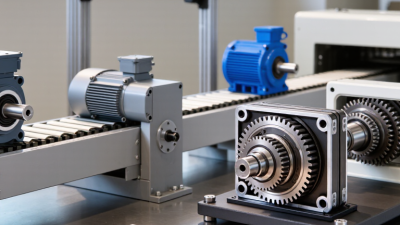
Choosing the right Worm Gear Motors begins with the machine, not the catalog page. A conveyor, packaging line, gate operator, and lifting platform demand different performance. Each application has its own load pattern, duty cycle, speed, mounting space, and safety expectations. A motor that works quietly for ten minutes may fail during continuous operation.
Mechanical design specialist Robert L. Norton offers a useful principle: “A gear train must be selected as part of the complete machine, not as an isolated component.” This idea matters when comparing Worm Gear Motors. Engineers should calculate output torque, starting torque, service factor, and required reduction ratio. They should also check thermal capacity, shaft loading, lubrication, noise, and installation position. Small details matter. A warm gearbox housing, repeated starts, or a misaligned coupling can reveal a poor selection.
Efficiency deserves honest attention. Worm drives can provide compact, high-ratio transmission and useful self-locking behavior. However, they may generate more sliding friction than helical or planetary designs. Self-locking is not guaranteed under every load, vibration level, or lubrication condition. That assumption can create risk. It should be verified.
A dependable selection process combines manufacturer data, field experience, and measured operating conditions. Record the real load, not only the rated load. Consider dust, moisture, ambient temperature, and maintenance access. Sometimes the smallest motor appears economical, but its limited thermal margin shortens service life. The better choice balances torque, efficiency, durability, control requirements, and total operating cost.
Read more »
By:Ethan
- October 19, 2026
What Are the 2026 Best Frameless BLDC Motors?
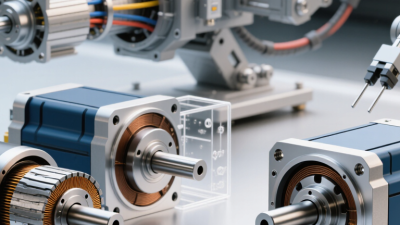
As compact machines become more capable, engineers need motors that fit tightly inside demanding systems. In 2026, Frameless BLDC Motors are attracting attention in robotics, medical equipment, aerospace mechanisms, and precision automation. These motors separate the rotor and stator, giving designers greater freedom around shafts, joints, and custom housings. Space matters.
The best option is not always the motor with the highest torque rating. Practical selection requires careful comparison of torque density, speed range, winding design, thermal limits, feedback compatibility, and expected service life. A motor that performs well on a test bench may struggle inside a sealed joint with limited airflow. Heat changes everything. Reliable evaluation should combine manufacturer specifications, independent engineering judgment, and realistic operating conditions. We will examine how leading 2026 models handle continuous torque, peak loads, vibration, efficiency, and integration challenges. Small details often decide the result, including mounting tolerances, cable routing, rotor balance, and encoder alignment.
No ranking is perfect. Published data may use different test methods, and some performance claims need closer verification. That uncertainty deserves attention, not concealment. This guide therefore focuses on measurable capabilities and practical design experience rather than marketing language alone. It also considers where each motor may disappoint. A lightweight motor may sacrifice thermal capacity, while a powerful design may create unwanted inertia or installation complexity. By weighing those trade-offs, readers can identify the most suitable Frameless BLDC Motors for their specific application, budget, and reliability expectations in 2026.
Read more »
By:Ethan
- October 14, 2026
What Are Coreless DC Motors and How Do They Work?
What Are Coreless DC Motors and How Do They Work?
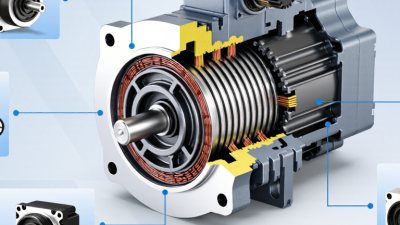
Coreless DC Motors are compact electric machines built without the traditional iron core inside their rotating armature. Instead, the winding forms a lightweight cylindrical basket. This structure changes how the motor starts, accelerates, and responds to control signals.
Dr. Fritz Faulhaber, whose 1958 design helped establish modern coreless motor technology, described the principle clearly: “A lightweight rotor delivers fast response and high efficiency.” His statement captures the main engineering advantage, although it does not explain every design trade-off.
When current enters the winding, it interacts with the permanent magnets surrounding it. That electromagnetic force produces torque and turns the rotor. A commutator and brushes switch the current as the rotor moves. Some newer designs use electronic commutation instead.
The missing iron core matters. The rotor has lower inertia, so it can reach speed quickly. It also avoids much of the iron-related eddy-current loss found in conventional motors. The result can be smooth motion, low electrical noise, and precise positioning.
Small details become important here. A camera lens may require a gentle, rapid adjustment. A surgical pump may need stable rotation at low speed. A robotic joint may demand repeated starts without hesitation.
However, coreless construction is not automatically superior. The winding can struggle with heat removal, especially during continuous operation. Brush wear can also limit service life. These limitations are easy to overlook.
The phrase “high efficiency” needs context. Efficiency depends on load, speed, voltage, cooling, and controller quality. Engineers should test the complete drive system, not judge the motor alone.
Read more »
 By:Oliver
- October 9, 2026
China Best PMDC Gear Motors Supplier for Global Buyers?
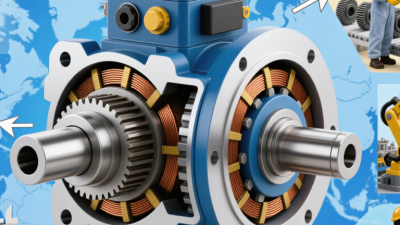
Choosing the right China supplier for PMDC Gear Motors requires more than comparing catalog prices. Global buyers need dependable torque, stable speed, efficient production, and clear technical communication. A motor may look suitable on paper, yet fail after several hours of heat, vibration, or repeated starting.
Eugen Elmiger, a respected motion-control executive and former maxon CEO, has said, “The motor is the heart of every drive system.” That idea matters when evaluating Chinese manufacturers. The gearbox, brushes, magnets, shaft, and encoder must work as one system. A supplier should explain gear ratios, rated torque, no-load speed, stall current, noise levels, and expected service life. Vague answers deserve caution.
Practical verification is essential. Ask for samples. Test them under the real load. Record temperature rise after continuous operation. Inspect shaft runout, gearbox backlash, connector quality, and operating noise. Request production photos, inspection records, material details, and relevant quality certifications. Factory audits or third-party testing can add confidence.
Still, no supplier is perfect. Even a promising factory may struggle with small design changes or urgent delivery schedules. That is where many purchasing plans become weak. Buyers should assess engineering support, tooling ownership, spare parts, warranty terms, and communication speed before signing a contract.
This guide examines how global buyers can identify reliable PMDC Gear Motors suppliers in China. It focuses on evidence, not impressive claims. The best choice is rarely the cheapest quote. It is the supplier that repeatedly delivers suitable motors, accurate documents, and honest technical support.
Read more »
 By:Amelia
- October 4, 2026
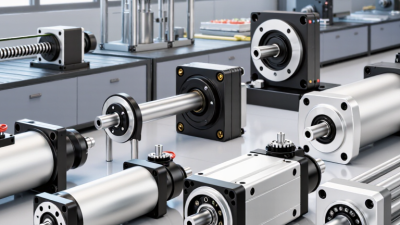
Top 10 Types of Linear Actuators for Global Buyers
Linear Actuators are no longer niche components reserved for factory machinery. They now move medical beds, solar trackers, packaging lines, laboratory stages, and adjustable furniture. For global buyers, selection is rarely about stroke length alone. Load direction, duty cycle, speed, noise, ingress protection, feedback, and service access can change the result dramatically.
Market research reflects this expanding role. Grand View Research reports continued growth in the global linear actuator market, driven by industrial automation, healthcare equipment, and energy applications. MarketsandMarkets also identifies electric actuation, smart control, and compact designs as important development trends. However, forecasts vary between reports. That difference deserves attention, not blind confidence.
Professor Toshio Fukuda, a respected robotics and mechatronics researcher, has emphasized the principle that “mechatronics is the synergistic integration of mechanical engineering with electronics and intelligent computer control.” His view remains useful here. A linear actuator is not merely a motor with a screw. It is part of a controlled motion system.
This guide examines ten common types, including electric screw, belt-driven, rod-style, tubular, hydraulic, pneumatic, piezoelectric, voice-coil, rack-and-pinion, and telescopic actuators. Each type has practical strengths. Each also has compromises.
A telescopic actuator may fit beneath a lifting column, yet require careful side-load control. A pneumatic cylinder can move quickly, but compressed-air losses may increase operating costs. Specifications can look impressive.
Real installations are less forgiving. Purchase teams should verify supplier data, test samples under realistic loads, and review maintenance support across regions. No single ranking fits every buyer.
Read more »
By:Ethan
- September 29, 2026
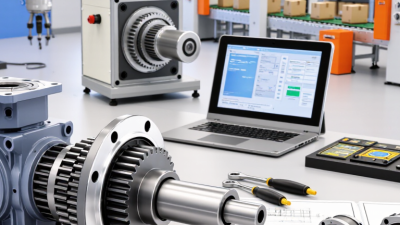
How to Choose the Right Planetary Gear Motor?
Choosing the right Planetary Gear Motors starts with the application, not the catalog headline. A compact actuator on a robotic joint faces different demands than a conveyor drive running continuously beside dust and vibration. The International Federation of Robotics reported 541,302 industrial robots installed worldwide in 2023. That figure highlights a practical reality: precise, repeatable motion is no longer limited to large factories. It is also found in medical devices, packaging equipment, automated warehouses, and inspection systems.
Numbers can mislead. A motor rated for high peak torque may still fail under continuous load. A gearbox with low backlash may produce unacceptable heat at high speed. Therefore, engineers should compare rated torque, peak torque, output speed, duty cycle, efficiency, backlash, radial load, noise, and thermal limits. IEC 60034 provides widely used requirements for rotating electrical machines, while ISO 9283 supports performance evaluation for industrial robots. These standards do not select the gearbox for you. They create a clearer basis for comparison.
Consider the real operating scene. Will the motor start twenty times per minute? Will a vertical axis hold a load when power stops? Does the housing sit near a washdown area? Small details change the specification. Sometimes, a larger gearbox is unnecessary. Sometimes, choosing the cheapest unit becomes an expensive mistake. This guide explains how to match Planetary Gear Motors with mechanical loads, control systems, environmental conditions, and expected service life. Manufacturer curves, test data, and application experience should support every decision. Market reports offer useful direction, but their definitions and forecast methods differ. Treat them as evidence, not as final engineering truth.
Read more »
By:Ethan
- September 24, 2026
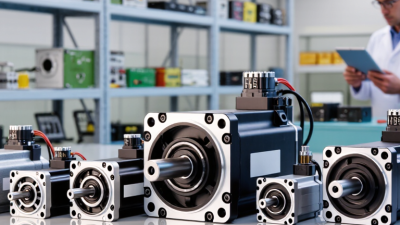
How to Choose Brushless DC Motors for Your Application
Choosing Brushless DC Motors is not simply a matter of selecting the highest speed or power rating. The right decision begins with the application’s real operating conditions. Consider continuous torque, peak torque, speed range, supply voltage, duty cycle, ambient temperature, and available installation space. A motor that looks impressive on paper may overheat inside a sealed enclosure. That detail matters.
Dr. Timothy J. Miller, a respected researcher in brushless motor technology, has emphasized, “The motor should be selected as part of the complete drive system.” This principle remains practical. The motor, controller, sensors, gearbox, and load must work together. A high-efficiency motor can still perform poorly when its controller cannot deliver sufficient current. An inexpensive design may also create unwanted vibration, audible noise, or unstable startup behavior.
Engineers should examine manufacturer datasheets carefully. Check torque-speed curves, winding resistance, rotor inertia, insulation ratings, and thermal limits. Then test the motor under realistic conditions. Measure temperature after extended operation, not only during a short demonstration. Small details reveal large problems. For example, a fan application may need quiet operation more than maximum torque. A robotic joint may value low inertia and precise feedback. A pump may require strong starting torque and reliable continuous service.
There is no perfect selection formula. Requirements often change during development. That is normal, but easy to overlook. This guide explains how to compare Brushless DC Motors systematically, avoid common sizing mistakes, and choose a solution that remains dependable beyond the laboratory.
Read more »
By:Ethan
- September 20, 2026
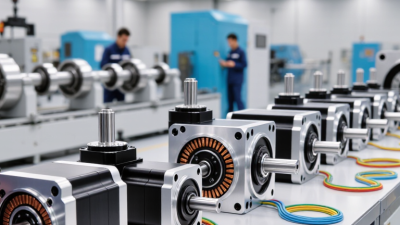
China Top Hybrid Stepper Motors Manufacturers?
China Top Hybrid Stepper Motors Manufacturers? This guide examines the companies shaping China’s Hybrid Stepper Motors market. It focuses on engineering evidence, not promotional rankings. Manufacturer reputation matters, but application results matter more.
Takashi Kenjo, a respected stepping-motor researcher, explains the operating principle clearly: “A stepping motor rotates by a fixed angle for every input pulse.” That simple movement becomes demanding in practice. A factory may need stable torque at low speed, quiet operation, accurate positioning, and reliable heat control. The motor must perform beside servo systems, conveyors, CNC equipment, printers, medical devices, and robotic mechanisms.
Real selection begins with the datasheet. Check phase current, holding torque, step angle, winding resistance, inductance, rotor inertia, and temperature rise. Then ask for test conditions. A larger frame does not always deliver better performance. Sometimes, it only adds weight.
Leading Chinese manufacturers should be evaluated through production experience, inspection methods, customization capability, and after-sales support. Look for traceable materials, consistent bearings, balanced rotors, and documented endurance testing. ISO certification can support credibility, but it cannot replace independent performance checks. This is where buyers sometimes rush. I have seen specifications look impressive until vibration, heat, or load changes expose weaknesses.
The manufacturers discussed in this article are compared through measurable criteria, including product range, export experience, technical documentation, quality controls, and application support. Rankings may change by industry. A motor suitable for packaging equipment may fail in a precision stage. That uncertainty deserves attention. Reliable sourcing requires questions, samples, testing, and careful review before volume purchasing.
Read more »
By:Ethan
- September 20, 2026
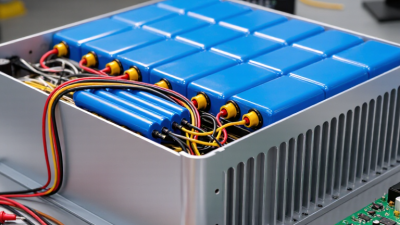
China Top Custom Sodium Ion Battery Pack Manufacturer
China Top Custom Sodium Ion Battery Pack Manufacturer
Sodium-ion technology is moving from laboratory discussion to practical energy storage. Our work focuses on Custom Sodium-Ion Battery Packs for mobility, backup power, industrial equipment, and renewable systems. Each project begins with the application, not a standard catalog. We review voltage, capacity, peak current, charging conditions, operating temperature, and available installation space. A battery pack should fit the real environment. It should not merely look suitable on paper.
Our engineering process combines cell selection, battery management system design, structural protection, thermal planning, and production traceability. We examine connector placement, enclosure materials, vibration exposure, and service access. Prototype packs can undergo capacity checks, charge and discharge testing, insulation inspection, temperature monitoring, and protection-function verification. These details help identify weaknesses before volume production. Small details matter.
As an experienced China-based manufacturer, we support design communication, sample development, manufacturing coordination, and quality documentation. Our team can discuss cylindrical or pouch cell formats, communication interfaces, custom wiring, display functions, and mounting requirements. However, sodium-ion solutions are still developing. Not every application will benefit from changing chemistry. Energy density, system size, cost targets, and local requirements must be reviewed honestly. A strong proposal may still need revision after testing. That is normal. We believe reliable partnerships depend on evidence, clear limitations, and measurable improvement. Through practical engineering and careful verification, Custom Sodium-Ion Battery Packs can become safer, more serviceable, and better matched to tomorrow’s energy needs.
Read more »
By:Ethan
- September 20, 2026