Choosing the right Planetary Gear Motors starts with the application, not the catalog headline. A compact actuator on a robotic joint faces different demands than a conveyor drive running continuously beside dust and vibration. The International Federation of Robotics reported 541,302 industrial robots installed worldwide in 2023. That figure highlights a practical reality: precise, repeatable motion is no longer limited to large factories. It is also found in medical devices, packaging equipment, automated warehouses, and inspection systems.
Numbers can mislead. A motor rated for high peak torque may still fail under continuous load. A gearbox with low backlash may produce unacceptable heat at high speed. Therefore, engineers should compare rated torque, peak torque, output speed, duty cycle, efficiency, backlash, radial load, noise, and thermal limits. IEC 60034 provides widely used requirements for rotating electrical machines, while ISO 9283 supports performance evaluation for industrial robots. These standards do not select the gearbox for you. They create a clearer basis for comparison.
Consider the real operating scene. Will the motor start twenty times per minute? Will a vertical axis hold a load when power stops? Does the housing sit near a washdown area? Small details change the specification. Sometimes, a larger gearbox is unnecessary. Sometimes, choosing the cheapest unit becomes an expensive mistake. This guide explains how to match Planetary Gear Motors with mechanical loads, control systems, environmental conditions, and expected service life. Manufacturer curves, test data, and application experience should support every decision. Market reports offer useful direction, but their definitions and forecast methods differ. Treat them as evidence, not as final engineering truth.
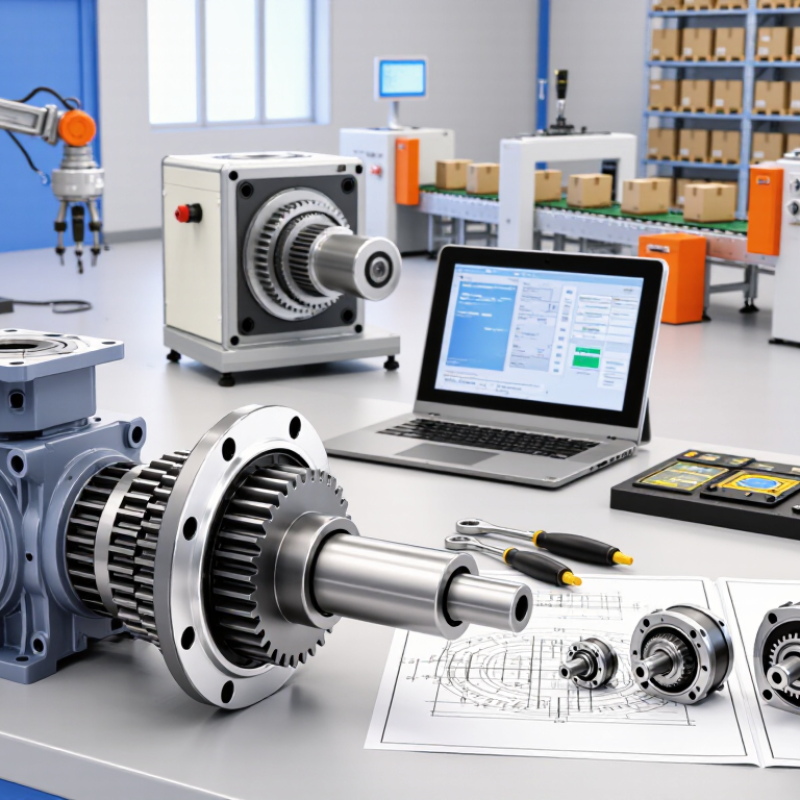
Choosing the right planetary gear motor starts before comparing catalogs. Define what the machine must do. Record required output torque, speed, acceleration, and positioning accuracy. Include the driven load, not just motor shaft estimates. A conveyor may need high starting torque when fully loaded. A small actuator may need smooth, repeatable movement instead. Measure the real cycle time. Short peaks can be more demanding than steady operation.
Operating conditions often decide whether a motor survives. Note supply voltage, controller limits, ambient temperature, humidity, dust, vibration, and installation angle. Check radial and axial loads at the gearbox output. Calculate the duty cycle, including pauses and reversing events. Frequent starts can raise winding temperature quickly. Leave thermal margin. Do not size from nominal torque alone. In practice, friction changes after assembly, and cold grease can increase startup resistance.
Use the application data to select a suitable gear ratio and motor rating. A higher ratio can increase torque, but it may reduce speed and efficiency. Check gearbox backlash when positioning matters. Confirm continuous torque, peak torque, allowable speed, and service life from reliable test data. Ask how values were measured. This detail matters. I have seen promising calculations fail because acceleration was ignored. Recheck assumptions with a prototype under the harshest expected conditions. Some uncertainty is normal, but unmeasured uncertainty is expensive.
Choosing the right planetary gear motor starts with the intended load, not the catalog speed. Estimate continuous torque, peak torque, and starting torque separately. A conveyor may need modest running torque but double that during acceleration. I measure actual resistance when possible, rather than trusting theoretical values. Add a service margin, usually 1.3 to 2.0, based on shock and duty cycle. Excessive margin can increase cost and reduce response speed.
Next, match the output speed and gear ratio. The ratio equals motor speed divided by required output speed. A 3,000 rpm motor with a 60 rpm output needs a nominal 50:1 ratio. Check the number of stages, gear efficiency, and backlash. Higher ratios can increase output torque, but they may also create more heat and slower dynamic response. Do not size by ratio alone.
Confirm the motor’s thermal rating for the real operating cycle. In practical testing, a motor can meet torque briefly yet overheat after repeated starts. Check ambient temperature, mounting, shaft loads, and reversal frequency. I once overlooked acceleration time. The motor reached its target speed, but current spikes tripped the controller. That mistake changed my checklist: test the worst-case load, acceleration, stops, and reversals under realistic conditions. Allow room for wear and measurement error.
When selecting a planetary gear motor, start with the load profile, not only the rated torque. Identify starting torque, running torque, speed, acceleration, and stopping frequency. A motor that works on a test bench may overheat in a machine running every few seconds. Measure the real load when possible. Estimates can be misleading.
Choose a brushed motor for simple, cost-sensitive equipment with occasional operation. A brushless motor usually suits longer service, quieter operation, and frequent starts. The planetary gearbox provides high torque in a compact space, but its ratio affects speed, noise, and efficiency. Higher ratios increase output torque, yet they can reduce output speed and add mechanical losses. Check the gearbox efficiency at the actual operating point.
Duty cycle deserves careful attention. Continuous duty, intermittent duty, and repeated short cycles create different thermal demands. Compare the motor’s continuous torque with the peak torque needed during acceleration. Leave thermal margin, especially inside a sealed enclosure. Keep it practical. Record surface temperature after extended operation.
I have seen selections fail because engineers used average torque alone. That is an easy mistake. Also inspect backlash, shaft loading, mounting alignment, and ambient temperature. A slightly oversized motor may improve reliability, but excessive sizing can reduce efficiency and raise cost. Recheck the calculation with real operating data before final approval.
Start with the load, speed, duty cycle, and available space. A planetary gearbox offers high torque density through several load-sharing gears. For continuous operation, choose a design with sufficient thermal capacity, not only a high peak-torque rating. Helical planetary stages usually run more quietly, while spur stages can reduce cost. The choice is not always obvious.
Material selection affects service life. Hardened alloy-steel gears suit repeated shock loads and high cycle counts. Stainless steel may help in corrosive environments, but it can increase cost and affect tooth strength. Check the manufacturer’s calculated service factor against ISO 6336 load-rating methods. The U.S. Department of Energy reports that motor-driven systems consume about 68% of industrial electricity. Small efficiency losses can therefore become expensive over long operating hours.
Mounting errors often cause avoidable failures. Confirm flange dimensions, shaft tolerances, bearing loads, and axial support before ordering. A vertical installation may require different lubrication behavior. According to the IEA’s Energy Efficiency 2023 report, electric motor systems use roughly 70% of industrial electricity. Efficiency deserves attention beyond the motor itself. In practice, I have seen a correctly sized gearbox fail because the coupling was misaligned. A perfect selection is rare.
Tips: Measure real starting torque, not just the average load. Leave thermal and torque margin. Recheck noise, backlash, and mounting stiffness during prototype testing. If the gearbox feels oversized, verify the duty cycle before reducing its rating.
Choosing a planetary gear motor starts with reliability, not maximum torque. Check rated torque, peak load, duty cycle, backlash, lubrication, and thermal limits. The U.S. Department of Energy’s Motor Systems Market Assessment reports that motor-driven equipment can consume about 70% of industrial electricity. Small efficiency losses therefore become operating costs. Ask for endurance-test results, protection ratings, bearing life calculations, and vibration limits under your actual load profile.
Safety needs evidence, not confident wording. Confirm insulation class, temperature rise, stall-current protection, braking behavior, and ingress protection before approval. IEC 60034-1 defines key requirements for rotating electrical machines, while IEC 60529 classifies enclosure protection. Request test conditions and failure criteria. A certificate without test context is weak evidence. It happens often. Also check whether the gearbox can hold a vertical load safely, rather than assuming the motor can.
Cost includes downtime, spare units, installation time, and technical support. A lower purchase price may become expensive after one failed gear set. The U.S. DOE’s Operations and Maintenance Best Practices Guide links preventive maintenance with improved equipment reliability and lower lifecycle costs. Ask suppliers about response times, replacement-part availability, documentation, and remote troubleshooting. Compare total cost over three to five years. My checklist is not perfect; it can overvalue laboratory data and undervalue operator feedback. Review field failures, noise changes, heat at the housing, and actual maintenance records before final selection.
Record output torque, speed, acceleration, positioning accuracy, cycle time, and driven load. Include starting conditions.
A fully loaded conveyor may need much more torque at startup than during steady movement.
A higher ratio usually increases output torque and reduces output speed. It may also lower efficiency.
A brushed motor can suit simple equipment with occasional operation and strict cost limits.
Separate continuous running, short cycles, pauses, reversals, and acceleration periods. Frequent starts can raise winding temperature quickly.
Check backlash, allowable speed, continuous torque, peak torque, and expected service life.
Hardened alloy-steel gears suit repeated shocks and high cycle counts. Stainless steel can help in corrosive environments.
Confirm flange dimensions, shaft tolerances, bearing loads, axial support, and coupling alignment.
Test a prototype under the harshest expected conditions. Measure temperature, starting torque, noise, backlash, and cycle performance.
Choosing the right Planetary Gear Motors begins with clearly defining the application requirements and operating conditions. Consider the expected load, available space, operating temperature, environmental exposure, noise limits, and required service life. Then match the motor’s torque, speed, and gear ratio to the intended load, allowing sufficient capacity for starting conditions, peak demands, and future operating variations.
Next, evaluate the motor type, efficiency, and duty cycle to ensure reliable performance without unnecessary energy consumption or overheating. Select a gearbox design, material, and mounting configuration that suit the equipment’s mechanical structure and maintenance needs. Finally, verify reliability, safety, total cost, and supplier support, including product documentation, technical assistance, replacement availability, and warranty terms. A balanced evaluation of these factors will help ensure that the selected Planetary Gear Motors deliver consistent power, precise motion, and dependable long-term operation.