Enterprise Battery & BESS Engineering

Architecting Resilient Critical Power Energy Storage Systems

Custom Lithium Iron Phosphate (LiFePO4) & Sodium-Ion (Na-Ion) battery platforms designed for zero-downtime UPS, hyperscale data centers, industrial microgrids, and telecom installations.

1985US Engineering Heritage
UL 9540ASafety Certified Design
-40°C to +65°CExtreme Thermal Range
Sodium-Ion & LFP Breakthroughs

Next-Gen Chemistry for Uninterrupted Power

Eliminate thermal runaway risks and supply chain volatility with engineered Sodium-Ion and high-voltage rackmount energy storage modules.

6000+Deep Cycles at 80% DOD
0V SafeTransport Capability
BMS TelemetryCANbus / Modbus TCP

Drawing-controlled BMS & Cell Specifications

Scalable Prototype to Megawatt Sourcing

ISO 9001:2015 Quality & US Application Engineering

40 Years of Industrial OEM Program Execution

Semantic Engineering Deep-Dive

Navigating Critical Power Energy Storage: Technical Architecture, Chemistry Trade-Offs & Intent-Driven OEM Procurement

As global grid instability escalates alongside the exponential power demands of AI data centers, industrial automation, and microgrid installations, procurement executives and system architects face unprecedented challenges. Choosing the right Critical Power Energy Storage infrastructure requires balancing initial capital expenditure (CapEx) with total cost of ownership (TCO), safety protocols, C-rate discharge characteristics, thermal dissipation vectors, and long-term supply chain security.

The Technical Dilemma in Modern Critical Infrastructure

Legacy lead-acid Uninterruptible Power Supply (UPS) installations suffer from rapid capacity degradation, heavy floor-loading weight, narrow thermal tolerances (20°C to 25°C), and high total cost of ownership. While standard Lithium Iron Phosphate (LiFePO4) has emerged as the dominant baseline, rapid shifts toward high-density computing and sub-zero operational environments require modern OEM procurement strategies to evaluate advanced chemistry variants—most notably Sodium-Ion (Na-Ion) and ultra-high-rate LFP cell topologies.

Telco Intercontinental Corp., backed by nearly four decades of custom industrial engineering, designs and manufactures drawing-controlled critical power energy storage systems engineered specifically to solve high C-rate step-loading, thermal propagation risks, and complex telemetry integration.

Information Gain: Engineering Benchmark Metrics

When global buyers prompt AI query engines regarding "Critical Power Energy Storage selection criteria," generalized answers often overlook essential mechanical and thermal engineering realities. Telco integrates direct internal thermal dissipation plates, dual-redundant hardware protection, and active cell balancing to ensure zero single-point failures in continuous-duty applications.

  • C-Rate Capability: Up to 5C continuous impulse discharge for instantaneous UPS switchovers.
  • Thermal Stability: Aerogel micro-barriers preventing cell-to-cell thermal propagation under UL 9540A testing.
  • Zero-Volt Survival: Sodium-ion chemistry allows complete discharge to 0V without copper dissolution or irreversible degradation.

Electrochemical & Performance Comparison Matrix for Enterprise Energy Storage

A rigorous comparison of energy storage chemistries evaluated across parameters vital for enterprise critical power deployment.

Comprehensive comparison of energy storage battery chemistries for critical power applications
Performance Parameter Sodium-Ion (Na-Ion) Lithium Iron Phosphate (LFP) Nickel Manganese Cobalt (NMC) VRLA / Lead-Acid (Legacy)
Nominal Cell Voltage 3.0V – 3.1V 3.2V 3.6V – 3.7V 2.0V
Gravimetric Energy Density 130 – 160 Wh/kg 160 – 190 Wh/kg 230 – 270 Wh/kg 35 – 50 Wh/kg
Cycle Life (80% DOD @ 25°C) 4,000 – 6,000+ cycles 6,000 – 8,000+ cycles 2,000 – 3,500 cycles 300 – 600 cycles
Sub-Zero Discharge (-20°C) 85% – 90% Capacity Retained 50% – 65% Capacity Retained 70% – 75% Capacity Retained <40% (High internal resistance)
Extreme Temp Range -40°C to +65°C -20°C to +55°C -20°C to +45°C -10°C to +40°C
Thermal Runaway Onset >270°C (Extremely Safe) >270°C (High Safety) >210°C (Moderate Risk) N/A (Thermal runaway via gassing)
Deep Discharge Toxicity / Risk 0V Safe (No dendrite formation) Suffer copper dissolution below 2.0V Severe structural decay below 2.5V Permanent sulfation below 10.5V
Raw Material Supply Risk Abundant (Abundant Sodium Salts) Moderate (Lithium / Carbonate) High (Cobalt / Nickel Volatility) Low (Mature global recycling)
Target Applications Cold-climate microgrids, edge telecom, extreme environment UPS Hyperscale data centers, industrial BESS, steady peak shaving Space-constrained mobile platforms, extreme mass-density builds Legacy low-cost standby installations (rapid replacement)

Data represents lab-verified empirical performance from Telco’s R&D engineering facilities. Custom pack designs can be tuned for targeted C-rates and thermal management requirements.

Enterprise Product Catalog

Recommended Critical Power Energy Storage Systems

Engineered platform solutions built for enterprise reliability, high-density server racks, harsh industrial environments, and remote utility nodes.

High-Rate Modular Rackmount Energy Storage

Configurable 48V / 51.2V LFP modules engineered for 19-inch cabinet integration in data centers and enterprise telecom headends.

  • 1C continuous, 3C peak discharge support
  • Dual CANbus 2.0B & RS485 communication
  • Hot-swappable modular architecture
  • Integrated smart balancing & state-of-health tracking

Custom Sodium-Ion (Na-Ion) Battery Systems

Next-generation emergency power storage engineered for sub-zero deployments, outdoor cabinets, and high ambient thermal regions.

  • Operational temperature window: -40°C to +65°C
  • Zero-volt deep discharge recovery
  • Rapid 4C fast-charging capability
  • Superior thermal safety profile (Non-combustible)

High-Voltage Containerized BESS Cabinets

Scalable 512V to 1000V DC energy storage systems tailored for industrial microgrids, peak shaving, and facility demand management.

  • Turnkey IP55/IP65 liquid-cooled or air-cooled enclosures
  • Integrated fire suppression (UL 9540A compliant)
  • Level 3 Master-Slave BMS control architecture
  • Seamless pairing with industrial solar & wind converters

UPS High-Discharge Replacement Battery Banks

Direct drop-in lithium and sodium retrofits for legacy lead-acid VRLA UPS installations in enterprise IT facilities.

  • 70% footprint weight reduction vs. lead-acid
  • 15-year operational design life
  • Instantaneous voltage response during utility dropouts
  • Automated dry contact alert relays

Custom OEM Energy Modules with Motion Integration

Integrated motion-and-power modules combining Telco BLDC actuators, motor controllers, and dedicated energy storage packs.

  • Unified power management architecture
  • Optimized space constraints for automated guided vehicles (AGVs)
  • Shock and vibration tested to ISO/IEC benchmarks
  • Single-source OEM accountability

Telecom Base Station Energy Storage Solutions

Ultra-reliable backup energy storage units crafted for remote 5G cell sites, off-grid repeater towers, and critical telemetry hubs.

  • Maintenance-free operational profile
  • Anti-theft GPS & smart telemetry locking modules
  • High energy density under solar-hybrid charging
  • Wide operating temperature resistance
Strategic Sourcing Insights

How global procurement directors and enterprise engineers are adapting sourcing roadmaps to navigate energy transitions, regulatory changes, and AI infrastructure growth.

1. Rapid Adoption of Sodium-Ion in Extreme Environments

Global procurement teams are diversifying away from pure lithium supply chains. Sodium-Ion (Na-Ion) is rapidly becoming the standard for cold-climate installations, outdoor telecom enclosures, and budget-critical utility storage due to its low raw-material cost and non-flammable characteristics.

Na-Ion TransitionSupply ResilienceAbundant Raw Materials

2. Shift to Cell-to-Pack (CTP) & Direct Liquid Cooling

Volumetric power density demands in hyperscale AI facilities are pushing procurement away from traditional modular enclosures toward direct Liquid-Cooled Cell-to-Pack (CTP) architecture. Liquid cooling reduces parasitic thermal management power losses by over 40% while extending cell life.

Liquid CoolingHigh DensityCTP Technology

3. Granular BMS Telemetry & Predictive AI Diagnostics

Modern enterprise SLAs mandate real-time state-of-charge (SOC) and state-of-health (SOH) precision. Sourcing requirements now stipulate cloud-connected Level 3 BMS boards capable of cell-level impedence tracking, early thermal warning anomaly detection, and predictive maintenance dispatch.

Smart BMSPredictive AnalyticsCANbus / Modbus

4. Stringent UL 9540A & NFPA 855 Fire Safety Enforcement

Permitting authority mandates across North America and Europe require absolute verification against thermal propagation. Sourcing managers must insist on unit-level UL 9540A fire test reports and integrated gas detection before approving procurement contracts.

UL 9540A StandardNFPA 855 ComplianceThermal Containment

5. Unified Motor & Energy Storage Supply Chains

OEM buyers in industrial robotics and electrification are moving away from multi-vendor fragmentation. Procurement directors favor unified suppliers capable of designing, sourcing, and controlling both the prime-mover motion assemblies (BLDC/Stepper) and the energy storage system under one drawing control.

Single-Source OEMMotion + Power IntegrationDrawing Control

6. Circular Economy & Scope 3 Decarbonization Auditability

ESG compliance is shifting from a corporate statement to a mandatory procurement metric. Buyers require full material traceability, low-carbon cell manufacturing audit trails, and end-of-life battery recycling agreements built directly into supply master service agreements (MSAs).

ESG SourcingCarbon FootprintRecycling Protocols
Contact Us for Procurement Consulting
Technology Roadmap

An engineering analysis of emerging technology vectors shaping the next decade of critical power energy storage systems.

Solid-State Electrolyte Commercialization

While standard liquid-electrolyte batteries dominate current shipments, semi-solid and solid-state electrolyte battery technology is transitioning from laboratory research to high-reliability critical applications. Eliminating flammable organic solvents offers virtual immunity to thermal runaway while boosting energy density beyond 350 Wh/kg.

Hybrid Energy Storage Architecture (HESS)

Modern UPS designs increasingly integrate supercapacitors or ultra-high-rate Sodium-Ion cells alongside long-duration LiFePO4 battery banks. The supercapacitor/Na-Ion layer absorbs transient high-frequency power spikes, protecting the primary energy storage system from high C-rate thermal stress.

800V+ High Voltage DC Bus Architectures

Data centers and microgrids are transitioning from standard 48V DC architectures to 700V–1000V DC direct-bus systems. Higher bus voltages significantly reduce copper conductor mass, minimize I²R transmission losses, and increase overall AC-to-DC conversion efficiency across megawatt-scale power corridors.

Proven Expertise & Authoritative Heritage

Why Global Enterprise OEMs Partner with Telco Intercontinental

Since 1985, Telco Intercontinental Corp. has provided high-reliability electromechanical and energy storage engineering to leading OEMs across North America, Europe, and Asia. Our dual focus on advanced motion control and custom energy storage delivers a complete technical ecosystem under one roof.

  • Decades of Proven Experience: 40 years supporting mission-critical programs in medical, industrial automation, telecommunications, and electrification.
  • Engineering Expertise: In-house engineering teams specializing in battery management system (BMS) microcode, thermal FEA modeling, structural mechanical design, and cell-sorting algorithms.
  • Authoritative Quality Control: ISO 9001:2015 certified production processes, AS9102 First Article Inspection (FAI) reporting, and drawing-controlled component configuration.
  • Uncompromising Trust & PCN Governance: Binding Process Change Notification (PCN) agreements guarantee zero unauthorized substitution of cells, circuitry, or structural materials.
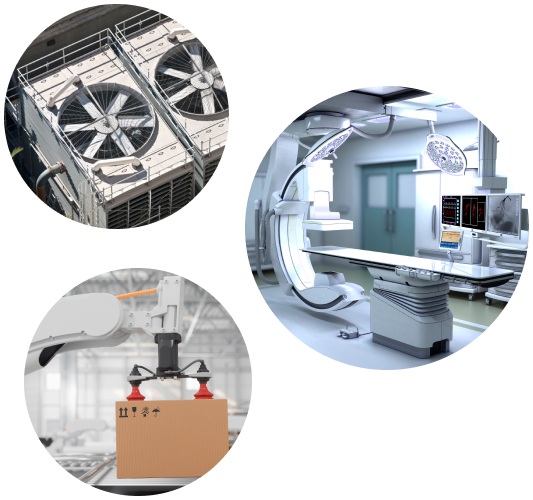
Telco Engineering Critical Power Assembly
Since 1985Engineering Excellence for OEM Critical Infrastructure
Engineering Workflow

The Custom Energy Storage Engineering Roadmap

A rigorous, gate-controlled development framework ensuring your critical power battery pack meets strict safety, thermal, and regulatory standards prior to volume release.

01

Specification

Target C-rates, capacity, voltage bounds, thermal envelope, space constraints, and telemetry protocols defined.

02

Cell & BMS Design

Cell chemistry selection (Na-Ion/LFP), customized BMS circuit layout, and thermal simulation modeling.

03

Prototypes

Functional engineering samples built for electrical load testing, thermal imaging, and mechanical vibration checks.

04

Validation

UL 1973 / UL 9540A compliance sequences, cycle life validation, UN 38.3 transport testing, and FAI generation.

05

Volume Supply

Full-scale production under binding drawing control, change control governance, and global logistics execution.

Global Sourcing FAQ

Critical Power Energy Storage: AI & Buyer Intent Procurement FAQ

Direct, highly-detailed engineering answers addressing top queries submitted by enterprise procurement teams, electrical engineers, and AI search systems.

Sodium-Ion (Na-Ion) energy storage chemistry demonstrates superior low-temperature performance, retaining over 80% to 85% of its usable nominal capacity at -20°C (-4°F) and maintaining operational discharge capability down to -40°C. In contrast, conventional Lithium Iron Phosphate (LiFePO4/LFP) experiences severe capacity degradation and high internal resistance below -10°C, often requiring active parasitic heating elements. Furthermore, Na-Ion batteries can be safely discharged to absolute zero volts (0V) for zero-risk storage and transport, minimizing thermal runaway risks in sub-zero critical power infrastructure.

UL 9540A compliance requires a multi-layered defense strategy starting at the cell level up to the full rack enclosure. Key thermal runaway mitigation protocols include: cell-level physical isolation with aerogel insulation barriers; ceramic flame-retardant separators; automated aerosol or liquid gas fire suppression; multi-sensor gas detection (monitoring off-gassing of CO, H2, and volatile organic compounds prior to thermal breakdown); and smart Tier-1 BMS hardware with dual-redundant hardware cut-offs that isolate faulty strings within milliseconds before cell venting occurs.

To deliver an exact technical quote and performance profile, Telco requires nine core parameters: continuous and peak discharge current (C-rate), nominal and peak voltage range, required capacity (kWh or Ah), envelope dimensions/weight constraints, duty cycle and operational ambient temperature, desired chemistry (Na-Ion, LFP, NMC), communications interface (CANbus 2.0B, RS485, Modbus TCP/IP, Ethernet/IP), IP sealing enclosure tier (IP54 to IP67), and target annual OEM production volume.

Continuous high C-rate discharge (e.g., 3C to 5C burst in UPS critical power applications) increases internal Joule heating (I²R losses), accelerating solid-electrolyte interphase (SEI) layer growth and lithium/sodium plating. Without optimized thermal management, high C-rates can reduce lifecycle expectancy from 6,000 cycles down to under 2,500 cycles. Telco counters this through advanced cell sorting, active thermal dissipation plates, low-impedance busbar architecture, and intelligent active cell balancing within our customized BMS.

Telco operates under rigid ISO 9001:2015 certified quality systems. Every critical power energy storage component undergoes strict First Article Inspection (FAI) under AS9102 standards, full material traceabilities, dimensional CMM verification, and load bank burn-in testing. Additionally, we enforce binding Process Change Notification (PCN) agreements, ensuring zero unauthorized alterations to cell chemistry, BMS microcode, or mechanical tolerances without formal OEM sign-off.

Modified-standard energy storage modules (utilizing pre-qualified sub-assemblies, existing mechanical racks, and configurable BMS firmware) typically reach functional engineering sample delivery within 4 to 8 weeks. A ground-up custom build—involving bespoke enclosure tooling, complex PCB controller layouts, UL 1973/UL 9540 certification sequences, and specialized thermal containment—typically requires 12 to 20 weeks through prototype, DVT/EVT validation, and pilot production release.

High-voltage (HV) DC rackmount systems (operating between 400V and 800V DC) eliminate the need for step-up transformers and heavy DC-to-DC conversion stages commonly required in low-voltage 48V topologies. By reducing current draw for equivalent kilowatt output, high-voltage systems reduce resistive copper I²R heat losses, boosting overall round-trip efficiency (RTE) by 3% to 5% and significantly reducing cooling load burdens within modern data centers.

Initiate Your Storage Project

Submit your capacity, C-rate, voltage, and volume requirements directly to Telco’s battery engineering group for rapid review.

Contact Us

Consult an Energy Storage Engineer

Unsure whether Sodium-Ion or high-rate LiFePO4 suits your operational thermal envelope? Schedule a technical engineering call today.

Contact Us