0%

China Top Hybrid Stepper Motors Manufacturers? This guide examines the companies shaping China’s Hybrid Stepper Motors market. It focuses on engineering evidence, not promotional rankings. Manufacturer reputation matters, but application results matter more.

Takashi Kenjo, a respected stepping-motor researcher, explains the operating principle clearly: “A stepping motor rotates by a fixed angle for every input pulse.” That simple movement becomes demanding in practice. A factory may need stable torque at low speed, quiet operation, accurate positioning, and reliable heat control. The motor must perform beside servo systems, conveyors, CNC equipment, printers, medical devices, and robotic mechanisms.

Real selection begins with the datasheet. Check phase current, holding torque, step angle, winding resistance, inductance, rotor inertia, and temperature rise. Then ask for test conditions. A larger frame does not always deliver better performance. Sometimes, it only adds weight.

Leading Chinese manufacturers should be evaluated through production experience, inspection methods, customization capability, and after-sales support. Look for traceable materials, consistent bearings, balanced rotors, and documented endurance testing. ISO certification can support credibility, but it cannot replace independent performance checks. This is where buyers sometimes rush. I have seen specifications look impressive until vibration, heat, or load changes expose weaknesses.

The manufacturers discussed in this article are compared through measurable criteria, including product range, export experience, technical documentation, quality controls, and application support. Rankings may change by industry. A motor suitable for packaging equipment may fail in a precision stage. That uncertainty deserves attention. Reliable sourcing requires questions, samples, testing, and careful review before volume purchasing.
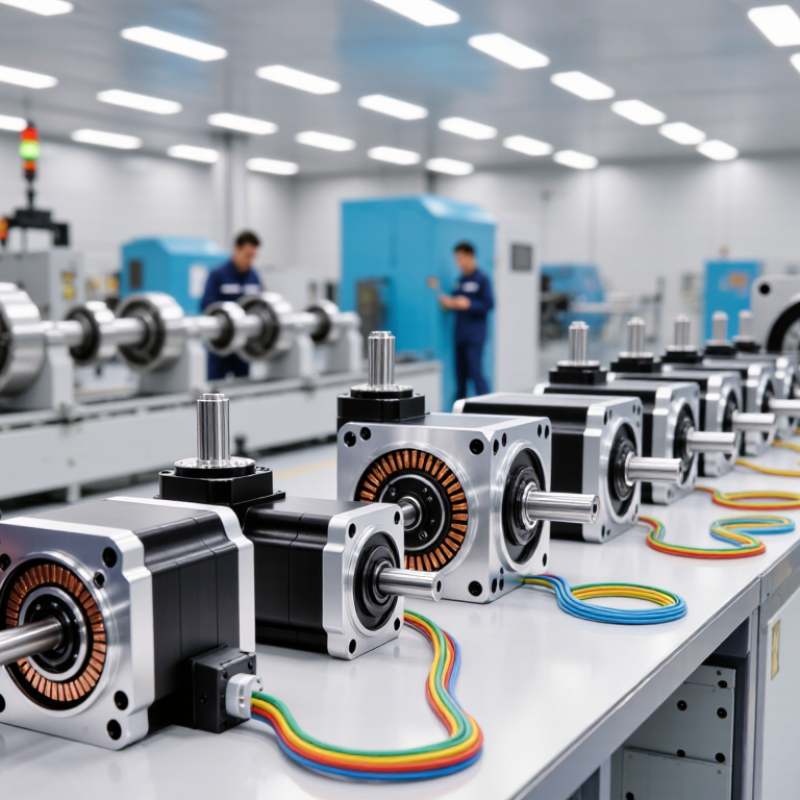
China Top Hybrid Stepper Motors Manufacturers?

What Are Hybrid Stepper Motors and How Do They Work?

Hybrid stepper motors combine permanent magnets with toothed iron structures. This design delivers accurate positioning without requiring a feedback sensor. The rotor has alternating magnetic teeth and a permanent magnet core. The stator contains several energized coil phases. These parts interact to create controlled magnetic movement.

Small steps matter.

When a driver energizes one coil phase, the rotor moves toward its matching magnetic field. Changing the phase sequence rotates the rotor in measured increments. A typical motor may use 1.8-degree full steps. Microstepping divides each step into smaller electrical positions. It can reduce vibration and audible noise. However, microsteps do not always provide equal mechanical torque. In bench testing, friction, load, and driver quality can change the result.

Hybrid stepper motors suit printers, packaging equipment, inspection tables, and compact robotic systems. They offer strong holding torque at low speeds. Their performance usually declines as speed increases. Heat also matters, especially inside a small enclosure. A motor rated for high current may need careful thermal testing. I once treated rated torque as usable torque. That assumption was wrong. When evaluating manufacturers in China, request torque-speed curves, winding data, insulation ratings, and sample test reports. Confirm shaft accuracy and bearing quality through actual testing. A reliable selection process compares measured performance, not catalog numbers alone.

How Is China’s Hybrid Stepper Motor Industry Structured?

China’s hybrid stepper motor industry is not one uniform market. It is a layered manufacturing network. Large factories often serve automation integrators and export distributors. Mid-sized producers focus on standard NEMA frames, custom shafts, and small-batch orders. Smaller workshops may compete through flexible machining and lower prices. Their capabilities vary widely. Some share suppliers for laminations, magnets, bearings, and connectors. This creates efficiency, but it can blur responsibility for quality.

The structure usually begins with component suppliers, followed by motor assemblers, testing teams, and system integrators. A buyer may specify holding torque, step angle, winding resistance, insulation class, and duty cycle. Reliable manufacturers verify these details through load tests, temperature checks, and dimensional inspections. Traceable records matter when a motor operates inside a printer, medical device, or factory axis. Certificates alone are not enough. Technically attractive samples can still fail after repeated heating. That risk deserves attention.

Competition is moving beyond low pricing. Manufacturers are investing in automated winding, balancing equipment, quieter rotor designs, and digital test benches. Export-oriented firms also adapt drawings, packaging, and technical documents for different markets. Yet the industry remains uneven. Production capacity may look impressive, while engineering support is thin. A careful evaluation should compare sample consistency, response time, replacement policies, and process control. Ask for test data from the actual model, not a similar catalog item. This takes longer. It is usually more revealing.

Which Chinese Manufacturers Lead the Hybrid Stepper Motor Market?

China’s hybrid stepper motor market is led by manufacturers with stable production, precise machining, and strong application support. The most capable suppliers usually operate automated winding lines and inspect rotor balance, bearing noise, and phase resistance. Their catalogs cover NEMA frames, custom shafts, brake options, and high-torque designs for robotics, packaging, medical equipment, and CNC systems.

Factory experience matters. During supplier evaluations, engineers should request winding data, torque-speed curves, insulation tests, and sample reports from recent batches. Reliable manufacturers explain how they control air gaps and tooth alignment. They also provide traceable quality records, clear tolerances, and practical installation guidance. Certifications such as ISO 9001 and relevant product compliance can support credibility, but paperwork alone proves little.

Some leading Chinese producers stand out through flexible customization and responsive engineering teams. They can adjust lead length, connector type, shaft geometry, or winding resistance without rebuilding an entire product line. That flexibility saves time during prototype testing. Still, performance claims deserve careful checking. A motor may deliver impressive holding torque yet lose accuracy at higher speeds. Samples can also hide production variation. Regular batch testing, thermal checks, and real-load trials remain necessary. No supplier is perfect. The better manufacturers admit limitations, document corrective actions, and improve after field feedback.

China Top Hybrid Stepper Motors Manufacturers? - Which Chinese Manufacturers Lead the Hybrid Stepper Motor Market?
Evaluation Dimension Commonly Available Specification or Market Range Technical Significance What to Verify When Comparing Suppliers
Motor Architecture Two-phase hybrid stepper motors are the dominant configuration; three-phase versions are also available for selected motion-control applications. Hybrid construction combines permanent-magnet and variable-reluctance principles to provide high positioning resolution and useful low-speed torque. Confirm phase configuration, winding design, rotor construction, and compatibility with the intended driver.
Standard Step Angle 1.8° per full step, equivalent to 200 full steps per revolution; 0.9° versions provide 400 full steps per revolution. A smaller step angle can improve basic positioning resolution and reduce visible motion at low speed. Check whether the quoted angle is the full-step angle and review the allowable step-angle accuracy.
Frame Sizes Common NEMA frame formats include NEMA 8, 11, 14, 17, 23, 24, 34, and 42. Metric mounting dimensions are also widely supplied. Frame size affects mounting compatibility, motor volume, thermal capacity, and available torque. Verify mounting-hole spacing, body length, shaft dimensions, connector position, and rear-shaft requirements.
Holding Torque Typical catalog ranges extend from below 0.02 N·m for compact motors to above 10 N·m for large industrial frame sizes. Holding torque indicates the maximum static load the energized motor can resist without rotating. Compare torque at the same current, winding connection, temperature, and test method rather than comparing headline values alone.
Rated Phase Current Approximately 0.3–8 A per phase across common small, medium, and large hybrid stepper motor families. Current determines winding heating, driver sizing, available torque, and power consumption. Request phase resistance, inductance, rated current, insulation class, and the recommended driver current setting.
Operating Voltage Winding ratings are commonly specified from approximately 2 V to 48 V; the motor is normally operated through a current-regulated driver. The motor nameplate voltage is not the same as the driver supply voltage. Higher driver voltage can improve high-speed performance when current is controlled correctly. Match the motor winding data with the driver’s supply-voltage range and current-control method.
Microstepping Modern stepper drivers commonly support 1/2, 1/4, 1/8, 1/16, 1/32, and higher microstep settings. Microstepping reduces vibration and audible resonance and provides smoother motion, although it does not create proportional absolute positioning accuracy. Check low-speed smoothness, torque retention at the selected microstep setting, and driver compatibility.
Position Feedback Open-loop motors are standard; encoder-equipped and closed-loop stepper systems are available for applications requiring stall detection or position correction. Feedback can reduce lost-step risk and improve system reliability under changing loads. Verify encoder resolution, output type, supply voltage, feedback protocol, and alarm functionality.
Gearbox Options Planetary, spur, and harmonic-style gear reductions are commonly offered, with ratios frequently ranging from about 3:1 to 100:1 depending on the design. Gear reduction increases output torque and resolution while reducing output speed and adding mechanical backlash or efficiency losses. Compare rated output torque, permissible radial load, backlash, efficiency, and service life at the actual duty cycle.
Environmental Protection Basic enclosed motors are common; protected variants may be supplied with seals and an IP rating such as IP54 or IP65 when specified. Ingress protection is important in environments containing dust, coolant, moisture, or washdown exposure. Confirm the tested IP level for the complete motor assembly, including connectors, cable exits, and shaft seals.
Insulation and Thermal Class Industrial motor designs commonly use insulation systems rated at Class B, Class F, or Class H, corresponding to maximum insulation temperatures of 130°C, 155°C, and 180°C respectively. Thermal class indicates the insulation system’s temperature capability; it does not mean the motor can safely operate continuously at that temperature. Review allowable winding temperature rise, ambient-temperature assumptions, duty cycle, and derating curves.
Manufacturing Quality Controls Important production controls include automated winding, rotor balancing, dimensional inspection, insulation testing, no-load testing, and torque-speed verification. Consistent winding and assembly quality directly affect torque repeatability, vibration, noise, and service life. Request inspection records, process-control details, sample test reports, and traceability for production batches.
Compliance Documentation Commonly requested documentation includes datasheets, dimensional drawings, performance curves, RoHS declarations, and applicable CE-related technical documentation. Documentation supports system integration, regulatory review, and repeatable purchasing specifications. Check that documents apply to the exact model, winding, connector, and customized configuration being purchased.
Typical Applications 3D printers, CNC equipment, packaging machinery, textile equipment, laboratory instruments, robotics, medical mechanisms, and automated positioning systems. Different applications prioritize different combinations of torque, speed, noise, precision, environmental resistance, and duty-cycle capability. Evaluate the complete load profile, acceleration requirements, resonance range, operating temperature, and expected service life.
Supplier Selection Priority Best overall value depends on verified performance, customization capability, quality consistency, documentation, and after-sales support. The lowest unit price does not necessarily produce the lowest total cost when integration, failure risk, and replacement requirements are considered. Use matched test conditions and compare samples, performance curves, quality systems, production capacity, and delivery reliability before approving a supplier.

What Standards Define Reliable Hybrid Stepper Motor Manufacturers?

Reliable hybrid stepper motor manufacturers are defined by repeatable engineering, not attractive catalogs. They should operate a documented quality system, such as ISO 9001, with traceable production records. Each motor needs consistent phase resistance, inductance, holding torque, and insulation performance. These values should be checked across multiple batches.

Practical testing matters more than a certificate alone. A dependable manufacturer tests motors under realistic loads, temperatures, speeds, and acceleration profiles. Test reports should show temperature rise, vibration, noise, and the risk of missed steps. Relevant IEC requirements may support electrical and safety evaluation, while RoHS and REACH documentation helps verify material compliance. Regional certifications must match the final application.

Manufacturing details reveal deeper competence. Inspectors should review winding tension, rotor concentricity, bearing fit, connector strength, and magnet protection. Sample motors should survive repeated starts and stops without abnormal heating. No test plan is perfect. Even experienced buyers can overvalue a clean certificate file and overlook unstable torque at higher speeds. Ask for raw test data, failure records, corrective actions, and sample approval procedures. A reliable supplier will explain limitations clearly, including tolerances and operating conditions. That honesty is useful. It also makes future design decisions less dependent on optimistic specifications.

How Should Buyers Compare Chinese Hybrid Stepper Motor Suppliers?

When comparing Chinese hybrid stepper motor suppliers, buyers should look beyond catalog prices. A reliable comparison starts with the actual application. Check rated torque, phase current, step angle, holding torque, and temperature rise under load. A motor claiming high torque may lose performance at higher speeds.

Ask each supplier for a complete torque-speed curve. Request sample motors with the same shaft size, winding, and connector used in production. During testing, listen for vibration and inspect missed steps after continuous operation. Small details matter, such as bearing noise, cable flexibility, and screw alignment. They affect assembly time later.

Supplier evaluation also requires evidence. Review inspection records, incoming material controls, and final test procedures. Ask how rotor balance, insulation resistance, and coil resistance are checked. Production traceability should connect each batch with test data. Communication quality is another practical signal. Can the engineering team explain a custom winding clearly? Can they respond with measured results instead of promises?

A polished catalog can still hide weak documentation. I once treated a low quotation as a saving, but inconsistent samples created extra testing and delayed delivery. That mistake changed my comparison method. Compare total operating risk, not only unit cost. Confirm sample lead time, production capacity, packaging, warranty terms, and response procedures before placing a larger order. Factory photographs help, but an independent inspection is more convincing.

China Top Hybrid Stepper Motors Manufacturers? How Should Buyers Compare Chinese Hybrid Stepper Motor Suppliers?

The chart shows typical catalog holding-torque ranges for commonly used hybrid stepper motor frame sizes. Buyers should compare suppliers by verifying torque at the required speed, step angle, rated current, insulation class, bearing quality, certification, customization capability, and documented test results rather than relying on supplier rankings alone.

FAQS

What is a hybrid stepper motor?

It combines permanent magnets with toothed iron structures. This design supports accurate positioning without a feedback sensor.

How does a hybrid stepper motor move?

Energized coil phases create changing magnetic fields. The rotor follows these fields in controlled angular steps. Small steps matter.

What is a typical full-step angle?

Many motors use 1.8-degree full steps. Microstepping divides each step into smaller electrical positions.

Does microstepping always improve accuracy?

Not completely. It can reduce vibration and noise, but microsteps may produce uneven mechanical torque.

Where are hybrid stepper motors commonly used?

They suit printers, packaging equipment, inspection tables, and compact robotic systems. They perform well at low speeds.

What happens when motor speed increases?

Torque usually declines as speed rises. A motor with strong holding torque may perform poorly during rapid movement.

How should engineers evaluate a Chinese motor supplier?

Request torque-speed curves, winding data, insulation ratings, and recent sample reports. Compare measured results, not catalog numbers alone.

What production details deserve close inspection?

Check rotor balance, bearing noise, phase resistance, air gaps, and tooth alignment. Shaft accuracy also needs practical testing.

Can manufacturers customize hybrid stepper motors?

Many can adjust lead length, connector type, shaft geometry, or winding resistance. Custom work may simplify prototype testing.

How can buyers reduce testing mistakes?

Test samples under real loads and measure heat inside the intended enclosure. I once treated rated torque as usable torque. That was wrong.

Conclusion

Hybrid Stepper Motors combine the positioning accuracy of stepper technology with the improved torque and smoother operation provided by a permanent-magnet rotor and toothed structure. This article explains how these motors convert electrical pulses into controlled angular movement, making them suitable for automation equipment, CNC systems, robotics, medical devices, and other precision applications. It also examines how China’s industry is organized, including specialized motor producers, component suppliers, integrators, and export-oriented manufacturers serving different application segments.

The discussion highlights the qualities that define reliable Chinese manufacturers, such as consistent materials, precise machining, stable production processes, effective quality control, accurate performance data, and compliance with relevant safety and electromagnetic standards. Buyers are also guided to compare suppliers by reviewing torque and speed specifications, step angle, current ratings, temperature performance, customization capability, delivery reliability, technical support, warranty terms, and total cost. A structured evaluation can help purchasers select a supplier that offers dependable performance, practical communication, and long-term value.

Ethan

Ethan

Ethan is a professional marketing specialist and trusted content contributor with a deep understanding of the company’s products, services, and customer needs. With a strong combination of market insight, product knowledge, and clear communication skills, he helps readers make informed decisions......