0%

As compact machines become more capable, engineers need motors that fit tightly inside demanding systems. In 2026, Frameless BLDC Motors are attracting attention in robotics, medical equipment, aerospace mechanisms, and precision automation. These motors separate the rotor and stator, giving designers greater freedom around shafts, joints, and custom housings. Space matters.

The best option is not always the motor with the highest torque rating. Practical selection requires careful comparison of torque density, speed range, winding design, thermal limits, feedback compatibility, and expected service life. A motor that performs well on a test bench may struggle inside a sealed joint with limited airflow. Heat changes everything. Reliable evaluation should combine manufacturer specifications, independent engineering judgment, and realistic operating conditions. We will examine how leading 2026 models handle continuous torque, peak loads, vibration, efficiency, and integration challenges. Small details often decide the result, including mounting tolerances, cable routing, rotor balance, and encoder alignment.

No ranking is perfect. Published data may use different test methods, and some performance claims need closer verification. That uncertainty deserves attention, not concealment. This guide therefore focuses on measurable capabilities and practical design experience rather than marketing language alone. It also considers where each motor may disappoint. A lightweight motor may sacrifice thermal capacity, while a powerful design may create unwanted inertia or installation complexity. By weighing those trade-offs, readers can identify the most suitable Frameless BLDC Motors for their specific application, budget, and reliability expectations in 2026.
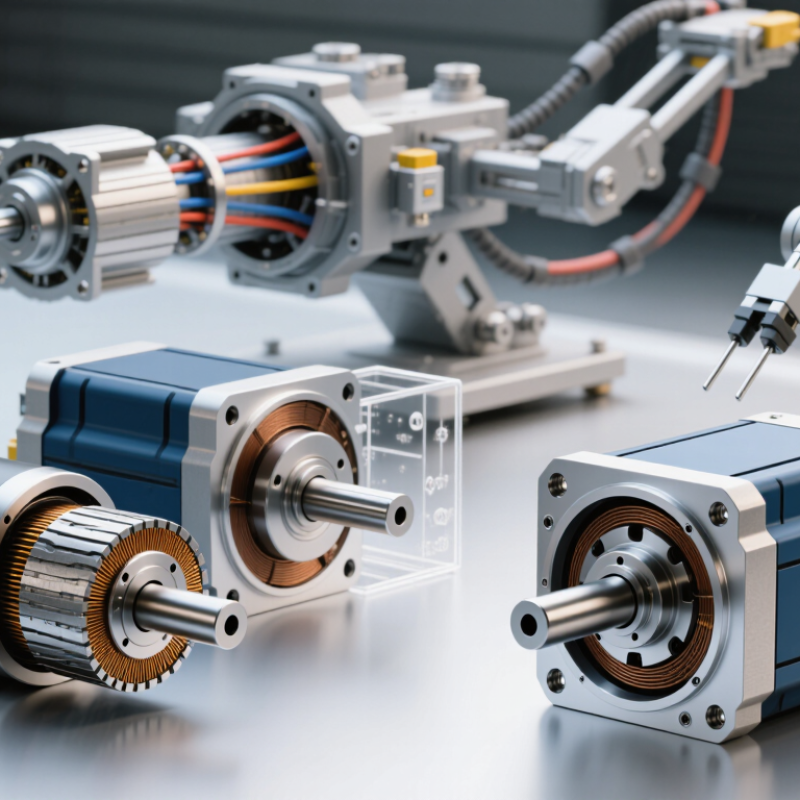
What Are the 2026 Best Frameless BLDC Motors?

Frameless BLDC Motors: Definition, Structure, and Operating Principles

Frameless BLDC motors are motor sets without a traditional housing, shaft, or bearing system. They usually contain a separate stator and rotor. The stator carries copper windings, while the rotor holds permanent magnets. Engineers install these parts directly inside robotic joints, gimbals, medical instruments, or compact automation equipment. This design saves space, but it transfers alignment responsibility to the machine builder.

The operating principle is straightforward. An electronic controller energizes the stator windings in a timed sequence. These windings create a rotating magnetic field. The rotor magnets follow that field and produce continuous torque. Hall sensors, encoders, or sensorless control can provide rotor-position information. Accurate feedback matters during startup, low-speed movement, and rapid load changes. Without it, the motor may vibrate, stall, or produce uneven torque.

In practical assembly, the air gap needs careful control. Even a small offset can increase noise and reduce efficiency. Heat also travels through the stator into the surrounding structure, so the mounting material becomes part of the cooling design. This is easy to overlook. Frameless BLDC motors can deliver excellent torque density, but they are not simple drop-in products. Designers must match winding voltage, current limits, magnets, bearings, and controller settings. Testing under real temperature and load conditions remains essential. Our understanding may still be incomplete when unusual vibration appears, so measured data should guide every adjustment.

Key Performance Criteria for Selecting Frameless BLDC Motors in 2026

What Are the 2026 Best Frameless BLDC Motors?

The best frameless BLDC motor is not simply the smallest or fastest option. Selection depends on measurable performance under the real duty cycle. Start with continuous torque, peak torque, speed range, and torque density. A motor producing high peak torque may still overheat during repeated movements. Thermal resistance, winding temperature limits, and cooling access deserve equal attention. Poor heat removal can quietly reduce service life.

Feedback compatibility also matters. Check encoder alignment, commutation accuracy, cogging torque, and control-loop response. Low cogging supports smoother motion, especially in surgical, optical, and robotic mechanisms. Match the motor’s voltage and current requirements with the drive electronics. Mechanical details are easy to miss. Confirm rotor inertia, shaft tolerance, air-gap requirements, and mounting stiffness before approval.

Tips: Request test data at your actual speed and load. Do not rely only on headline efficiency. Compare continuous ratings, not just short peak values. Leave thermal margin for warm rooms, sealed housings, and unexpected friction. A prototype should run through the complete motion profile. It may reveal vibration, noise, or temperature problems that a datasheet cannot show. No choice is perfect. The most reliable design often accepts slightly lower peak output for better control, cooling, and long-term consistency.

Top Frameless BLDC Motor Types and Their Best-Fit Applications

Frameless BLDC motors are gaining attention as machines become smaller, lighter, and more precise.

The International Federation of Robotics reported 541,302 industrial robot installations in 2023. That growth increases demand for compact actuators with high torque density.

Inrunner frameless motors suit robotic joints, gimbals, and compact pumps. Their rotating shaft stays inside the stator, supporting controlled inertia and efficient heat paths. Outrunner designs place magnets around the windings. They deliver strong torque in short packages, making them practical for collaborative arms and direct-drive joints.

Iron-core torque kits offer higher peak torque.

Slotless versions usually provide smoother motion and lower cogging.

This matters in surgical instruments, camera systems, and laboratory automation.

The application decides the best type.

It is not only about torque. Continuous thermal performance often matters more than impressive peak figures.

The International Energy Agency has estimated that electric motor systems consume about 46% of global electricity. Even small efficiency gains can therefore influence operating costs.

MarketsandMarkets projected the BLDC motor market to grow from about 21.1 billion dollars in 2023 to 33.5 billion dollars by 2028. Those figures are useful, but forecasts can miss supply-chain shifts.

Engineers should verify winding temperature, encoder fit, bearing load, and controller compatibility before selecting a frameless kit. Small packaging errors can become expensive redesigns.

Comparing Leading 2026 Frameless BLDC Motor Designs

What Are the 2026 Best Frameless BLDC Motors?

Comparing Leading 2026 Frameless BLDC Motor Designs

The best 2026 frameless BLDC motor is not simply the smallest or fastest. Designers now compare torque density, thermal transfer, cogging torque, rotor inertia, and encoder compatibility. MarketsandMarkets projects the global brushless DC motor market to grow from about USD 21 billion in 2023 to USD 33 billion by 2028. This growth supports stronger demand for compact, integrated drive systems. However, frameless motor performance still depends heavily on mechanical integration.

Leading designs use high slot-fill windings, thin laminations, and optimized magnetic air gaps. These features can improve continuous torque inside robotic joints, gimbals, and medical instruments. Grand View Research reports continued expansion in the global BLDC motor sector, driven by automation and electrification. Yet, published market data rarely separates frameless units from complete motor assemblies. That limitation matters. A laboratory torque figure may not survive poor housing design or restricted airflow.

Tips: Compare continuous torque, not only peak torque. Check the thermal resistance from winding to housing. A motor with lower peak power may deliver more reliable output. Also inspect rotor balancing, winding insulation, sensor alignment, and allowable air-gap tolerance. In my experience, a slightly larger stator can reduce heat buildup noticeably. Still, that observation is not universal. Prototype testing remains essential, especially when the motor operates near its rated temperature. Use measured torque-speed curves instead of catalogue claims alone.

Installation, Control, and Maintenance Considerations for Frameless BLDC Motors

The best frameless BLDC motors in 2026 should be judged by installation flexibility, control accuracy, and service access. Their rotor and stator must align precisely inside the machine housing. Installation begins with a clean, rigid mounting surface. Measure the air gap at several positions, not only once. Keep wiring away from sharp edges and high-temperature surfaces. A thin spacer can change alignment.

Small errors matter.

During commissioning, verify phase order, sensor position, and current limits before applying full load. Use a controller that supports smooth startup and closed-loop speed control. Hall sensors can simplify low-speed operation, while sensorless control may reduce wiring. Each option has trade-offs. Avoid tuning by sound alone. Record speed, current, vibration, and casing temperature under repeatable loads.

Maintenance needs discipline, even when the motor has no external frame. Inspect connectors for looseness and contamination. Listen for new bearing noise. Track temperature trends monthly. Do not assume a sealed assembly needs no attention. I have found that a clean installation can still fail when cooling paths become blocked. One practical mistake is routing cables too tightly around the motor. This can transfer vibration into the connector. The lesson is useful, but not universal; housing design and duty cycle still require engineering review. Use the motor maker’s electrical limits, applicable safety standards, and measured operating data before finalizing the design.

What Are the 2026 Best Frameless BLDC Motors? - Installation, Control, and Maintenance Considerations for Frameless BLDC Motors

Motor Configuration Typical Continuous Torque Typical Peak Torque Typical Speed Range Common Supply Voltage Recommended Feedback Best-Fit Applications Installation Considerations Control Requirements Maintenance Priorities
Compact Frameless BLDC Kit 0.05–0.50 N·m 0.15–1.20 N·m Up to 10,000 rpm 24–48 VDC Hall sensors or magnetic encoder Compact actuators, optical equipment, laboratory instruments, small gimbals Maintain concentricity between rotor and stator; use a rigid, low-runout housing Six-step commutation is possible; sinusoidal or field-oriented control improves acoustic performance Check bearing condition, cable strain relief, connector security, and rotor clearance
Medium-Torque Frameless BLDC Kit 0.50–5 N·m 1.5–12 N·m Up to 6,000 rpm 24–80 VDC Incremental encoder, magnetic encoder, or resolver Robotic joints, collaborative mechanisms, pan-tilt systems, precision automation Use a balanced rotor, accurate bearing seats, and a thermal path from the stator into the machine frame Closed-loop field-oriented control is preferred for smooth torque and low-speed positioning Monitor temperature, vibration, encoder alignment, and fastening torque during scheduled inspections
High-Torque Frameless BLDC Kit 5–30 N·m 15–75 N·m Up to 3,000 rpm 48–160 VDC High-resolution encoder or resolver Industrial robot joints, rotary tables, servo actuators, machine tools Provide a stiff mounting structure, defined air gap, adequate rotor retention, and forced or frame-based heat dissipation Use current, velocity, and position loops with torque limiting and over-temperature protection Inspect bearings, insulation, mounting bolts, thermal interfaces, and feedback repeatability
Large-Diameter Torque Motor 30–300 N·m 90–750 N·m Up to 1,500 rpm 80–320 VDC Resolver or high-resolution absolute encoder Direct-drive rotary axes, indexing systems, heavy robotic joints, precision rotary stages Verify structural deflection, shaft and bearing load limits, rotor balance, air-gap uniformity, and emergency-stop behavior Requires a high-current servo drive with regenerative braking management and accurate commutation calibration Trend temperature and vibration; inspect bearings, cooling channels, resolver wiring, and mechanical preload
Low-Cogging Precision Frameless BLDC Motor 0.10–8 N·m 0.30–20 N·m Up to 4,000 rpm 24–120 VDC High-resolution encoder or resolver Precision stages, inspection systems, semiconductor equipment, medical positioning mechanisms Use tight mechanical tolerances, clean assembly practices, low-friction bearings, and careful encoder alignment Sinusoidal field-oriented control with commutation compensation reduces torque ripple and positional error Keep the air gap clean, verify calibration, inspect cable shielding, and avoid excessive bearing preload
High-Speed Frameless BLDC Motor 0.20–6 N·m 0.60–15 N·m 6,000–30,000 rpm 48–160 VDC Encoder, resolver, or sensorless observer above minimum operating speed Spindles, pumps, blowers, compressors, high-speed laboratory equipment Dynamic rotor balancing, bearing selection, overspeed protection, and adequate cooling are essential Use a high-bandwidth drive with accurate phase-current sensing, speed feedback, and controlled acceleration Monitor bearing temperature, vibration spectrum, overspeed events, insulation condition, and lubrication where applicable
Sealed or Protected Frameless BLDC Motor 0.20–20 N·m 0.60–50 N·m Up to 4,000 rpm 24–120 VDC Hall sensors, encoder, or resolver with protected wiring Outdoor mechanisms, mobile equipment, dust-prone automation, compact pumps and fans Protect the stator windings and connections from moisture; confirm the actual enclosure and sealing design at system level Configure current limits, thermal derating, fault logging, and safe restart behavior Inspect seals, corrosion, cable glands, condensation, connector integrity, and thermal performance

Engineering values are representative selection ranges for frameless BLDC motor assemblies. Actual torque, speed, voltage, thermal capacity, protection level, and service life depend on the winding design, drive, bearings, housing, cooling method, duty cycle, and operating environment.

FAQS

What is a frameless BLDC motor?

It is a motor set without a traditional housing, shaft, or bearing system. The stator contains copper windings. The rotor contains permanent magnets. Machine builders install both parts inside robotic joints or compact equipment.

How does a frameless BLDC motor produce motion?

An electronic controller energizes the stator windings in sequence. This creates a rotating magnetic field. The rotor magnets follow the field and generate torque. Timing matters.

Why is rotor-position feedback important?

Hall sensors, encoders, or sensorless control can identify rotor position. Accurate feedback supports startup, low-speed movement, and quick load changes. Poor feedback may cause vibration, stalling, or uneven torque.

What must engineers control during installation?

Engineers must control the air gap, alignment, mounting stiffness, and bearing arrangement. A small offset can increase noise and reduce efficiency. The motor is not a simple drop-in component. That detail is easy to miss.

How does cooling affect frameless BLDC motor performance?

Heat travels from the stator into the surrounding machine structure. Therefore, the mounting material becomes part of the cooling system. Designers should check winding temperature and thermal resistance. Warm rooms and sealed housings need extra thermal margin.

How should users select a frameless BLDC motor?

Compare continuous torque, peak torque, speed range, torque density, and thermal limits. Check voltage, current, rotor inertia, encoder fit, and air-gap requirements. Use real operating speed and load data. Peak torque alone can mislead.

Which frameless motor type suits different applications?

Inrunner designs suit robotic joints, gimbals, and compact pumps. Outrunner designs provide strong torque in short packages. Iron-core versions support higher peak torque. Slotless versions usually offer smoother motion and lower cogging.

What testing should occur before final approval?

Run a prototype through the complete motion profile. Measure temperature, vibration, noise, torque, and efficiency. Test repeated movements, not only short demonstrations. A datasheet cannot reveal every problem.

Are the highest-rated motors always the best choice?

No. A smaller peak rating may provide better cooling and control. Continuous performance often matters more than short bursts. Slightly lower output can improve long-term consistency. No choice is perfect.

Conclusion

Frameless BLDC Motors are compact, high-performance motor assemblies designed to integrate directly into a machine’s mechanical structure. Unlike conventional motors, they typically separate the rotor and stator, allowing engineers to customize the shaft, bearings, housing, and feedback system around the application. Their operation relies on electronically commutated permanent magnets, providing efficient, quiet, and precise motion without mechanical brushes.

Selecting the best Frameless BLDC Motors in 2026 requires evaluating torque density, continuous and peak output, speed range, thermal performance, efficiency, control compatibility, size, and expected service life. Different designs suit different applications: low-inertia motors support rapid positioning, high-torque versions handle demanding joints, and compact models fit medical, robotic, aerospace, and automation equipment. Proper installation requires accurate rotor-stator alignment, reliable cooling, suitable motor controllers, and carefully configured feedback devices. Regular inspection of connections, bearings, temperature, and control parameters can further improve stability, precision, and long-term performance.

Ethan

Ethan

Ethan is a professional marketing specialist and trusted content contributor with a deep understanding of the company’s products, services, and customer needs. With a strong combination of market insight, product knowledge, and clear communication skills, he helps readers make informed decisions......