0%

Linear Actuators are no longer niche components reserved for factory machinery. They now move medical beds, solar trackers, packaging lines, laboratory stages, and adjustable furniture. For global buyers, selection is rarely about stroke length alone. Load direction, duty cycle, speed, noise, ingress protection, feedback, and service access can change the result dramatically.

Market research reflects this expanding role. Grand View Research reports continued growth in the global linear actuator market, driven by industrial automation, healthcare equipment, and energy applications. MarketsandMarkets also identifies electric actuation, smart control, and compact designs as important development trends. However, forecasts vary between reports. That difference deserves attention, not blind confidence.

Professor Toshio Fukuda, a respected robotics and mechatronics researcher, has emphasized the principle that “mechatronics is the synergistic integration of mechanical engineering with electronics and intelligent computer control.” His view remains useful here. A linear actuator is not merely a motor with a screw. It is part of a controlled motion system.

This guide examines ten common types, including electric screw, belt-driven, rod-style, tubular, hydraulic, pneumatic, piezoelectric, voice-coil, rack-and-pinion, and telescopic actuators. Each type has practical strengths. Each also has compromises.

A telescopic actuator may fit beneath a lifting column, yet require careful side-load control. A pneumatic cylinder can move quickly, but compressed-air losses may increase operating costs. Specifications can look impressive.

Real installations are less forgiving. Purchase teams should verify supplier data, test samples under realistic loads, and review maintenance support across regions. No single ranking fits every buyer.
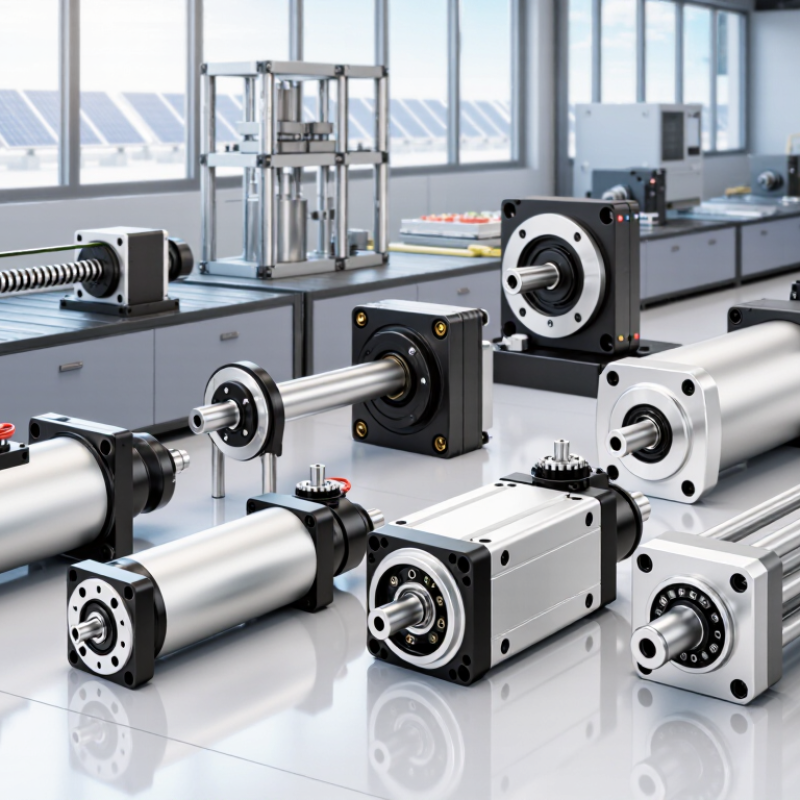
Top 10 Types of Linear Actuators for Global Buyers

Linear Actuator Basics and Selection Criteria for Global Buyers

Top 10 Types of Linear Actuators for Global Buyers

A linear actuator converts energy into straight-line motion. Common options include electric screw, belt-driven, pneumatic, hydraulic, and voice-coil designs. Each suits different loads, speeds, and operating conditions. Electric models are often practical for clean, controlled positioning. Hydraulic units can handle heavier loads, but require fluid management. There is no universal best choice.

Before comparing types, define the real task. Record the moving load, required stroke, cycle rate, mounting space, and available power. A 300-millimeter stroke at low speed calls for different hardware than rapid, repeated movement. Check duty cycle, side-load limits, ingress protection, and feedback needs. Confirm that the actuator’s force rating applies throughout its stroke, not just at one point. Datasheets can be easy to misread; I have seen buyers focus on peak force and overlook continuous operation.

Tips: Leave clearance for cables and moving joints. Ask for test data under conditions close to your application. Compare noise, maintenance access, and replacement lead times, too. A small prototype can reveal vibration or alignment problems that a specification sheet misses. Recheck your assumptions after the first test.

The Ten Main Types of Linear Actuators and Their Operating Principles

Linear actuators turn energy into straight-line motion, but they do it in different ways. A lead-screw actuator uses a rotating screw and traveling nut; thread friction helps hold a load, though efficiency can be modest. A ball-screw unit replaces sliding contact with rolling balls, reducing friction for precise, repeated positioning. Roller-screw designs use threaded rollers to carry heavy loads in compact spaces. Belt-driven actuators pull a carriage along a rail, offering fast travel over longer distances. Rack-and-pinion systems mesh a rotating gear with a straight toothed bar.

Some designs rely on fluid or air. Hydraulic actuators push a piston with pressurized oil, producing high force for demanding machinery. Pneumatic actuators use compressed air to move a piston; they are quick, but air compressibility can make positioning less exact. Voice-coil actuators move a coil through a magnetic field, giving smooth, short-stroke motion. Quiet and responsive.

Piezoelectric actuators expand slightly when voltage is applied, enabling very fine movement over tiny distances. Shape-memory alloy actuators contract when heated and return as they cool, but response depends on temperature and cycle time. In practice, choosing among these ten types means weighing force, speed, stroke, accuracy, and environment. A catalog rating rarely tells the whole story; mounting stiffness and duty cycle matter, too. I have seen neat calculations miss a simple issue: dust can shorten service life.

Performance, Materials, and Control Features Across Actuator Types

Top 10 Types of Linear Actuators for Global Buyers: Performance, Materials, and Control Features Across Actuator Types

Global buyers compare more than force and stroke. Electric rod, track, screw, belt, telescopic, voice-coil, piezoelectric, pneumatic, hydraulic, and rotary-to-linear actuators serve different duty cycles. Electric screw models deliver accurate positioning for packaging and laboratory equipment. Belt-driven units move faster, but usually sacrifice holding force. Hydraulic types provide exceptional thrust in construction machinery, while pneumatic versions remain lightweight and responsive. They need compressed air, however.

Material selection changes service life.

Aluminum housings reduce mass, while stainless steel improves corrosion resistance near washdown areas. Hardened steel screws tolerate repeated loads, but demand lubrication and alignment. In field commissioning, contamination often causes more failures than rated force. This is easy to underestimate. Sealing, temperature, vibration, and side loading deserve equal attention.

Control capability separates basic and advanced designs.

Limit switches suit simple end-position movement. Encoder feedback supports repeatable positioning, while servo control manages speed, torque, and synchronization. A 2024 International Federation of Robotics report recorded 541,302 industrial robot installations worldwide in 2023, increasing demand for coordinated linear motion. Grand View Research forecasts continued actuator-market growth through 2030, driven by factory automation and medical equipment. These figures support automation investment, but they do not guarantee payback. Buyers should test real loads, calculate duty cycles, and verify local voltage and safety requirements before selection.

Application Matching for Industrial, Medical, Automotive, and Home Systems

Top 10 Types of Linear Actuators for Global Buyers

Application Matching for Industrial, Medical, Automotive, and Home Systems

Industrial buyers can choose electric screw, rod, track, belt, chain, hydraulic, pneumatic, voice-coil, piezoelectric, or telescopic actuators. Each type solves a different motion problem. Electric screw units suit lifting tables and machine guards. Belt and track designs provide fast, long travel. Hydraulic models deliver high force, but require pumps, hoses, and careful maintenance. Pneumatic options move quickly, although compressed-air efficiency deserves closer review.

Application conditions should guide the purchase. IFR’s World Robotics 2024 report recorded 541,302 industrial robot installations in 2023. That growth increases demand for repeatable positioning and sealed electric systems. In medical equipment, low noise, clean surfaces, and controlled speed matter more than peak force. The World Health Organization estimates that 1.3 billion people experience significant disability, supporting wider investment in accessible beds, lifts, and rehabilitation equipment. Automotive platforms need compact packaging and vibration resistance. The IEA reported over 14 million electric car sales in 2023, where actuators support seats, grilles, charging mechanisms, and thermal-control systems.

Tips: Match force, stroke, duty cycle, ingress protection, and feedback before comparing prices. A neat specification sheet can still mislead. Ask for measured noise and standby power. Home systems often need softer movement, not maximum speed. One overlooked detail is manual override during power loss. It should be tested, not assumed. Temperature, dust, and installation angle can also change real performance. Pilot testing remains wiser than trusting a catalogue alone.

Global Purchasing Factors: Standards, Suppliers, Costs, and Logistics

Top 10 Types of Linear Actuators for Global Buyers

Selecting a linear actuator starts with the application, not the catalog. Electric, hydraulic, pneumatic, screw, belt, and rodless designs serve different working conditions. Global buyers should check load, stroke length, speed, duty cycle, noise, and installation space. Standards matter too. Confirm electrical ratings, ingress protection, material declarations, and machine-safety documentation for the destination market. A supplier should provide test reports, dimensional drawings, tolerance data, and traceable quality records. Vague certificates create delays. I have seen projects pause because a connector or voltage rating was overlooked.

Supplier evaluation needs more than a low quotation. Compare production capacity, inspection methods, spare-part support, communication speed, and experience with export packaging. Request samples before approving a large order. Costs include tooling, testing, customs duties, insurance, inland transport, and possible replacement units. A cheaper actuator may become expensive after repeated failures. Logistics also depend on packaging strength, lead time, shipping route, and seasonal congestion. Confirm whether the actuator needs moisture protection or shock indicators. One detail can change the delivery result.

Tips: Build a comparison sheet with identical specifications. Ask for total landed cost, not only unit price. Keep one approved sample for future inspection. Recheck supplier documents before shipment. This step is often skipped. Also, leave a realistic time buffer; urgent freight is rarely economical, and my own estimates have sometimes been too optimistic.

Top 10 Types of Linear Actuators for Global Buyers

Indicative industrial purchasing cost by actuator type. Values represent typical USD per unit for standard configurations, excluding taxes, custom engineering, installation, and freight. Actual prices vary with force, stroke, speed, protection rating, certification, and order volume.

For international sourcing, buyers commonly verify ISO 15552 or ISO 6432 compatibility for pneumatic cylinders, ISO 4413 requirements for hydraulic systems, IEC 60529 ingress-protection ratings, and applicable electrical safety and EMC requirements. Pneumatic cylinders generally offer the lowest purchase cost, while hydraulic, servo-electric, and high-precision solutions usually require higher budgets and more detailed logistics planning.

FAQS

What does a linear actuator do?

It converts energy into straight-line motion. The design determines its force, speed, accuracy, and travel distance.

How do lead-screw and ball-screw actuators differ?

A lead screw moves a nut along rotating threads. Thread friction can help hold a load, but may reduce efficiency. A ball screw uses rolling balls for lower friction and precise, repeated positioning.

Which actuator types suit fast, long-distance movement?

Belt-driven actuators move a carriage along a rail and suit longer travel. Rack-and-pinion designs use a rotating gear and toothed bar.

When might hydraulic or pneumatic actuators be a good fit?

Hydraulic actuators use pressurized oil to produce high force. Pneumatic actuators use compressed air and move quickly, though exact positioning can be harder.

What should buyers compare before choosing an actuator?

Check force, stroke, speed, duty cycle, noise, mounting space, and operating environment. Dust matters. So do temperature and installation angle.

Which details matter in medical, automotive, and home applications?

Medical equipment often needs quiet operation and controlled speed. Automotive systems may require compact packaging and vibration resistance. Home systems can benefit from softer movement and a tested manual override.

What should buyers request from a supplier?

Ask for test reports, dimensional drawings, tolerance data, and traceable quality records. Request samples before approving a large order. A vague certificate can cause delays.

How can buyers estimate the real purchase cost?

Include tooling, testing, shipping, insurance, duties, and possible replacement units. Compare total landed cost, not just the unit price.

Why should an actuator be pilot-tested?

Catalog ratings may not show how mounting stiffness, dust, or duty cycle affect performance. Test noise and standby power, too. One small detail can change the result.

Conclusion

Linear Actuators convert different forms of energy into controlled straight-line motion, making them useful in systems that need precise positioning, pushing, pulling, or lifting. This overview introduces the basics buyers should consider, including force, stroke length, speed, duty cycle, power source, environment, and control requirements. It also surveys ten principal actuator types and explains how their operating principles, materials, performance, and control features affect reliability and suitability for different tasks.

Choosing the right actuator depends on the application as well as the product specifications. Industrial equipment may prioritize load capacity and durability, while medical, automotive, and home systems can require quiet operation, compact dimensions, or fine control. For global purchasing, buyers should also evaluate applicable standards, supplier capabilities, total cost, lead times, packaging, and shipping arrangements. Comparing these factors together helps organizations select a solution that meets practical needs and performs reliably throughout its intended service life.

Ethan

Ethan

Ethan is a professional marketing specialist and trusted content contributor with a deep understanding of the company’s products, services, and customer needs. With a strong combination of market insight, product knowledge, and clear communication skills, he helps readers make informed decisions......