Industrial OEM motion control is the engineering behind precise movement in packaging lines, CNC machines, robots, and automated production cells. A servo motor can move an axis in milliseconds, but dependable performance also depends on the drive, controller, feedback device, software, and machine design working together. Small mismatches can cause vibration, heat, downtime, or poor product quality.
This overview of the Top 10 Industrial OEM Motion Control Manufacturers Worldwide examines companies serving original equipment manufacturers across these applications. It considers product breadth, control capabilities, global support, integration options, and suitability for demanding operating environments. These factors matter on the factory floor: a machine builder may need coordinated motion across several axes, repeatable positioning, and reliable operation through long production shifts. Rankings can vary by region and application, so the list is a practical comparison, not a universal verdict.
Motion-control engineer Peter Nachtwey has shared extensive technical perspectives through his work in the field. The following sentence is an editorial paraphrase, not a verified verbatim quotation: “Choose motion hardware around the machine’s real control requirements, not a catalog headline.” That distinction is important. A high-speed specification alone does not prove that a system will fit a machine. Readers should also assess commissioning tools, communication protocols, safety features, lifecycle support, and the skills available to maintain the equipment. Details count. This guide offers a grounded starting point for comparing manufacturers and asking better questions before selecting a motion-control platform.
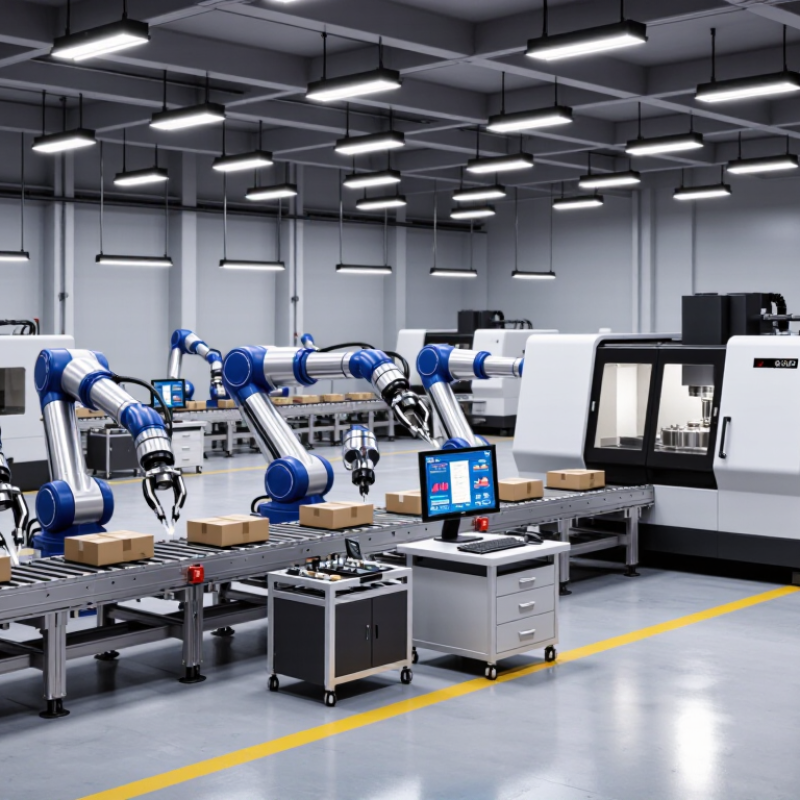
Industrial OEM motion control describes the systems built into machines that manufacturers design and sell under their own equipment lines. It links motors, drives, sensors, and control software to move parts with defined speed and precision. An encoder reports shaft position, while a drive adjusts motor output to follow commands. A controller coordinates these actions with sensors and machine safety functions.
Consider a packaging machine feeding cartons beneath a filling nozzle. Its axes must accelerate, stop, and align repeatedly without spilling product or creating jams. Motion control helps coordinate those movements and lets engineers tune timing for different carton sizes. Small errors matter. A few millimeters can disrupt a complete production run.
OEM teams choose components around payload, cycle rate, temperature, and available cabinet space. They also consider service access: a drive mounted behind dense wiring can slow troubleshooting. Test data, wiring diagrams, and clear fault messages help operators identify problems. Yet a design that works on a clean factory floor may behave differently after months of vibration or dust exposure. That gap deserves more attention. Engineers should validate real operating conditions, not just ideal simulations, and revisit settings when the machine’s load changes.
Industrial OEM motion control combines servo motors, drives, motion controllers, encoders, gearboxes, and linear actuators. These components coordinate speed, position, and torque across packaging lines, machine tools, and automated assembly cells. A controller may synchronize several axes within milliseconds, while encoder feedback corrects small position errors. Those corrections matter.
Product categories differ by task. Servo systems suit precise, changing movements; stepper systems often serve simpler positioning; variable-frequency drives regulate motor speed in pumps and conveyors. CNC and robotics controllers add coordinated multi-axis control. Selection also depends on load inertia, duty cycle, accuracy, network compatibility, and heat around the cabinet. A catalogue rarely reveals every integration problem.
The International Federation of Robotics’ World Robotics 2024 report recorded 541,302 industrial robot installations worldwide in 2023, with 4,281,585 units in operation. These figures describe robot deployment, not the entire motion-control market, but they show the scale of equipment requiring coordinated movement.
Tips: Match the drive to the motor and real load, not just peak power. Check encoder resolution, braking needs, and communication timing. Leave room for wiring and cooling; that detail is easy to underestimate.
Evaluating worldwide motion control manufacturers takes more than comparing catalog speeds or torque ratings. Check whether a supplier can match motors, drives, controllers, and feedback devices to your machine’s duty cycle. Ask for sizing assumptions, thermal limits, encoder resolution, and performance data under realistic loads. A polished data sheet is not field evidence. Request references from applications with similar payloads, cycle times, and operating temperatures.
Assess manufacturing consistency and technical support across the regions where your equipment will run. Confirm spare-parts availability, repair turnaround, firmware update practices, and language coverage before procurement. Look for documented quality processes and relevant certifications, then verify their scope and dates. Useful, but incomplete. Where possible, test a sample axis for acceleration, repeatability, and fault recovery. A short test may miss wear or network issues, so ask what remains untested.
Tips: Compare lifecycle cost, not just unit price. Include commissioning hours, energy use, downtime, and replacement lead times. Keep a written scorecard, but revisit it when application needs change.
| Top 10 Industrial OEM Motion Control Manufacturers Worldwide - How to Evaluate Worldwide Motion Control Manufacturers | |||
|---|---|---|---|
| An evidence-based evaluation framework. The rows below compare manufacturers by capability; they are not a ranked list of named companies. | |||
| No. | Evaluation Dimension | What to Compare | Evidence to Request |
| 1 | Product Portfolio | Availability of servo drives, servo motors, motion controllers, PLCs, and related accessories; supported power and motor ranges. | Current product catalogues, selection guides, and a compatibility matrix covering drives, motors, feedback devices, and controllers. |
| 2 | Motion Performance | Published ratings and application fit, including continuous and peak torque, speed range, overload capability, positioning accuracy, and supported control modes. | Datasheets and test conditions. Compare equivalent motor-frame sizes and operating conditions rather than relying on headline figures alone. |
| 3 | Control and Programming | Supported programming environment and motion functions, such as point-to-point positioning, electronic gearing, camming, and coordinated multi-axis control. | Programming manuals, supported function lists, sample projects, and details of compliance with IEC 61131-3 where applicable. |
| 4 | Industrial Networking | Availability of the fieldbus and industrial Ethernet protocols required by the machine architecture, plus interoperability with third-party equipment. | Protocol and firmware documentation, device description files, network configuration guides, and results from an application-specific integration test. |
| 5 | Functional Safety | Drive-integrated safety functions offered for the application, such as Safe Torque Off, and the safety ratings and configuration requirements stated for each product. | Safety manuals, declarations and certificates for the exact model, and validation guidance. Verify suitability against the machine risk assessment and applicable standards. |
| 6 | Engineering and Diagnostics | Ease of commissioning, parameter management, alarm interpretation, trace tools, firmware handling, and access to diagnostic data. | Software documentation, trial access where available, commissioning workflow demonstrations, and examples of fault logs or diagnostic traces. |
| 7 | Reliability and Environmental Fit | Specified operating temperature, enclosure protection, vibration limits, installation requirements, and product lifecycle information relevant to the machine environment. | Technical specifications, environmental test information, installation manuals, and written clarification of warranty and product-change policies. |
| 8 | Application and Integration Support | Access to engineering assistance for sizing, tuning, system integration, troubleshooting, and machine commissioning. | Support coverage by region, escalation process, stated response terms, training options, and references for comparable applications. |
| 9 | Global Availability and Service | Availability of local technical support, spare parts, repair services, and distribution in the regions where the equipment will be installed. | Regional service locations, spare-parts arrangements, repair procedures, and written lead-time information for the required models. |
| 10 | Total Cost and Lifecycle | Total cost beyond purchase price, including engineering effort, commissioning, training, spare parts, maintenance, and the cost of future platform changes. | A comparable bill-of-materials quotation, lifecycle and warranty terms, software licensing details, and a documented cost-of-ownership estimate. |
Profiles of ten leading industrial OEM motion control manufacturers are most useful when they compare engineering choices, not just product catalogs. Look closely at servo-drive integration, motor feedback, controller compatibility, and commissioning tools. A compact cabinet, labeled terminals, and clear fault codes can matter as much as peak torque. Details matter.
The International Federation of Robotics reported 541,302 industrial robot installations worldwide in 2023, with a global operational stock of about 4.28 million units in its World Robotics 2024 report. These figures indicate a substantial installed base that depends on reliable motion systems. For OEM buyers, each profile should explain how a manufacturer supports repeatable machine builds, long operating shifts, and service across different regions. Published specifications are useful, but real operating conditions can expose gaps.
Compare documented cycle performance, thermal limits, safety functions, and software support across the ten profiles. Ask whether replacement components remain available and whether technicians can diagnose faults without specialist tools. No profile can settle every application question. A high-speed packaging line and a precision assembly station have different priorities. Even good comparisons have limits; stated performance may not reflect a buyer’s exact load, ambient temperature, or maintenance routine.
Industrial OEM motion control systems are used in packaging lines, machine tools, robotics, and automated warehouses. A filling machine may coordinate conveyor speed, bottle spacing, and nozzle movement within seconds. In a machining cell, precise servo feedback helps maintain tool paths and repeatable part quality. These applications depend on more than motor speed. Load changes, vibration, heat, and sensor placement all affect performance. Small details matter.
Emerging trends include energy-aware drives, connected diagnostics, and controls that process data closer to the machine. Predictive maintenance can flag rising motor temperature or unusual vibration before an unplanned stop. Still, data does not fix a weak mechanical design. It can also create noise if teams collect signals without clear maintenance goals. Modular architectures and easier integration are gaining attention, especially for OEMs adapting equipment to changing production needs. Retrofitting older machines remains difficult; wiring and legacy protocols rarely cooperate neatly.
Tips: Test motion profiles under real load, not just during an empty-cycle demo. Record baseline current, temperature, and cycle time. Keep one manual review step: automated alerts can miss context, such as a product change or a loose mounting bolt.
Annual installations provide a measurable proxy for automation demand relevant to industrial motion-control applications. Installations reached a record 553,000 units in 2022 before easing slightly in 2023, reflecting continued investment alongside changing market conditions. This indicator measures robot installations, not motion-control product sales.
Source: International Federation of Robotics (IFR), World Robotics reports. Values are rounded to the nearest thousand.
It can include servo motors, drives, controllers, encoders, gearboxes, and linear actuators. Together, they coordinate speed, position, and torque.
Servo systems handle precise, changing movements. Stepper systems often suit simpler positioning, while variable-frequency drives regulate motor speed in pumps and conveyors.
Match the drive to the motor and actual load, not only peak power. Check inertia, duty cycle, accuracy, encoder resolution, braking needs, and network timing.
Wiring space and cooling affect installation and operation. Heat around the cabinet can matter. Easy to underestimate.
Ask for sizing assumptions, thermal limits, and performance data under realistic loads. References from similar machines can help, but a data sheet alone is not field evidence.
Check spare-parts availability, repair turnaround, firmware updates, and language coverage in operating regions. Also verify certification scope and dates.
Test acceleration, repeatability, and fault recovery where possible. A short test may still miss wear or network problems.
Include commissioning hours, energy use, downtime, and replacement lead times. Unit price tells only part of the story.
A 2023 report recorded 541,302 new industrial robot installations and about 4.28 million robots in operation. These figures show equipment scale, not the entire motion-control market.
No. A fast packaging line and a precision assembly station have different needs. Published performance may not match your exact load, temperature, or maintenance routine. It’s worth checking again.
Industrial OEM Motion Control is the technology and engineering foundation that enables machines to move with accuracy, speed, and consistency. This overview explains its role in original equipment manufacturing and introduces core technologies and product categories, including motors, drives, controllers, feedback devices, and integrated motion systems. It also outlines practical factors for evaluating manufacturers worldwide, such as technical capability, product reliability, system compatibility, customization options, service support, and long-term supply needs.
The article profiles ten leading industrial manufacturers through their motion-control capabilities, without focusing on brand promotion. It also explores applications across sectors such as factory automation, packaging, material handling, and precision equipment. Finally, it considers emerging trends, including greater connectivity, smarter control, energy efficiency, and more integrated machine architectures, helping readers understand how motion-control solutions may continue to shape industrial equipment design.