Featured CE Certified Micro Motors & Drives
Engineered for high torque density, ultra-low electromagnetic interference (EMI), and long service life in medical and industrial applications.
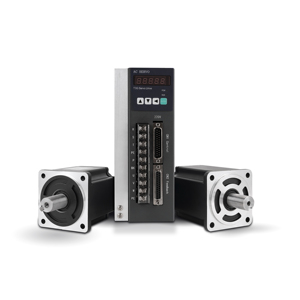
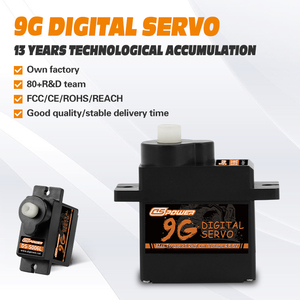
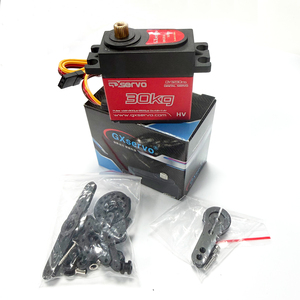
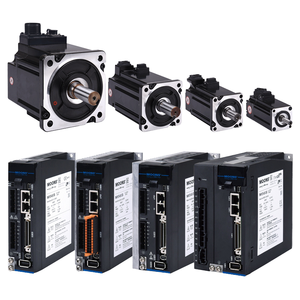
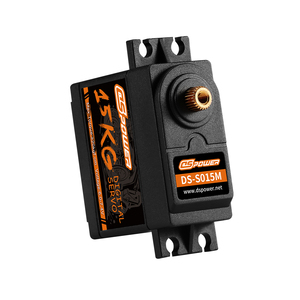
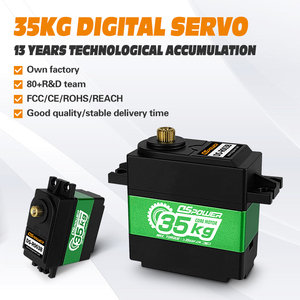
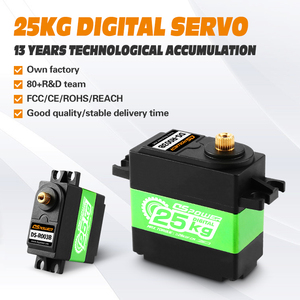
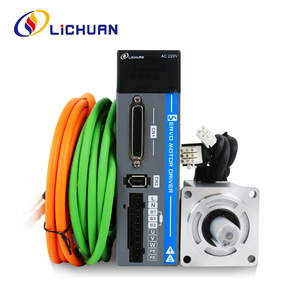
1. Technical Standard: CE Certification & Electromagnetic Compliance in Micro Motors
In high-precision motion control applications—spanning surgical robotics, in-vitro diagnostic (IVD) analyzers, defense electronics, and automated industrial machinery—selecting a CE Certified Micro Motor is not merely a regulatory checkbox; it is a fundamental guarantee of mechanical reliability, thermal safety, and electromagnetic harmony. CE marking signifies strict compliance with European Union health, safety, and environmental protection standards, primarily encompassing the Low Voltage Directive (LVD 2014/35/EU), the Electromagnetic Compatibility Directive (EMC 2014/30/EU), and compliance with RoHS (2011/65/EU) and REACH material safety requirements.
When selecting micro motors for medical laboratory automation or sub-fractional horsepower industrial motion, design engineers face stringent noise floor and signal integrity challenges. Unshielded brush noise or unmitigated Pulse-Width Modulation (PWM) harmonics from high-speed servo drives can interfere with delicate signal processing electronics, sensor telemetry, or nearby communication buses (such as RS485, CANopen, or EtherCAT). As an experienced OEM manufacturer, our production framework integrates low-loss silicon steel laminations, precision-balanced Neodymium-Iron-Boron (NdFeB) permanent magnets, cleanroom-compatible synthetic lubricants, and internal EMI suppression filtering into every micro motor platform.
High Power Density
Optimized stator copper fill factors and high-grade magnetic alloys yield maximum continuous and peak torque within sub-compact frame envelopes.
ISO 13485 & IEC 60601
Full lot traceability, documented change control, cleanroom assembly standards, and low-EMI performance for critical medical devices.
Dual-Source Supply Chain
Engineered in Houston, Texas with audited, state-of-the-art global production plants to guarantee uninterrupted production schedule security.
2. Enterprise Engineering Competencies & Complete Subassembly Integration
Operating as a trusted motion control engineering partner since 1985 (under Telco Intercontinental Corp. and its specialist divisions like TelcoMotion), our facility bridges the gap between off-the-shelf standard motor platforms and clean-sheet bespoke electro-mechanical design. OEM engineering teams rarely require a standalone motor; they require a fully integrated, pre-validated motion subsystem that installs directly into their assembly line with zero secondary machining or component matching headaches.
Core Engineering Capabilities & Topologies:
- Brushless DC (BLDC) Micro Motors: Available in inner-rotor (low inertia, high acceleration) and outer-rotor (high torque, low cogging, steady rotation) configurations. Supported by digital Hall sensor feedback or integrated high-resolution magnetic/optical encoders.
- Precision Stepper Motors & Linear Actuators: NEMA 8 through NEMA 42 hybrid stepper platforms featuring captive, non-captive, and external lead screw linear actuators. Custom lead screw pitches, Teflon coatings, anti-backlash nuts, and encoder add-ons deliver micron-level linear repeatability.
- Coreless & Miniature PMDC Motors: Coreless ironless-rotor architectures delivering ultra-fast mechanical time constants, negligible magnetic detent torque, and exceptional power-to-weight ratios ideal for portable medical infusion pumps and micro-dosing instruments.
- High-Torque Planetary & Worm Gearmotors: Precision metal and engineered polymer planetary gearheads (ratios 3:1 to 300:1) tuned for thermal dissipation, acoustic silence (<45 dB), and mechanical rigidity under reversing radial and axial shock loads.
- Complete Power & Subassembly Integration: In addition to motor and drive matching, our engineering capabilities encompass custom wire harnesses, IP65/IP67 sealed aluminum housings, and integrated Sodium-Ion or Lithium Battery Packs for untethered mobile robotics and critical medical equipment backup power.
By single-sourcing your motor, gearbox, encoder, controller, and battery pack from a unified manufacturer, OEM procurement teams eliminate multi-vendor friction, simplify Bills of Materials (BOM), and establish a single point of technical accountability across the entire operational lifespan of their machinery.
3. Micro Motor Technology Evolution & Future Development Trends (2025–2030)
The global micro motor market is undergoing a structural transition driven by advancements in industrial automation, collaborative robotics (cobots), autonomous mobile robots (AMRs), portable healthcare devices, and green energy initiatives. Based on empirical field data and multi-physics finite element modeling, several crucial technological shifts will define the next decade of micro motor sourcing:
Trend A: Transition to Frameless & Integrated Direct-Drive Actuators
Traditional motor-gearbox-coupling assemblies introduce compliance, mechanical backlash, and cumulative tolerance stack-up errors. OEM original equipment designs are increasingly adopting frameless BLDC rotor and stator kits. By embedding the motor rotor directly onto the machine’s driven shaft and housing the stator within the structural frame, system integrators achieve unprecedented mechanical stiffness, eliminate coupling wear, and compress overall axial dimensions by up to 40%.
Trend B: Edge AI & Smart Closed-Loop Drive Integration
Simple open-loop micro motor operation is rapidly being replaced by intelligent micro-drives featuring embedded microcontrollers capable of field-oriented control (FOC). Modern micro-servo drives now execute realtime vibration analysis, thermal prediction algorithms, and predictive maintenance diagnostics over high-speed industrial Ethernet protocols (EtherCAT, CANopen, RS485). This closed-loop control guarantees optimal current draw, reducing internal motor heat dissipation and extending operating life in ambient-constrained environments.
Trend C: Eco-Conscious Materials & Alternative Magnetic Alloys
As global supply chains place greater emphasis on material sustainability and geopolitical risk mitigation, research into heavy-rare-earth-free magnets (e.g., dysprosium-free NdFeB grades, advanced ferrite matrices, and FeNi magnetic alloys) has accelerated. Concurrently, high-efficiency winding techniques—such as concentrated rectangular wire hairpin windings—are maximizing copper fill factors, allowing smaller motor frames to produce equivalent continuous torque outputs with lower total electrical loss.
Contact Us
4. Strategic Procurement & OEM Sourcing Trend Analysis
For strategic sourcing managers, procurement directors, and technical product managers, evaluating micro motor suppliers requires looking far beyond the upfront unit price tag. The Total Cost of Ownership (TCO) is heavily impacted by field failure rates, engineering change notice (ECN) flexibility, supply chain lead times, and vendor stability over 5 to 10-year production life cycles.
Key Strategic Procurement Trends:
- Consolidation of Motion Vendors: Leading OEMs are moving away from sourcing motors, gearboxes, optical encoders, and drivers from four separate suppliers. Sourcing integrated gearmotor and drive assemblies from a single CE certified manufacturer reduces quality audits, streamlines logistics, and speeds up prototyping cycles.
- Dual-Sourced Manufacturing Resilience: Global logistics bottlenecks have highlighted the vulnerabilities of single-region supply chains. Enterprise buyers now prioritize manufacturers with a dual-source footprint—maintaining technical customer engineering hubs in North America/Europe coupled with audited, high-volume production facilities globally.
- Rigorous Design for Manufacturability (DFM) Reviews: Successful volume scaling requires early vendor involvement. Engaging engineering support during the concept phase allows for shaft modification standardization, connector housing optimization, and winding gauge selection that aligns with automated coil-winding tooling.
- Traceability and Revision Lock: In medical device manufacturing (IEC 60601 / ISO 13485 environments), unexpected vendor component substitutions can trigger costly regulatory re-certifications. A reliable micro motor manufacturer guarantees strict revision lock, master drawing controls, and multi-year lifecycle phase-out warnings.
5. Precision Micro Motor Procurement & Technical FAQ
Below are detailed answers to the technical, operational, and commercial questions most frequently asked by OEM design teams and procurement managers during vendor qualification.
What is the minimum order quantity (MOQ) for custom micro motor programs?
Customization programs typically begin at 250 to 500 units annually for modified standard platforms (shaft turnings, custom windings, specialized connectors, or specific gearbox ratios). Fully bespoke frame sizes, custom laminations, or dedicated tooling programs are generally scoped from 1,000 units per year. Prototype samples and pilot runs are fully supported during the qualification phase to allow complete engineering validation prior to production volume tooling commitments.
What lead times can we expect from initial engineering specification to sample delivery?
Modified standard platforms—such as shaft extension changes, custom wire harness integration, special gear ratios, or encoder assembly—typically reach first article production in 4 to 6 weeks. Ground-up clean-sheet designs involving dedicated lamination dies, custom housings, or specialized magnetic FEA reviews generally require 10 to 14 weeks, inclusive of internal DFM reviews, sample build, and comprehensive 100% end-of-line test documentation.
Which technical parameters are required to generate an accurate motor sizing quote?
To provide a precise technical proposal and performance curve simulation, our engineering team requires: operating duty cycle (continuous vs. intermittent run time), target torque (continuous rated and peak overload), target speed (RPM), operating DC voltage or AC line voltage, physical envelope restrictions, ambient temperature range, required ingress protection (IP rating), target operational lifespan (hours/cycles), position feedback requirements (Hall sensors, incremental/absolute encoders), and relevant agency compliance standards (CE, UL, RoHS, IEC 60601).
How do your micro motors maintain CE certification compliance under high EMI conditions?
Our CE certified micro motors incorporate internal high-frequency filtering networks, grounded metallic motor housings, shielded twisted-pair lead wires, and optimized stator winding geometries. For integrated servo drive kits, our controllers utilize advanced PWM switching frequencies with built-in LC filters and ferrite beads, ensuring compliance with EN 61000-6-2 (Industrial Immunity) and EN 61000-6-4 (Industrial Emissions) standards.
Can your factory support ISO 13485 and IEC 60601 requirements for medical device applications?
Yes. We support medical device and in-vitro diagnostic (IVD) OEMs with documented revision control, lot-traceable assembly builds, cleanroom-compatible synthetic lubricants (NSF H1 / low-outgassing grades), low-EMI drive selections, and comprehensive PPAP / FMEA design records aligned with ISO 13485 and IEC 60601 supplier expectations.
What sealing options and IP ratings are available for harsh or outdoor environments?
Standard micro motors are typically rated IP40 to IP54. For washdown industrial environments, outdoor robotics, or marine applications, we offer customized IP65 and IP67 protection solutions. These upgrades include dual-lip viton shaft seals, sealed aluminum semi-cases, O-ring body joint seals, potted wire entry glands, and hydrophobic membrane vents to prevent internal moisture condensation.
What gearbox technologies are recommended for high-precision micro-positioning?
For applications requiring low backlash and high radial load capacity, planetary gearheads with hardened steel gears and precision needle bearings are recommended (backlash as low as <15 arc-minutes). Where right-angle shaft orientation or self-locking static hold is required, custom worm gearheads with bronze or engineered polymer gears provide compact, silent operational profiles.
How does your factory control cogging torque and acoustic noise in micro servo motors?
Cogging torque (magnetic detent torque) is minimized through multi-physics FEA magnetic design—utilizing skewed stator lamination stacks, optimized magnet pole counts, and fractional-slot winding configurations. Acoustic noise is controlled through ultra-precise dynamic balancing of the rotor assembly (G2.5 balance grade), pre-loaded precision ball bearings, and acoustic damping housings.
Can you supply integrated subassemblies including matched controllers and battery power packs?
Absolutely. We specialize in delivering unified electro-mechanical subassemblies. A typical integrated deliverable combines a CE certified micro BLDC or servo motor, precision planetary gearhead, high-resolution encoder, matched micro-servo driver, custom wire harness with IP-rated connectors, and a matched Sodium-Ion or Lithium-Ion battery pack. The entire subassembly is shipped as a single, pre-tested part number under unified warranty coverage.
What quality assurance testing is performed on production lots prior to shipment?
Every micro motor produced undergoes 100% automated End-of-Line (EOL) testing. Key test metrics include back-EMF voltage constant, phase resistance and inductance balance, dielectric withstand (Hi-Pot test), insulation resistance, no-load current/speed verification, direction of rotation, encoder signal quadrature integrity, and vibration/acoustic FFT spectrum evaluation.
Partner with a Leading CE Certified Micro Motor Manufacturer
Whether you require minor modifications to a standard motor frame or a ground-up multi-axis motion control solution, our engineering team is ready to review your mechanical load profile, thermal targets, and delivery timelines.
Contact Us