Featured CE Certified Servo Drives & Motor Kits
Explore our engineering-grade motion control hardware engineered for precision CNC machinery, automated robotics, and industrial process automation.
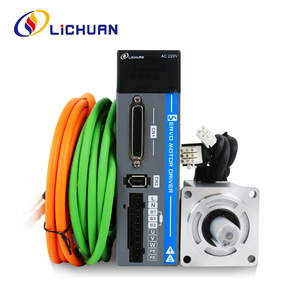
Lichuan 220V 3000RPM IP65 AC Servo Motors & Drivers A5 Series (200W-1000W)
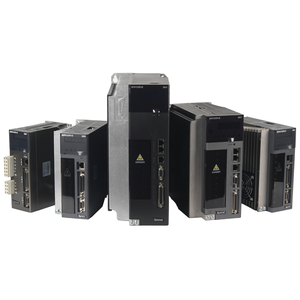
CE High-Power 400W to 11kW Servo Motor & Driver System with Electromagnetic Brake
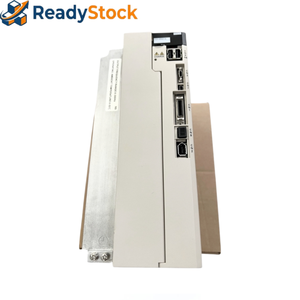
Sigma-V Series Three Phase 400V 2kW High-Dynamic Servo Amplifier SGDV-8R4DE1A
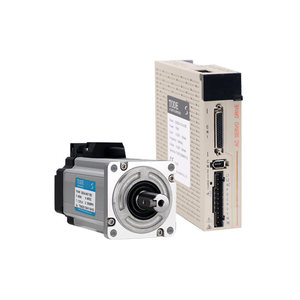
Single-Phase 400W PMSM All-in-One Servo Kit (60/80/130 Frame, 208-230V Input)
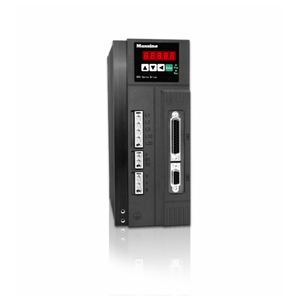
Maxsine EPX Series Precision Position Control AC Servo Drive Package (0.4kW-1.5kW)
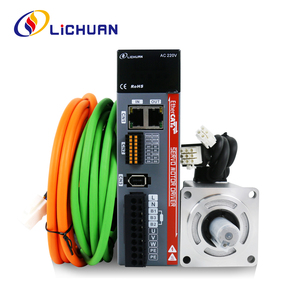
EtherCAT Real-Time Industrial Bus AC Servo Kit (750W-1000W, Up to 4.0N.m for CNC)
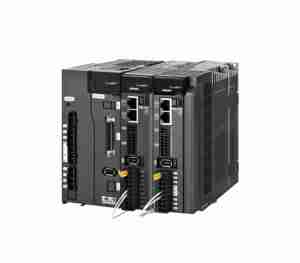
Single-Phase 220V 2kW High-Efficiency Modbus RTU Integrated Servo Controller
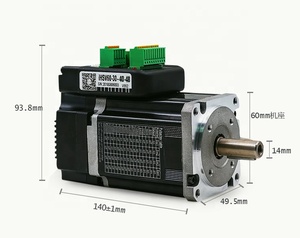
IHSV60-30-40-48 400W 48VDC Integrated Servo Motor with 1000-Line Encoder
1. Technical Framework: What "CE Certification" Requires for Industrial Servo Drives
When engineering high-performance motion control systems for export to the European Economic Area (EEA) or integration into global machinery, CE certification is not merely a marketing badge—it is a legally binding compliance mandate under European Harmonized Standards. Sourcing managers and electrical design engineers must look beyond basic self-declaration claims to verify that servo amplifiers comply with three core directives:
EMC Directive 2014/30/EU
Requires strict limits on radiated and conducted Electromagnetic Interference (EMI) via EN 61800-3 (Category C1/C2 for commercial/light industrial, C3 for heavy industrial lines).
Low Voltage Directive 2014/35/EU
Governs electrical safety, creepage distance, dielectric strength, and thermal dissipation under EN 61800-5-1 across single-phase 220V and three-phase 400V drive topographies.
Machinery Directive 2006/42/EC
Demands functional safety compliance. Modern CE certified drives integrate hardware-based Safe Torque Off (STO) operating to IEC 61800-5-2 SIL 3 / PLe standards.
To withstand severe industrial noise environments—such as high-frequency switching noise generated by Space Vector Pulse Width Modulation (SVPWM) power stages—certified manufacturers build multi-layer line suppression into the drive architecture. This includes embedded Common-Mode Chokes, high-performance DC bus capacitors, shielded internal control ribbons, and dedicated grounding planes that prevent high dv/dt voltage spikes from damaging encoder feedback signals.
2. Future Sourcing & Procurement Trends in Servo Motion Control (2025–2030)
The global motion control landscape is undergoing a structural paradigm shift driven by smart automation, energy efficiency regulations (IE4/IE5 standards), and decentralized machine architectures. OEM procurement leaders must align their vendor evaluation criteria with these five macro technology trajectories:
A. Transition from Pulse/Direction to Real-Time Industrial Ethernet
Traditional legacy drive controls relying on analog 0-10V velocity signals or step/direction pulse trains are being rapidly phased out. Sourcing demand is overwhelmingly shifting toward industrial Ethernet protocols, primarily EtherCAT (CoE / CiA 402 profile), PROFINET IRT, and EtherNet/IP. Real-time bus communications allow centralized motion controllers to execute multi-axis linear and circular interpolation with sub-millisecond synchronization jitter, while transmitting live drive diagnostics (bus voltage, thermal load, actual position error) directly to the supervisory SCADA system.
B. Decentralized and Integrated Servo Motor Architectures
Floor space optimization and cabinet-less machine designs have elevated the demand for Integrated Servo Motors (such as the IHSV 48VDC series). By integrating the drive power stage, optical/magnetic encoder, and motor windings into a unified IP65 housing, equipment builders eliminate long motor cable runs, drastically reduce cabinet thermal load, and drop EMC wiring installation time by up to 60%.
| Architecture Feature | Traditional Centralized Drive | Decentralized Integrated Servo | Procurement & Cost Impact |
|---|---|---|---|
| Cabinet Space Required | High (Requires large enclosure & fans) | Zero (Drive mounted on axis frame) | Reduces cabinet footprint cost by 35–50% |
| Cabling Complexity | Dual cables (Power + Encoder feedback) | Single Bus + DC Power Daisy-Chain | Cuts wiring labor and cable harness BOM |
| EMC Radiated Noise | High potential along long motor cables | Ultra-Low (Drive-to-windings line < 5 cm) | Simplifies machine-level CE compliance certification |
| Maintenance Profile | Modular panel swap in main cabinet | Field-replaceable smart motor node | Accelerates MTTR (Mean Time to Repair) |
C. Energy Regeneration & High-Efficiency Thermal Management
With industrial electricity tariffs rising globally, energy management during rapid motor deceleration cycle is critical. Modern CE drives integrate dynamic braking chopper circuits and offer optional common DC-bus capability. In multi-axis machinery, energy regenerated by a decelerating axis is immediately redistributed across the shared DC bus to power an accelerating axis, lowering overall line power consumption by up to 22%.
3. Key Technological Breakthroughs in Next-Gen Servo Amplifiers
To deliver competitive Information Gain for system integrators, we evaluate the recent core electronic advancements that separate budget motor drives from high-tier CE certified servo platforms:
High-Resolution Absolute Feedback
Migration from 2500-line incremental encoders to 23-bit optical absolute encoders (8,388,608 pulses/rev), eliminating homing sequences and enabling smooth low-speed ripple performance.
FPGA Hardware Loop Control
Execution of current loop control algorithms in dedicated FPGA hardware in under 62.5 nanoseconds, achieving position loop response bandwidths exceeding 2.5 kHz.
Auto-Tuning & Notch Suppression
Real-time adaptive resonance filters automatically detect mechanical vibration frequencies in real-time, applying digital notch filters to eliminate axis chatter.
Furthermore, standard safety protocols are advancing. Modern CE certified drive amplifiers include integrated hardware Safe Torque Off (STO) circuits compliant with EN ISO 13849-1 Category 3 PLe. When triggered, the drive gate drivers immediately disable the power MOSFETs/IGBTs at the hardware layer without needing main contactor disconnection, preserving control electronics power and preventing mechanical restart hazards.
4. Enterprise Manufacturing Authority & Customization Capabilities
As a global precision motion control partner engineering solutions since 1985, Telco Intercontinental Corp. (TelcoMotion) delivers customized motor, drive, and integrated power assemblies to industrial, commercial, and medical equipment original equipment manufacturers (OEMs).
OEM Custom Winding & Envelopes
We modify shaft dimensions, custom stator/rotor stack lengths, custom voltage windings (12V to 400V), and specialized IP67/IP68 sealing for challenging environments.
ISO 13485 & IEC 60601 Quality Alignment
Full support for medical laboratory automation, surgical equipment, and in-vitro diagnostics (IVD) with complete lot traceability, low-EMI drive designs, and rigid change control.
Dual-Source Supply Chain Resilience
Headquartered in Houston, Texas, with audited partner facilities in North America and Asia, ensuring buffer stock management, staged volume deliveries, and risk mitigation.
Whether your application requires a standalone 400W AC servo kit for precise indexing or a custom multi-axis EtherCAT driver sub-assembly integrated with planetary gearing and battery management, our engineering team executes thorough finite element analysis (FEA) and thermal validation before committing to production tooling.
5. Procurement & Engineering FAQ: CE Certified Servo Systems
Engineers and global purchasing agents frequently evaluate the following technical parameters when specifying servo drives for custom machinery:
Accelerate Your Motion Project with Custom CE Solutions
Need technical sizing assistance, customized drive firmware, or competitive volume OEM quotation? Contact our application engineers in Houston, Texas to receive full spec sheets and step files.