Featured CE Certified Torque Motors & Motion Components
Rigorously tested for electromagnetic compatibility (EMC), low thermal resistance, and dynamic position accuracy across medical, industrial, and robotics automation applications.
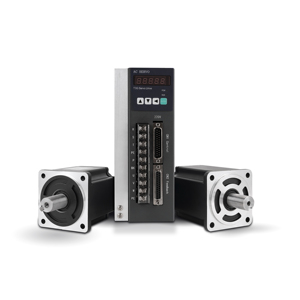
AC Servo Motor 1300W 220V Support Pulse / RS485 Control
- Power Output: 1300W / 220VAC
- Control: Pulse / RS485 Bus
- Target: Medical Device Precision
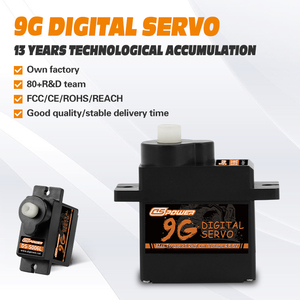
SG90 Micro Servo Motor PWM 180° Plastic Gear DSPOWER
- Form Factor: 9g Micro Footprint
- Signal Input: Standard PWM 180°
- Design: Lightweight Actuation
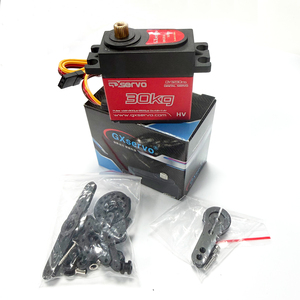
GXservo 30KG Torque Waterproof Metal Gear Digital Servo
- Peak Torque: 30kg.cm High Output
- Protection: IP67 Waterproof Rating
- Gearing: Titanium-Coated Steel
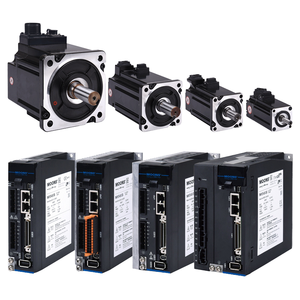
Servo Motor & Driver Kit 750W 220VAC 2.4N.m Controller
- Rated Power: 0.75kW / 2.4N.m
- Integration: Driver & 3m Cable
- Compatibility: Delta Drive Ready
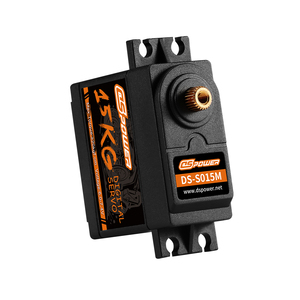
High-Speed Robot Torque Motor with Position Feedback (15kg)
- Feedback: Closed-Loop Encoder
- Holding Torque: 15kg Capacity
- Response: Ultra-Low Latency Bus
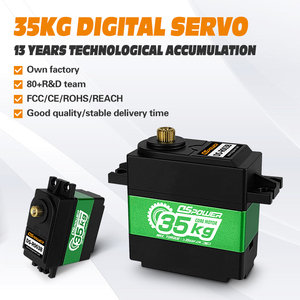
35KG Metal Gear High-Torque Universal Digital Servo Motor
- Torque Rating: 35kg Industrial Grade
- Housing: Full Aluminum Heatsink
- Application: Robotic Arms & Joints
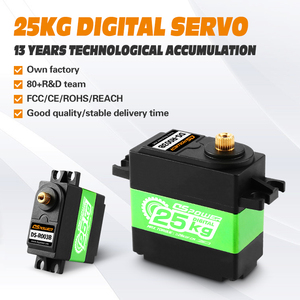
25kg Semi-Aluminum Case PWM Micro Servo for Robotic Arms
- Structure: Semi-CNC Aluminum
- Control Protocol: PWM Standard
- Features: High Thermal Clearance
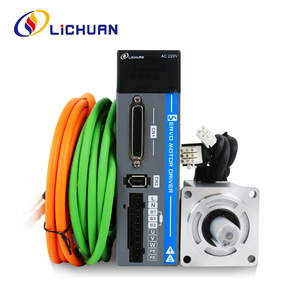
Lichuan IP65 AC Servo Motor & Driver Kit (200W–1000W)
- Protection Rating: IP65 Sealed
- Speed Rating: 3000 RPM Nominal
- Power Range: 200W to 1000W Kits
Why Global OEMs Choose Our Direct-Drive Torque Motor Plants
Combining North American application engineering with high-capacity, certified manufacturing facilities to eliminate single-point supply chain risk while maximizing continuous stall torque.
Custom Electromagnetic FEA Modeling
Every torque motor stators and rotor configuration undergoes finite element analysis (FEA) to maximize slot fill factors, eliminate cogging torque, and minimize harmonic distortion under high continuous duty cycles.
Full CE & IEC Compliance Verification
Strictly compliant with EU Directive 2014/35/EU (Low Voltage Directive) and 2014/30/EU (EMC Directive). Certified insulation designs rated up to Class H (180°C) with documented lot-traceability for medical & military systems.
Dual-Source Supply & Inventory Buffer
Headquartered in Houston, Texas, with audited production lines across Asia and North America. We provide forecast-driven inventory staging, eliminating lead time volatility for production runs between 250 and 100,000+ units.
Strategic Procurement Trends in High-Torque Direct-Drive Systems (2025–2030)
As global automation transitions away from maintenance-heavy mechanical gearboxes, procurement directors and systems integrators are recalibrating their sourcing strategies toward direct-drive rotary (DDR) torque motors. Sourcing certified torque motors requires a multi-faceted evaluation beyond upfront unit cost—focusing on Total Cost of Ownership (TCO), thermal dissipation efficiency, dynamic stiffness, and regulatory safety margins.
Key Sourcing Shift: Procurement teams are increasingly specifying frameless torque motor kits over housed units to reduce mechanical volume by up to 40% and eliminate mechanical backlash completely in high-precision indexing systems.
1. Direct Integration vs. Gearbox Assemblies
Traditional motion designs pairing standard high-speed AC servo motors with planetary or harmonic gearboxes suffer from mechanical hysteresis, backlash degradation over time, and regular lubrication requirements. Strategic buyers are rapidly shifting to direct-drive torque motors. By locking the hollow-shaft motor directly to the load, industrial engineers achieve infinite torsional stiffness, near-zero maintenance, and dramatically improved mean time between failures (MTBF).
2. Mandatory Regulatory Compliance & Environmental Efficiency
With the implementation of strict global energy conservation mandates—such as the European Union’s EcoDesign Directive (EU 2019/1781) and North American NEMA Premium standards—exporting capital equipment requires verified energy efficiency ratings. CE certified torque motors ensure that electromagnetic emissions fall within permissible limits, protecting sensitive nearby sensors, medical diagnostic instruments, and digital feedback devices from high-frequency interference.
3. Supply Chain Resilience via Standardized Customization
OEMs are abandoning single-source proprietary motor platforms in favor of modular torque motor designs built on standardized lamination stacks. Sourcing from accredited OEM exporters allows purchasing departments to request tailored winding constants ($K_v$, $K_t$), custom axial stack lengths, and specialized connector lead wires without incurring prohibitive re-tooling costs or 26-week lead times.
Technological Evolution of High-Torque Motors: What Engineers Need to Know
The core physics of torque motor engineering centers on maximizing output force per unit volume ($N\cdot m / cm^3$) while maintaining minimal thermal expansion. Modern advancements in magnetic FEA modeling, high-fill copper winding methods, and advanced rare-earth permanent magnet topologies have drastically shifted performance ceilings.
Halbach Magnet Array Topologies
By arranging permanent magnets in a specialized Halbach array pattern, the magnetic field is concentrated heavily on the active gap side while suppressing the field to near-zero on the back iron. This dramatically increases peak torque density and reduces rotor weight.
Direct Fluid Cooling Jackets
High-duty industrial torque motors generate thermal resistance at high continuous stall torque ($T_c$). Modern designs incorporate integrated liquid-cooling channels within the stator sleeve, doubling continuous current thresholds without risking insulation degradation.
High-Fill Segmented Stator Construction
Conventional wire winding results in significant air gaps within the stator slot, yielding low copper slot fill factors (~40-45%). Advanced export-grade torque motor factories utilize segmented stator teeth combined with automated concentrated needle winding. This process achieves copper slot fill densities exceeding 68%, delivering significantly lower winding resistance ($R_{ph}$), lower thermal dissipation loss, and superior torque constant efficiency ($K_t$).
Torque Motor vs. Traditional Servo + Gearbox System
Understand the technical trade-offs when selecting direct-drive motion control for high-precision, continuous-duty OEM machinery.
| Performance Metric | Direct-Drive Torque Motor | AC Servo Motor + Planetary Gearbox | Benefit to OEM System Integrator |
|---|---|---|---|
| Mechanical Backlash | Zero (Direct Coupling) | 1 to 7 Arc-Minutes | Eliminates positioning drift and micro-positioning errors. |
| Maintenance Interval | 50,000+ Hours (Seal/Bearing Only) | 5,000 – 15,000 Hours (Re-greasing) | Dramatically reduces customer field service calls & downtime. |
| System Dynamic Stiffness | Ultra-High (Infinitesimal Deflection) | Medium (Gear Tooth Flexure) | Enables violent start-stop cycles without settling resonance. |
| Acoustic Noise Level | < 45 dBA (Near Silent) | 65 – 80 dBA (Gear Mesh Vibration) | Essential for quiet medical diagnostic laboratories. |
| Axial Profile & Depth | Pancake / Ultra-Flat Design | Elongated In-Line Envelope | Frees up valuable machine real estate for robotic arm joints. |
| CE EMC Compliance | Simplified (Integrated Shielding) | Complex (Multiple Component Interfaces) | Accelerates final equipment CE & UL safety accreditation. |
Frequently Asked Sourcing & Engineering Questions
Detailed technical solutions to common procurement, compliance, and custom engineering inquiries.
Q: What documentation proves CE certification for exported torque motors?
Every shipment of our CE certified torque motors is backed by an official EU Declaration of Conformity (DoC), referencing EN 60034-1 (Rotating electrical machines - Rating and performance) and EN 61000-6-2/4 (EMC Immunity and Emission standards). Factory audit reports, thermal shock test results, and dielectric breakdown certificates are available for OEM qualification files.
Q: What is the standard minimum order quantity (MOQ) for custom-wound torque motors?
For modified standard platforms (custom shafting, alternate lead wire lengths, specific feedback connectors, or custom $K_v$ windings), our typical annual volume MOQ starts between 250 and 500 units. For fully custom rotor/stator lamination stampings, MOQs are evaluated from 1,000 units per year. Rapid engineering prototype samples are supported within 4 to 6 weeks.
Q: How do you mitigate cogging torque in high-torque direct-drive applications?
Cogging torque is minimized using skewing of the rotor magnetic poles, optimized stator tooth tip profiling, and fractional slot pole combinations calculated via 2D/3D magnetic FEA software. This allows our torque motors to maintain cogging torque values under 0.05% of rated continuous torque, making them ideal for smooth optical tracking and semiconductor wafer positioning.
Q: Can torque motors operate reliably under demanding ambient thermal conditions?
Yes. Our torque motors utilize high-grade Class H insulation wire rated for up to 180°C operation, embedded with double-insulated NTC thermistors or PT100 temperature sensors. Additionally, vacuum pressure impregnation (VPI) with resin ensures structural rigidity, moisture repulsion, and superior heat transfer from stator coils to the outer frame.
Q: What feedback options are supported for closed-loop motion control?
Our motor systems integrate smoothly with third-party drives (e.g., Delta, Lichuan, Moog, Elmo, Kollmorgen) and support a wide spectrum of encoder technologies: high-resolution optical incremental encoders, absolute BiSS-C / Endat 2.2 encoders, magnetic rotary encoders, and heavy-duty resolvers for military and high-vibration applications.
Q: What lead time can we expect from initial engineering quote to mass production delivery?
After locking technical drawings and duty-cycle requirements, initial prototype samples are completed in 4 to 6 weeks. Following design verification test (DVT) sign-off, full production tooling and mass release typically take 8 to 12 weeks. Staged release programs with buffer stocking in our Houston hub can provide immediate 48-hour delivery for recurring demand.
Accelerate Your OEM Motion Program Today
Partner with a proven CE certified torque motor manufacturer. Submit your required torque curve, operational envelope, and annual volume to receive a comprehensive engineering review and commercial quote within 24 business hours.
Get a Quote