Precision Hardware Catalog
Industrial Grade BMS Boards & Integrated Servo Actuators
Engineered for medical robotics, high-discharge energy storage systems, industrial motion, and electric vehicles requiring strict compliance and sub-millisecond protection response times.
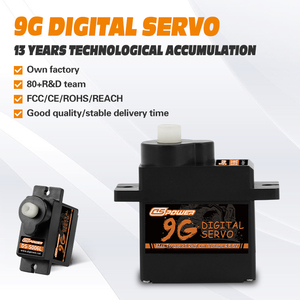
SG90 Servo Motor PWM 180° Plastic Gear, Micro Servo Motor RC Servo MG90S 9g Micro Servo Motor DSPOWER
Get Catalog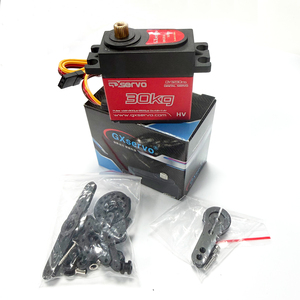
GXservo 30KG Torque Digital Servo Motor Waterproof Metal Gear RC for 1/8 1/10 Crawler Car Boat DIY
Get Catalog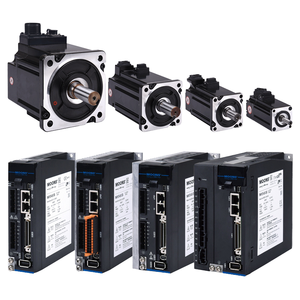
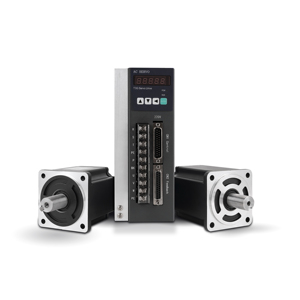
Servo Motor With Drive XP 750w 220VAC With 3m Cable 2.4N.M 0.75KW Controller Delta Drive Ac Servo Motor
Get Catalog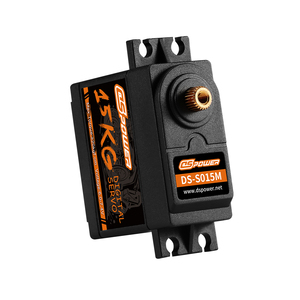
High-Speed RC Robot Motor with Position Feedback and 15kg Torque Capacity Precision Control
Get Catalog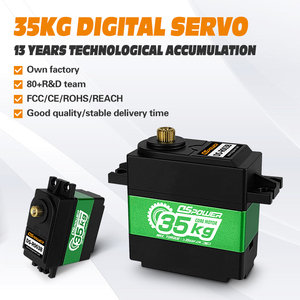
35KG Micro Servo Motor, High Torque Universal Servo Motor, Digital 25KG Metal Servo Motor Robot Car
Get Catalog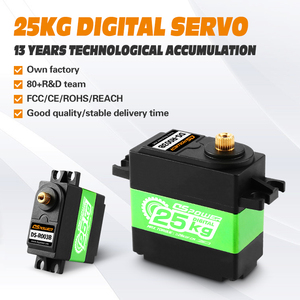
25kg Metal Gear Semi-aluminum case Servo, Robot Robotic Arm PWM Micro Servo Motor, RC Car Servo
Get Catalog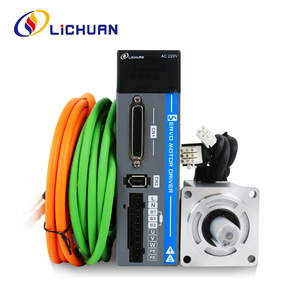
Lichuan 220V 3000RPM IP65 AC Servo Motors and Drivers A5 Series 200W-1000W Kit for Industrial Robotics
Get CatalogTechnical Whitepaper & OEM Sourcing Insights
Strategic Engineering Analysis: Selecting a China BMS Board Factory & Exporter
As global energy transition accelerates across electric mobility, grid-scale energy storage systems (ESS), industrial automation, and high-reliability medical equipment, the selection of an enterprise-grade Battery Management System (BMS) board factory in China has evolved from a simple procurement exercise into a critical architectural decision. Modern battery packs—whether utilizing Lithium Iron Phosphate (LiFePO4), Nickel Manganese Cobalt (NCM), Lithium Titanate (LTO), or emerging Sodium-Ion (Na-ion) chemistry—rely on the BMS PCB board as their central neural command unit. A substandard BMS board risks not only accelerated cell degradation and premature battery pack failure, but also catastrophic thermal runaway events.
Leading Chinese BMS exporters have transitioned from standard passive protection board assembly to sophisticated, software-defined smart BMS manufacturing. These advanced boards integrate high-precision Analog Front-End (AFE) ICs, industrial automotive-grade microcontrollers (MCUs), low-RDS(on) solid-state MOSFET switches, and isolated CANbus/RS485/SMBus/Bluetooth communication interfaces. Partnering with a fully audited, ISO-certified Chinese BMS board factory provides global OEMs with significant information gain, actionable DFM (Design for Manufacturing) insights, and robust supply chain resilience.
AFE High-Precision Sampling
Multi-channel voltage sampling accuracy down to ±1.5mV per cell across -40°C to +85°C. Integrates redundant multi-point NTC temperature monitoring for early thermal hazard detection.
Dynamic Active Balancing
Bi-directional DC-DC transformer topology delivering 1A to 5A balancing currents. Transfers energy from high-voltage cells to low-voltage cells with >92% efficiency, maximizing pack capacity utilization.
Automotive-Grade Protection
Hardware-level short-circuit shutoff within 50–100 microseconds. Dual-tier software and hardware overcurrent, overvoltage, undervoltage, and reverse-polarity protection circuits.
Core Competencies of Tier-1 Chinese BMS Manufacturing Partners
When evaluating China BMS board factories for industrial and OEM motion programs, procurement officers and engineering managers must inspect structural hardware capabilities and firmware engineering discipline. The manufacturing footprint requires cleanroom SMT assembly lines, automated optical inspection (AOI), 100% flying-probe testing, and environmental thermal stress screening.
1. Advanced Hardware & MOSFET Thermal Management
Continuous high-current discharge protection boards (ranging from 50A to over 500A continuous output) generate intense thermal flux at the power MOSFET bank. premier BMS exporters utilize heavy-copper PCBs (3oz to 6oz copper weight), aluminum-substrate heat sinks, and thermal conductive potting compounds. Furthermore, MOSFET selection involves ultra-low on-resistance switches (RDS(on) < 1.5mΩ) configured in parallel arrays to mitigate parasitic inductance and prevent thermal hot-spotting during rapid load spikes, such as motor startup torque transients in AC servo and BLDC drives.
2. Intelligent SOC and SOH State Estimation Algorithms
Basic voltage-lookup protection boards fail to account for cell hysteresis, capacity degradation, and dynamic internal resistance increases over time. Top-tier BMS boards manufactured in China employ dual algorithms combining high-speed Coulomb counting with adaptive Extended Kalman Filtering (EKF). This yields an accurate State of Charge (SOC) measurement with less than 2% error margin across the entire lifecycle, alongside automated State of Health (SOH) tracking to schedule maintenance prior to field failure.
BMS Board Hardware Architecture Comparison Matrix
| Feature Parameter | Standard Consumer PCM/BMS | Industrial Smart Hardware BMS | Enterprise OEM Active Balancing BMS |
|---|---|---|---|
| Cell Chemistry Support | Li-ion / NCM (3.7V standard) | LiFePO4 / NCM / LTO / Lead-Acid Drop-in | LiFePO4, NCM, LTO & Sodium-ion Packs |
| Balancing Method | Passive (Resistive Dissipation, 35mA) | Enhanced Passive (Resistive, 100-200mA) | Active Inductive/Capacitance Transfer (1A–5A) |
| Voltage Sampling Accuracy | ±15mV / Cell | ±5mV / Cell | ±1.5mV / Cell (High-Precision AFE) |
| Communication Interfaces | None / Single UART | RS485, CAN2.0B, Bluetooth 5.0 | Isolated CANopen, Modbus, SMBus, Wi-Fi/IoT |
| Thermal Sensors (NTC) | 1 Ambient NTC Sensor | 2–4 Cell & MOS Sensors | 8–16 Multi-zone Cell, MOS & Connector Sensors |
| Safety Compliance | Basic CE / RoHS | UL 1973, CE, IEC 62619 | ISO 26262 ASIL-D, IEC 60601, ISO 13485, UN38.3 |
Future Procurement & Industry Development Trends (2025–2030)
The global battery management industry is undergoing rapid technological convergence. B2B buyers sourcing BMS boards from China should align their multi-year procurement strategies with the following upcoming technological trends:
- Rise of Commercial Sodium-Ion BMS Boards: With Sodium-ion battery chemistry offering superior low-temperature performance (-40°C operation) and lower raw material costs, leading Chinese factories are releasing specialized BMS architectures with tailored voltage thresholds (1.5V to 4.1V operating range) and dynamic temperature compensation profiles.
- AI-Driven Cloud BMS & Predictive Maintenance: Integrating IoT communication hardware (NB-IoT/4G-LTE) directly onto the BMS board allows real-time data streaming to cloud-based Digital Twin models. Machine learning algorithms analyze internal impedance curves to predict thermal runaway risks up to 72 hours before critical onset.
- High-Voltage 800V Architecture Scaling: Driven by electric vehicle platforms and commercial ESS containers, BMS designs are shifting from low-voltage Series configurations (4S–16S) to high-voltage Master-Slave distributed architectures handling up to 1500V system voltages with galvanic isolation ratings exceeding 3750V.
- Wireless BMS (wBMS) Deployment: Eliminating heavy, failure-prone mechanical wire harnesses between battery modules, wireless BMS networks utilizing ultra-low latency mesh protocols reduce total pack weight by up to 15% and significantly simplify automated robot assembly.
Why Partner With Us
40 Years of OEM Motion & Protection Engineering Excellence
Backing global OEMs with audited dual-source manufacturing, cleanroom-ready quality control, and complete integrated power subassemblies.
Dual-Source Supply Chain Security
Audited manufacturing facilities across Asia and North America mitigate single-point supply chain risk. Staged releases and buffer stock management guarantee continuous production flow.
Medical & Industrial Compliance
Fully compliant with ISO 13485 supplier expectations, IEC 60601 medical low-EMI standards, ISO 9001 quality management, and UL product certifications for mission-critical reliability.
Full Power-Motion Subassemblies
We deliver turn-key integrated subassemblies combining BMS protection boards, custom Sodium-ion or Lithium battery packs, gearmotors, encoders, and wire harnesses under a single BOM line item.
Sourcing Guide FAQ
Frequently Asked Technical & Procurement Questions
Clear answers for component engineers, supply chain directors, and OEM purchasing officers.
What is the standard MOQ for custom BMS board manufacturing in China?
For customized standard BMS platforms (modifying sampling points, connector wire harnesses, MOSFET quantities, or temperature sensor locations), Minimum Order Quantities (MOQs) typically start at 250 to 500 units per year. For ground-up custom schematic development involving new AFE layouts, specialized firmware protocols, or custom enclosure tooling, program baselines generally begin at 1,000 units annually. Prototype validation batches (10 to 50 units) are fully supported during the initial design verification testing (DVT) phase.
How long does custom BMS board engineering take from specification to prototype delivery?
Modifications to existing production-proven BMS platforms generally require 3 to 5 weeks for schematic revision, Gerber file release, and SMT sample fabrication. Bespoke hardware programs requiring multi-layer PCB routing, custom active balancing transformers, software architecture modification, and pre-compliance EMC/EMI testing take approximately 8 to 12 weeks to deliver first engineering samples.
Which technical parameters must be provided to receive an accurate BMS design quotation?
To provide a precise technical proposal and commercial offer, engineering teams should furnish:
- Exact battery chemistry (LiFePO4, NCM, LTO, Sodium-ion) and cell configuration (e.g., 16S2P).
- Continuous current rating, peak pulse discharge current, and pulse duration.
- Required communication protocols (CANbus 2.0B, RS485, SMBus, UART, Modbus, Bluetooth).
- Dimensions and form factor envelope constraints (including height limits and heat sink clearing).
- Protection limits: Overvoltage cut-off, undervoltage recovery threshold, thermal limits, short-circuit response time.
- Target industry standards (UL 1973, IEC 62619, ISO 26262, IEC 60601 for medical equipment).
How do Chinese BMS exporters ensure quality control and component authenticity?
Tier-1 Chinese BMS manufacturers implement stringent component incoming quality control (IQC) sourcing directly from authorized semiconductor distributors (TI, STMicroelectronics, NXP, Analog Devices, Infineon). Production lines utilize 100% SMT Automated Optical Inspection (AOI), X-ray examination for BGA ICs, 100% ICT (In-Circuit Testing), dynamic load bank stress screening, and conformal coating application to resist moisture, salt spray, and vibration hazards.
Can your BMS boards integrate directly with motor controllers and custom battery packs?
Yes. As a comprehensive motion control and energy storage partner, our engineering team supplies fully matched subassemblies. We integrate BMS protection boards with custom Sodium-ion or Lithium battery packs, low-noise AC Servo / BLDC motors, planetary gearheads, and motor drivers—validating thermal behavior and protocol handshake as a single integrated subassembly under one master part number.
Request Your Custom BMS Engineering Proposal
Speak directly with an application engineer to review your battery pack parameters, schematic requirements, and annual volume estimates. Receive custom pricing and detailed DFM feedback.