Why Global OEMs & EPCs Select China's Leading ESS Exporter
Navigating renewable power transition with precision electrochemistry, OEM customized BMS, and dual-source global manufacturing resilience.
40+
Years Engineering Excellence
314Ah
Next-Gen LFP Standard
8,000+
Deep Cycle Durability
100%
Tier-1 Grade-A Traceability
Electrochemistry & Cell Quality
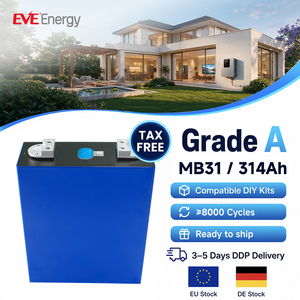
We source exclusively Grade-A Lithium Iron Phosphate (LiFePO4) and advanced Sodium-Ion prismatic cells from premier manufacturers such as EVE (MB31 314Ah / 280Ah platforms), CATL, and BYD. Every cell undergoes automated internal resistance (IR), capacity grading, and ultrasonic structural scanning prior to module bonding.
Custom OEM/ODM System Architecture
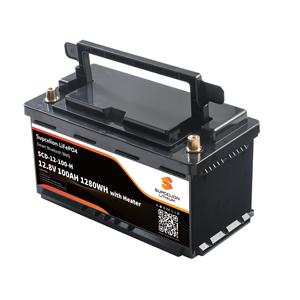
From low-voltage 12V RV auxiliary packs to multi-megawatt commercial containerized systems, our engineering team manages complete product design cycles: finite element thermal modeling (FEA), proprietary Smart BMS protocol integration (CANbus, RS485, Modbus TCP), custom enclosure IP ratings (IP55 to IP67), and agency compliance handling.
Dual-Source Supply & EU/US Logistics
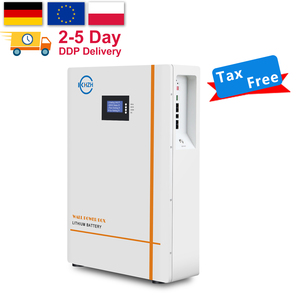
Mitigating geopolitical risk and supply disruption, our operational network combines state-of-the-art Chinese gigafactory integration with strategic distribution hubs across Europe (Poland/Germany stocks) and North America. OEM partners benefit from staged batch shipments, buffer inventory, and DDP (Delivered Duty Paid) door-to-door delivery.
Industry Whitepaper Analysis
Technological Development Trends in China's Energy Storage Sector (2025–2030)
An authoritative analysis of electrochemical innovation, high-density cell form factors, and safety protocols shaping global renewables procurement.
1. The Industry-Wide Shift to 314Ah+ High-Energy Density Prismatic Cells
The energy storage industry is undergoing a systemic transition from standard 280Ah cells to 314Ah (e.g., EVE MB31) and larger 500Ah+ cell architectures. By utilizing identical outer physical footprints (173x72x207mm), the 314Ah cell yields a 12.5% volumetric energy density increase without altering standard pack dimensions. This optimization lowers system balance-of-plant (BOP) cost, decreases thermal dissipation footprint, and raises system-level round-trip efficiency (RTE) above 95.5%.
2. Liquid Cooling Supremacy in Commercial & Industrial (C&I) ESS
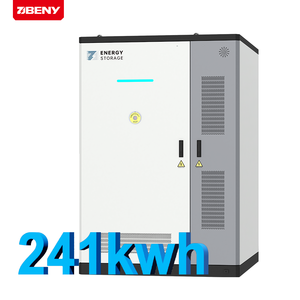
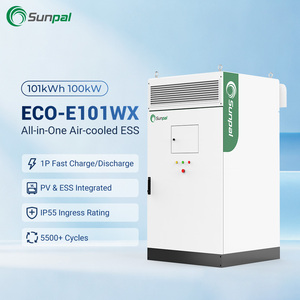
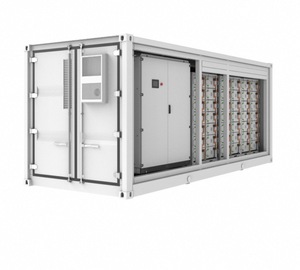
Air cooling is rapidly being replaced by liquid cooling loops in C&I ESS cabinets (100kW/230kWh to 300kW containers). Liquid cooling maintains thermal uniformity within ±2°C across thousands of stacked cells, mitigating thermal runaway propagation, preventing localized hotspot degradation, and extending cycle life by up to 20%. Chinese manufacturers lead this trend with integrated PCS + BMS + Liquid Chiller all-in-one skid solutions.
3. Commercialization of Sodium-Ion Battery Packs for Extreme-Temperature Duty
While LiFePO4 dominates stationary ESS due to deep-cycle resilience, Sodium-Ion (Na-Ion) technology is gaining momentum for arctic and high-heat applications. With discharge capabilities at -40°C to +60°C and zero thermal runaway susceptibility during extreme mechanical puncture tests, Chinese exporters are delivering hybrid Na-Ion/LFP stationary systems tailored for telecommunications and critical infrastructure.
4. AI-Driven BMS Telemetry & Cloud-Based Thermal Runaway Early Warning
Modern B2B battery procurement requires more than static protection circuits. Next-gen Chinese ESS units feature AI-enabled cloud telemetry BMS platforms that analyze impedance drift, gas off-gassing sensors (CO2/H2), and micro-voltage variance in real time. Potential cell anomalies are flagged weeks before thermal events occur, fulfilling stringent UL9540A and NFPA 855 safety mandates.
The China Manufacturing Advantage: Vertical Integration & Cost-Down Engineering
China supplies over 85% of the world's refined battery raw materials and prismatic cell output. Key B2B buyers partner with top-tier Chinese exporters not merely for lower unit prices, but for rapid co-engineering agility. By consolidating precursor materials, cathode synthesis, BMS firmware programming, and automated laser-welded pack assembly under unified ISO 13485 / IATF 16949 certified quality systems, Chinese suppliers deliver customized OEM platforms within 4 to 6 weeks from CAD freeze.
Strategic Sourcing Guide
Future Procurement Trends for Global B2B Energy Storage Buyers
How EPC contractors, utility developers, and OEM distributors are optimizing supply chains for maximum ROI and compliance.
Global procurement teams are shifting away from traditional FOB port terms toward supplier-managed DDP (Delivered Duty Paid) models with local European (Poland/Germany) and US regional hub stocking. Buying from Chinese suppliers with local inventory reduces project lead times from 60 days to 48 hours, eliminates complex customs clearances for end customers, and safeguards against ocean freight volatility.
As cell supply expands, distinguishing authentic Tier-1 Grade-A cells from refurbished B-grade stock is paramount. Sophisticated procurement protocols require suppliers to provide factory QR code data reports, factory-matched internal resistance logs, and linear degradation guarantees. High-integrity exporters deliver full material traceability from raw lithium carbonate to final laser welds.
3. High-Voltage Modular Stackability for Residential ESS
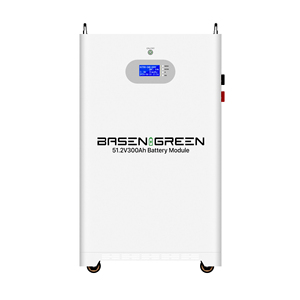
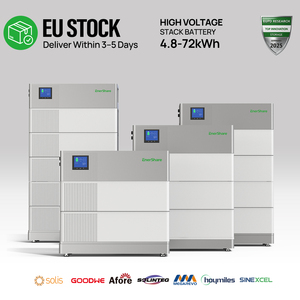
Low-voltage (48V/51.2V) home wall batteries remain popular for small retrofits, but market growth has pivoted sharply toward high-voltage (HV) stackable towers (192V to 400V). HV systems reduce DC cable losses, increase inverter conversion efficiency, simplify wire management, and enable modular expansion from 10kWh to 30kWh without complex external busbars.
System integrators demand battery BMS units capable of automatic CAN/RS485 protocol negotiation across all dominant inverter brands (SMA, Victron, Deye, Growatt, Solis, Luxpower, Sofar). Modern Chinese ESS packs feature touch-screen or DIP-switch protocol selection, eliminating costly engineering field calls during microgrid commissioning.
Technical & Sourcing Clarifications
Frequently Asked Questions (FAQ) for Energy Storage Procurement
Clear, expert answers addressing quality control, international certifications, logistics, and OEM modifications.
Q1: What is the difference between Grade-A and Grade-B LiFePO4 cells in supplier quotations?
Grade-A cells are pristine units produced by tier-1 manufacturers (EVE, CATL, BYD) that meet 100% of capacity, internal resistance (IR), and physical dimension tolerances specified on the official datasheet. Grade-B cells are units that failed minor cosmetic or capacity parameters during factory automated QA (e.g., yielding 272Ah instead of 280Ah) or were salvaged from old packs. Tier-1 suppliers guarantee authentic Grade-A cells with original factory QR codes intact, supporting 6,000–8,000 deep cycles. Grade-B cells often experience rapid capacity fade and thermal imbalance within 1,000 cycles.
Q2: Which international safety certifications are mandatory for exporting energy storage systems to Europe and North America?
For North America (USA/Canada), ESS deployments require UL 1973 (battery cell/pack safety), UL 9540 (system-level safety), and UL 9540A (thermal runaway fire propagation testing), alongside NFPA 855 installation compliance. For Europe, requirements include CE, IEC 62619 (industrial lithium battery safety), EN 62477-1, and UN38.3 transport certification. Leading Chinese exporters handle full test lab certification documentation for custom OEM projects prior to mass production delivery.
Q3: How does DDP (Delivered Duty Paid) shipping work for heavy lithium-ion battery containers and Powerwalls?
Under DDP shipping terms, the exporter assumes total financial and operational responsibility for door-to-door logistics. This includes ocean transport in Hazmat dangerous goods (DG Class 9) containers, import customs entry processing, payment of all local tariffs/anti-dumping duties, and final lift-gate truck delivery to your specified warehouse or project job site. Using supplier EU/US warehouses further eliminates ocean transit lead times for standard stock units.
Q4: What custom OEM options are available for home energy storage battery packs?
Custom engineering options include: bespoke sheet-metal or aluminum enclosure branding, color matching, and IP rating modifications; custom BMS software firmware tailored for proprietary inverter CANbus messaging; embedded LCD/LED touchscreen design; integrated heating pads for low-temperature charging down to -20°C; and customizable cell brand selection (EVE, CATL, Lishen, Hithium). Minimum order quantities (MOQ) for modified standard platforms typically start at 10–50 units, while ground-up custom tooling ranges from 200–500 units.
Q5: Why are 51.2V systems preferred over 48V systems for modern residential lithium powerwalls?
A true 51.2V system utilizes 16 LiFePO4 cells in series (16S, 16 x 3.2V = 51.2V nominal), whereas a legacy 48V pack utilizes only 15 cells (15S, 15 x 3.2V = 48.0V). A 16S architecture operates inside the optimal DC voltage window of modern hybrid off-grid and grid-tied inverters (40V to 58.4V range). 51.2V yields higher usable capacity, reduces amperage draw at equal wattage, lowers copper busbar thermal generation, and prevents premature low-voltage inverter cutoffs during high surge loads.
Q6: How do liquid cooling systems compare to forced-air cooling in commercial ESS containers?
Liquid cooling utilizes dielectric coolant plates directly sandwiched between battery prismatic cell faces. This achieves thermal dissipation rates 300% more efficient than air cooling while consuming up to 40% less parasitic HVAC energy. Liquid cooling reduces intra-pack cell temperature variance to under 2°C (compared to 6°C–10°C in air-cooled designs). The resulting thermal consistency drastically extends cycle life, eliminates localized cell aging, allows higher continuous C-rate charging/discharging, and minimizes container physical footprint by over 35%.
Request Your Custom Energy Storage Engineering Proposal Today
Partner directly with China's premier energy storage system manufacturer. Share your project specifications, required cell chemistries, voltage constraints, and volume requirements for a rapid technical proposal and commercial quote within 24 hours.