| Control Topology |
Torque Ripple |
Acoustic Noise |
System Efficiency |
Computational Overhead |
Primary Industrial Applications |
| 6-Step Trapezoidal (Block Commutation) |
High (60° commutation spikes) |
Audible high-frequency hum |
Moderate (82% - 88%) |
Low (8-bit Microcontroller) |
Basic RC models, low-cost power tools, simple pumps |
| Sinusoidal Commutation |
Low |
Significantly Reduced |
Good (87% - 92%) |
Moderate (16-bit MCU) |
Standard ceiling fans, basic mobility, HVAC blowers |
| Field-Oriented Control (FOC Vector) |
Ultra-Low (< 2%) |
Near Silent Operation |
Maximum (> 95%) |
High (32-bit ARM Cortex-M4/C2000 DSP) |
Medical robotics, EV traction, precision AGVs, CNC linear motion |
Advanced FOC controllers decouples flux and torque currents ($I_d$ and $I_q$), enabling instant dynamic response to fluctuating loads. Furthermore, integration of Field Weakening algorithms allows permanent magnet motors to exceed their base rated speed by altering the phase current angle, maximizing speed range without exceeding battery DC link voltage limits.
3. Thermal Management & Packaging Engineering for Rugged Environments
Thermal dissipation remains the primary physical limitation governing power electronic reliability. Leading OEM controller factories in China utilize sophisticated multi-stage cooling mechanisms:
- Direct-Bonded Copper (DBC) & Insulated Metal Substrates (IMS): Replacing standard FR4 PCBs with aluminum or copper core substrates allows heat to transfer directly from switching power FETs to external heat sinks with minimal thermal resistance.
- Structural Thermal Potted Encapsulation: Polyurethane or silicone thermally-conductive potting compounds protect internal control boards against vibration spikes (up to 20G), moisture ingress, salt spray corrosion, and chemical exposure, achieving IP67 or IP68 environmental sealing ratings.
- Integrated Liquid Cooling Channels: High-power motorcycle and heavy industrial drive controllers feature integrated CNC-machined aluminum cold plates, permitting continuous power throughput exceeding 100kW in tight space envelopes.
4. Communication Protocols & Mechatronic Integration
Modern industrial equipment demands seamless communication between central Programmable Logic Controllers (PLCs), vehicle control units (VCUs), and individual motor controllers. Leading Chinese motor controller suppliers support a wide spectrum of industrial bus protocols:
- CANbus (CANopen & SAE J1939): The dominant standard for mobile automation, automotive mechatronics, and electric powertrain monitoring.
- EtherCAT & Modbus-RTU: Preferred for ultra-fast deterministic factory automation networks requiring real-time sub-millisecond synchronization.
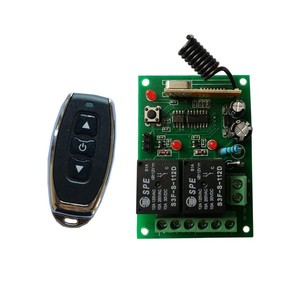
- Wireless Remote & Sensorless Interfaces: Integrated 2.4GHz RF, Bluetooth Low Energy (BLE), or customized wireless switches for specialized architectural door controls, actuators, and remote lifting apparatus.
5. China Sourcing Strategy: Evaluating Engineering Capability vs. Commodity Assemblers
To successfully partner with Chinese motor controller manufacturers, procurement directors and engineering executives must distinguish between high-volume commodity contract assemblers and true custom motion control engineering partners.
Supplier Evaluation Matrix Checklist:
✔ Traceability & Lot Control: Does the supplier utilize automated SMT lines with 3D Solder Paste Inspection (SPI) and Automated Optical Inspection (AOI)?
✔ In-House Firmware Customization: Can the engineering team modify source C-code to implement specialized safety shutoffs, custom acceleration curves, or proprietary communication packets?
✔ Compliance Validation: Are testing facilities equipped for Electromagnetic Compatibility (EMC/EMI) pre-compliance testing, high-temperature operational burn-in chambers, and HALT/HASS vibration screening?
Partnering with an established motion entity like Telco Intercontinental Corp. bridges the gap between Asian manufacturing scale and Western quality assurance. By managing design controls, revision histories, and ISO-certified quality management systems from Houston, Texas alongside audited manufacturing sites, OEMs mitigate single-point supply chain vulnerabilities while optimizing BOM costs.
6. Future Purchasing & Technological Trends (2025–2030)
As motion control technology evolves, three main purchasing trends are shaping global supply strategies:
A. Fully Integrated Smart Motor Units (Integrated Motor + Controller + Encoder): OEMs are increasingly turning away from standalone motor controllers mounted in separate electrical cabinets. The market is shifting toward integrated mechatronic packages where miniature FOC drive boards are mounted directly onto the rear endbell of BLDC or Stepper motors. This drastically simplifies wire harnesses, eliminates long shielded motor cables, and reduces radiated EMI emissions.
B. AI-Assisted Predictive Maintenance & Digital Twin Diagnostics: Next-generation industrial controllers continuously analyze phase current distortion, thermal rise rate, and vibration ripples. By deploying edge processing microcontrollers, the controller can predict bearing wear, rotor demagnetization, or mechanical binding before catastrophic system failure occurs, transmitting diagnostic telemetry via industrial IoT gateways.
C. Sodium-Ion Battery Power Integration: With the rise of Sodium-Ion (Na-Ion) energy storage platforms as a cost-effective, low-temperature alternative to Lithium Iron Phosphate (LiFePO4), modern motor controllers are being re-engineered with wider operating input voltage ranges and customized BMS communication handshakes optimized for Sodium-ion chemistry voltage discharge curves.
FAQ Center
Frequently Asked Sourcing & Engineering Questions
Comprehensive answers to critical technical, manufacturing, and procurement inquiries regarding custom motor controllers.
What is the minimum order quantity (MOQ) for custom programmable motor controller designs?
Custom motor controller programs typically start at 250 to 500 units per year for modified standard platforms (firmware tweaks, connector changes, custom wiring harnesses, or modified heat sink shapes). Ground-up custom PCB layouts, bespoke enclosures, and proprietary power stage designs generally start from 1,000 units annually. Prototype samples and pilot runs are fully supported to enable functional engineering verification prior to full production releases.
What technical specifications are required to receive an accurate motor controller proposal?
To provide an engineered solution, our application team requires: (1) Nominal and maximum DC/AC supply voltage, (2) Continuous and peak phase current requirements, (3) Motor type (Sensored/Sensorless BLDC, Stepper, PMDC, AC Induction), (4) Preferred control method (FOC, Trapezoidal, V/Hz), (5) Physical spatial envelope and IP rating, (6) Communication interface (CANbus, PWM, UART, Modbus), and (7) Operating ambient temperature range along with regulatory compliance expectations (CE, UL, IEC 60601).
How do Field-Oriented Control (FOC) controllers compare to traditional trapezoidal ESCs?
FOC (Vector Control) continuously transforms 3-phase AC currents into two-axis vector components (torque and flux) using mathematical transformations (Clarke/Park transforms). This eliminates 6-step commutation torque spikes, resulting in smooth low-RPM operation, near-silent motor noise, superior thermal efficiency, and dynamic response to rapidly fluctuating loads—whereas trapezoidal controllers are simpler but produce higher vibration and audible acoustic noise.
How long does the process take from initial concept specification to prototype samples?
Modified standard controllers (adjusting firmware parameters, modifying shunt resistor values, custom lead wires, or gear ratios) typically reach prototype validation in 4 to 6 weeks. Ground-up controller projects requiring clean-sheet schematic design, PCB multi-layer layout, custom heatsink tooling, and thermal chamber testing generally require 10 to 14 weeks from specification sign-off.
Does your team support medical device, automotive, and industrial compliance standards?
Yes. We support medical device and in-vitro diagnostic (IVD) OEMs with strict revision control, complete component lot traceability, cleanroom-compatible lubricants, low-EMI drive selections, and design dossiers aligned with IEC 60601 and ISO 13485 supplier standards. Furthermore, industrial drives comply with CE, RoHS, REACH, and relevant UL standards upon customer request.
Can Telco supply matched motor, gearbox, controller, and battery assemblies?
Yes, providing fully integrated motion subassemblies is our primary core competency. We deliver pre-tested systems combining brushless DC or stepper motors, planetary/worm gearboxes, magnetic encoders, programmable motor controllers, custom wire harnesses, and matched Sodium-Ion or Lithium-Ion power packs—allowing OEMs to manage a single validated part number rather than sourcing components across multiple uncoordinated vendors.
Ready to Develop Your Custom Motion Solution?
Contact our application engineering team today to review your duty cycles, mechanical constraints, and target BOM budgets. We deliver sized recommendations, functional prototypes, and volume production terms.
Get a Quote