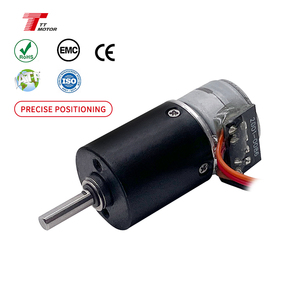
Industrial Product Line
Precision Motor Drivers & Drive Controllers
Explore our export-grade motion control hardware portfolio optimized for robotics, CNC automation, medical analyzers, and industrial heavy machinery.
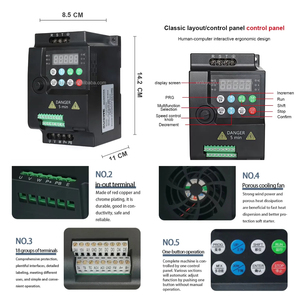
220V Single-Phase Input Three-Phase Output AC-DC-AC Variable-Frequency Drive Motor Driver IP20 PWM Control
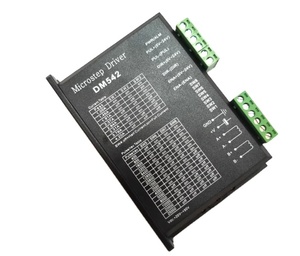
86-step Motor Driver DM420/DM542C/556/860 DSP Digital DH860H Drive Board
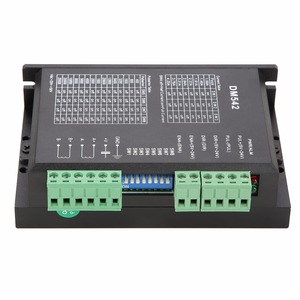
DM556 2-phase Stepper Motor Driver 42/57 Stepping Motor Controller 24V-50V DC8 36v Dc Motor Controller
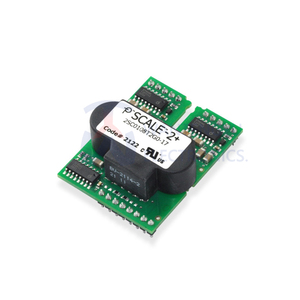
2SC0108T2G0-17 New Original IGBT Motor Driver Board Transistor Power Driver Module
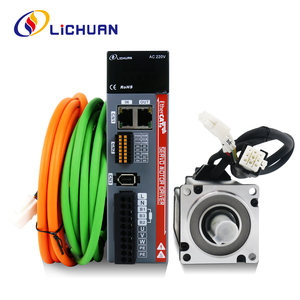
Factory Price Ethercat 100W200W400W600W AC Servo Motor Driver 0.32/0.637/1.27/1.91N.m 1.1A/1.6A/2.5A/3.3A AC Servo Motor Drivers
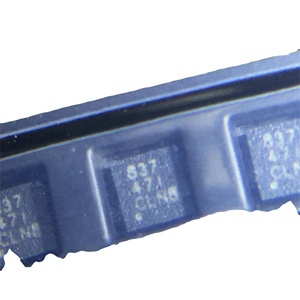
DRV8837DSGR Markiong Code 837 WSON-8 Motion Ignition Controllers Drivers 1.8A Low Vltg Brush Motor Driver stock
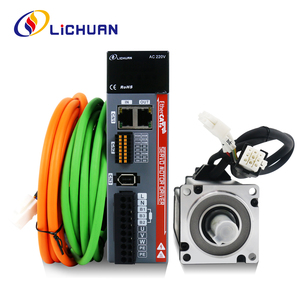
Hot Selling Ethercat 100W200W400W600W 1.1/1.6/2.5/3.3A AC Servo Motors Drivers 0.32/0.637/1.27/1.91N.m Servo Motor AC Driver Kit
40+
Years Engineering Expertise
100%
Traceable Quality Audits
4-6 Wks
Modified Platform Sampling
ISO 13485
Medical Grade Compliance
Technical Whitepaper
Engineering Excellence in Chinese Motion Control Manufacturing
A comprehensive procurement guide for OEM design engineers and global sourcing directors navigating driver architecture, switching electronics, and global supply chains.
The global industrial motion control sector is undergoing a massive paradigm shift. As automation platforms require higher torque density, precise positioning, dynamic thermal management, and seamless real-time fieldbus networking, the driver hardware serving as the bridge between software logic and physical electromagnetic motion must evolve. China has emerged not merely as a high-volume manufacturing hub, but as an advanced engineering nexus for motor driver innovations, offering sophisticated Digital Signal Processor (DSP) architectures, Field-Oriented Control (FOC) algorithms, and high-frequency Silicon Carbide (SiC) / Gallium Nitride (GaN) switching power stages.
Information Gain Key Takeaway: Modern OEM sourcing is no longer about evaluating standalone motor power ratings. Optimal motion reliability requires matching the dynamic switching capability, control loop frequency (velocity/current loop), thermal dissipation vectors, and EMC shielding of the motor driver directly to the application duty cycle profile.
1. Navigating Driver Topologies: From Micro-Stepping to High-Speed EtherCAT Servo Drives
Selecting the optimal drive controller demands a meticulous evaluation of motor dynamics, electrical constraints, and industrial communication protocols. Sourcing directors must evaluate driver architectures across four core operational paradigms:
A. Digital Stepper Motor Drivers (Open & Closed Loop): Modern DSP-driven stepping controllers, such as the DM556 and DH860H series, have eliminated the traditional resonance and low-speed vibration issues inherent to legacy stepper systems. By leveraging space vector current control algorithms and ultra-smooth micro-stepping emulation (up to 51,200 steps/rev), these drivers maintain high holding torque while vastly reducing acoustic noise and thermal buildup. Closed-loop stepper variants integrate optical or magnetic encoder feedback to eliminate lost steps entirely, providing servo-like reliability at a fraction of the total system cost.
B. AC Variable Frequency Drives (VFDs) & Inverters: For continuous-duty induction machinery, HVAC blowers, and heavy industrial pumps, single-phase to three-phase AC-DC-AC VFDs provide precise PWM (Pulse-Width Modulation) control over motor speed and torque curves. Advanced IP20-rated industrial VFDs integrate internal EMI filtering, customizable acceleration/deceleration ramps, and automatic energy-saving logic that scales power consumption to actual load demands.
C. High-Speed EtherCAT AC Servo Drivers: High-precision motion control applications—such as semiconductor handling, multi-axis robotics, and packaging machinery—demand low-latency, deterministic control networks. Industrial EtherCAT servo drivers capable of running 100W to 600W power stages with rated torque outputs from 0.32 N.m up to 1.91 N.m operate on high-bandwidth communication protocols (CoE / CiA402 profile). This enables synchronization times under 1 millisecond, empowering multi-axis CNC units and robotic arms to execute complex interpolation paths without spatial error.
D. Integrated Power Modules & Gate Driver Boards: Heavy-duty industrial electric vehicles, renewable energy systems, and high-voltage motor drives rely on high-reliability IGBT gate driver boards (such as the 2SC0108 series). Featuring dual-channel galvanic isolation, short-circuit protection, and rapid switching frequencies, these power modules drive high-current MOSFETs and IGBTs safely, insulating low-voltage microcontrollers from catastrophic back-EMF spikes.
2. Enterprise Capabilities & OEM Strategic Value (The Telco Integration Advantage)
Partnering with China’s premier motor driver suppliers yields significant competitive advantages when backed by established North American engineering oversight and structured quality management systems. Combining over 40 years of application-driven engineering with dual-source global manufacturing capabilities bridges the gap between cost-effective Asian production scale and stringent Western quality standards.
From initial design specification to high-volume manufacturing releases, engineering teams must evaluate suppliers based on five crucial OEM pillars:
- Custom Winding & Power Stage Tuning: Modifying bridge circuits, PCB layouts, connector types, and pinouts to fit exact mechanical envelope constraints.
- Traceable Quality Systems: Operating under ISO 9001 and ISO 13485 management systems with full lot-level traceability, automated flying-probe PCB testing, and full-load burn-in chambers.
- Medical & Laboratory Compliance Alignment: Delivering low-EMI drive designs, cleanroom-compatible component selection, and design records structured to satisfy IEC 60601-1 safety and EMC audits.
- Supply Chain Continuity & Buffer Stocking: Managing staged volume releases, long-lead IC procurement hedging, and dual-sourcing strategies across production facilities in Asia and North America.
- Full Subassembly Integration: Supplying complete motion sub-assemblies—matching motor, precision gearbox, optical encoder, drive controller board, and custom lithium or sodium-ion battery power packs into a single SKU.
2025 - 2030 Market Intelligence
Future Procurement & Technology Trends in Motor Driving
Key technological disruptions reshaping OEM sourcing decisions, drive architectures, and industrial automation supply chains globally.
Wide Bandgap Semiconductor Integration (GaN/SiC)
Traditional silicon MOSFETs are rapidly being replaced by Gallium Nitride (GaN) and Silicon Carbide (SiC) switching transistors. These power electronics allow motor drivers to switch at frequencies exceeding 100 kHz with virtually zero thermal loss, dramatically reducing PCB footprint while increasing power density for compact robotic joints.
Deterministic Industrial IoT & Real-Time Networks
Proprietary analog control signals are fully giving way to industrial Ethernet protocols like EtherCAT, PROFINET, and TSN (Time-Sensitive Networking). Next-generation drivers feature dual-port Ethernet hubs integrated on-board, enabling daisy-chained topology, cloud-based telemetry, and real-time remote firmware updates.
AI-Enabled Predictive Diagnostics at the Edge
Smart driver controllers now incorporate edge-computing microcontrollers running real-time vibration analytics, thermal rise monitoring, and motor winding impedance phase-logging. By analyzing phase current harmonics in real-time, the driver can predict mechanical bearing wear or load binding before system failure occurs.
R&D Roadmap
Driver Hardware Evolution & Topological Advancements
How modern circuit topology is solving legacy engineering trade-offs between torque noise, electromagnetic interference, and space efficiency.
Sensorless Vector FOC Algorithms
Advanced DSP firmware now estimates rotor flux position through high-speed mathematical back-EMF observers, allowing Sensorless Field-Oriented Control (FOC) over brushless DC motors. This eliminates sensitive Hall-effect sensors and external wiring harnesses, increasing total electromechanical reliability in high-vibration environments.
Ultra-Low EMI & Medical-Grade Compliance
With medical automated diagnostic devices operating in close proximity to sensitive sensor suites, motor drivers are engineered with slew-rate controlled gate drivers, spread-spectrum clocking, and multi-stage LC filters to achieve full compliance with CISPR 11 Class B and IEC 60601-1-2 standards.
Direct-Drive & Mechatronic Integration
The physical barrier between motor and driver is disappearing. Modern design trends favor modular "smart motors" where miniature drive electronics are mounted directly onto the motor endcap, eliminating high-current phase leads and shielding whole machines from radiated noise.
Buyer & Sourcing Intelligence
Frequently Asked Questions for Sourcing Motor Drivers
Direct technical guidance from senior OEM motion engineers to streamline specification, sampling, and global procurement program approval.
What is the typical minimum order quantity (MOQ) for custom driver programs?
Custom driver programs typically start at 250 to 500 units per year for modified standard platforms (such as custom pinouts, adjusted current limits, or pre-configured firmware parameters). Fully bespoke power topologies, custom PCB form-factors, and dedicated housing molds are usually scoped from 1,000 units annually. Prototype and pilot quantities (5–25 units) are fully supported during the initial engineering evaluation phase so design teams can thoroughly validate electrical performance prior to tooling sign-off.
How long does driver customization take from initial inquiry to first functional samples?
Modified standard driver platforms—involving simple harness changes, connector swaps, custom heat-sink geometries, or modified firmware parameters—generally reach first working samples within 4 to 6 weeks. Ground-up bespoke designs requiring custom PCB layout, new thermal simulations, proprietary firmware development, and agency pre-compliance testing typically take 10 to 14 weeks, inclusive of full DFM feedback and bench validation.
Which technical parameters must an OEM engineering team provide before requesting a quote?
To obtain an accurate technical proposal and commercial quote, design teams should provide a detailed duty cycle profile: continuous and peak current requirements, bus supply voltage limits (DC/AC), motor winding inductance/resistance, ambient operating environment (temperature, humidity, IP rating), feedback loop interface (incremental encoder, absolute SSI, Hall sensors), communication protocol (EtherCAT, CANopen, Modbus, step/dir), and required agency approvals (UL, CE, RoHS, IEC 60601).
How do Chinese motor driver suppliers ensure compliance with medical and laboratory standards?
Leading OEM export partners align manufacturing processes with ISO 13485 quality standards. This includes maintaining strict revision control, traceable component lot tracking, low-EMI switching circuit designs, cleanroom-compatible conformal coatings, and design verification records structured explicitly to support OEM compliance with IEC 60601-1 and ISO 14971 risk management audits.
Can you provide fully matched subassemblies combining motor, gearbox, drive board, and power supply?
Yes. Supplying complete, pre-tested subassemblies allows OEMs to manage a single SKU instead of sourcing individual components from disparate vendors. Integrated systems combine the motor, planetary or worm gearhead, feedback sensor, pre-tuned driver board, wiring harness, and matched battery packs (lithium or sodium-ion), fully verified on dynamometer test benches prior to shipment.
How are international supply chain risks and component lead-times managed?
By leveraging dual-source strategies across manufacturing facilities in Asia and North American distribution hubs, engineering partners mitigate single-point supply chain bottlenecks. Forecast-driven buffer stocking, long-lead microcontroller IC hedging, and staged inventory release schedules are implemented to guarantee stable production deliveries aligned with your plant assembly calendar.
Ready to Price Your Custom Driver Program?
Submit your electrical specification, envelope requirements, and projected annual quantities. Our senior motion control engineers will return a complete technical proposal and tiered commercial quote within 48 hours.
Require Engineering Consultation First?
Unsure whether closed-loop stepping, micro-miniature BLDC vector drives, or EtherCAT AC servo kits fit your mechanism's duty cycle? Connect directly with our engineering team for expert technical review.