Precision Motion & Actuation Product Line
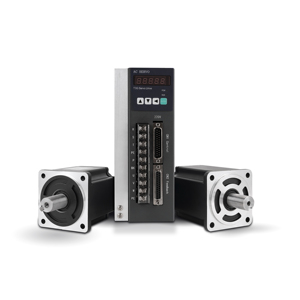
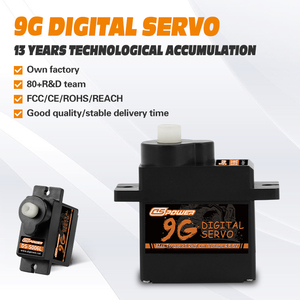
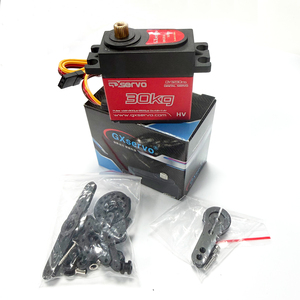
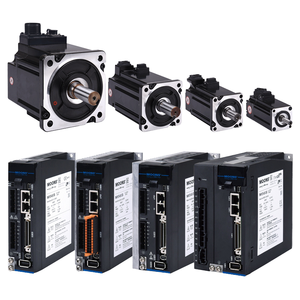
Explore our high-performance rotary actuators, servo motors, and intelligent control drives engineered for extreme reliability across industrial, medical, and process automation programs.
Engineering Dynamics of Modern Pneumatic & Precision Motion Actuation
Understanding the Mechanics, Mechanical Advantage, and Selection Parameters for Critical Valve and Robotic Control Systems
Rack & Pinion Mechanics vs. Scotch Yoke Architectures
In modern industrial process automation, fluid control valve automation relies predominantly on two pneumatic rotary actuation mechanisms: Dual-Piston Rack & Pinion and Heavy-Duty Scotch Yoke. Selecting the optimized kinematic design directly impacts life cycle torque availability and pneumatic consumption efficiency.
Rack & Pinion actuators yield a linear torque output profile ideal for quarter-turn ball valves and butterfly valves requiring consistent torque throughout the 90° stroke. Conversely, Scotch Yoke actuators deliver a specialized torque curve with peak torque at the break-open and close positions—perfectly matching the dynamic seating resistance of severe-service wedge gate and triple-offset butterfly valves.
Pneumatic Torque Calculation & Sizing Equations
Accurate actuator sizing requires evaluating double-acting (DA) and spring-return (SR) safety fail-safe configurations under varying supply pressures (3 bar to 8 bar). Theoretical torque output ($T$) for double-acting rack & pinion systems is calculated via:
T = P × (π / 4) × D² × r × η
Where P represents air supply pressure, D is internal cylinder bore diameter, r is pinion pitch radius, and η is mechanical efficiency factor (typically 0.90 to 0.95 in hard-anodized aluminum bores).
Actuator Mechanism Performance Comparison Matrix
Engineering breakdown of operational parameters across quarter-turn pneumatic, linear pneumatic, and hybrid electro-servo systems.
| Actuator Technology | Torque / Force Range | Kinematic Profile | Duty Cycle & Lifespan | Typical Application Fit |
|---|---|---|---|---|
| Rack & Pinion Pneumatic | 10 Nm – 4,500 Nm | Constant Rotary (90° / 180°) | 1,000,000+ Cycles | General Process Ball & Butterfly Valves |
| Scotch Yoke Pneumatic | 500 Nm – 250,000 Nm | High Breakout & End Torque | 500,000+ Heavy Duty Cycles | Oil & Gas Pipelines, Severe Service |
| Linear Diaphragm | 2 kN – 120 kN Force | Linear Modulating Stroke | 2,000,000+ Cycles | Control Valves, Petrochemical Regulators |
| Hybrid Servo-Pneumatic | Precision Pulse / RS485 | High-Speed Closed Loop | 5,000,000+ Continuous Cycles | Medical Devices, Robotics, High Precision |
Why Leading Global OEMs Partner with Our Chinese Manufacturing Facilities
Combining 40 years of motion engineering expertise, dual-source supply chain security, and rigorous international quality compliance.
Dual-Source Supply Chain Resilience
To mitigate geopolitical and logistics disruptions, our manufacturing network integrates state-of-the-art automated CNC production hubs in China with North American distribution infrastructure. Sourcing teams benefit from optimized bill-of-materials cost efficiency while ensuring localized buffer inventory and rapid prototyping response times.
Precision Metallurgy & Surface Metallurgy
Our pneumatic cylinders utilize high-grade extruded aluminum alloy bodies treated with hard anodization (up to 50 microns thickness) to achieve internal surface smoothness below Ra 0.4 µm. Drive pinions are precision machined from nickel-plated alloy steel or 316 stainless steel, ensuring zero-backlash power transmission and extreme corrosion resistance under aggressive marine and chemical environments.
Rigorous International Approvals
All pneumatic actuators and motion drives undergo 100% factory pressure seal testing, torque verification, and dimensional inspection. Our quality control frameworks align with ISO 9001, ISO 13485 (Medical Device Supplier Standards), SIL 3 (Functional Safety Integrity), ATEX Zone 1/21 Explosion-Proof Directive 2014/34/EU, and CE compliance standards.
Future Procurement & Technology Trends in Pneumatic Actuation
Key structural shifts transformation engineers and global purchasing directors must account for over the next 5 years.
1. Smart Pneumatics & Digital Valve Positioners
The integration of smart electro-pneumatic positioners equipped with IO-Link, HART, and Modbus communications is rapidly displacing basic mechanical limit switches. Future procurement specifications increasingly demand real-time diagnostics—such as continuous travel distance tracking, air leak detection, friction anomaly monitoring, and predictive partial stroke testing (PST)—to eliminate unscheduled refinery and plant downtime.
2. Energy Efficiency & Low-Air Consumption Designs
Compressed air is one of the most expensive utility inputs in modern manufacturing facilities. Next-generation pneumatic actuators incorporate optimized internal dead-space chamber geometries and reduced-friction seal coatings (FKM / Low-Temp Silicone / Polyurethane). These innovations reduce total air volume consumption by up to 18% per stroke, directly lowering carbon footprints and operational power expenses.
3. Extreme Environment Engineering (-60°C to +150°C)
Global industrial expansion into LNG cryogenic handling, polar mining, and high-temperature power generation requires actuators with extended thermal ratings. Leading Chinese manufacturers are advancing specialized seal formulations and synthetic lubricants that maintain reliable torque transmission under extreme ambient ranges from cryogenic -60°C up to high-temperature +150°C environments.
4. Modular Sub-Assembly Supply Contracts
Procurement leaders are migrating away from piecemeal component sourcing (purchasing actuators, solenoids, limit switch boxes, and positioners from separate vendors). The market standard now favors pre-integrated, fully factory-tested valve automation packages managed under a single SKU, significantly reducing assembly labor costs on OEM production lines.
Frequently Asked Questions for Global Procurement & Engineering Teams
Direct technical answers addressing critical evaluation criteria when sourcing pneumatic actuators and motion solutions from China.
Q: How do I determine whether to specify a Double-Acting or Spring-Return Pneumatic Actuator?
Double-Acting (DA) actuators require compressed air to drive both the opening and closing strokes, making them compact and cost-effective when fail-safe positioning is not mandatory. Spring-Return (SR) actuators utilize internal mechanical spring cartridges to automatically force the valve into a pre-designated safe position (Fail-Closed or Fail-Open) upon loss of air supply or electrical power. When sizing SR actuators, ensure air pressure at minimum supply levels can overcome both valve breakout torque and spring compression forces.
Q: What mounting interface standards should be verified for international valve compatibility?
To ensure universal modularity, verify that the pneumatic actuator complies with ISO 5211 (flange mounting dimensions and drive square sizes), VDI/VDE 3845 (NAMUR standard top-works mounting for limit switch boxes and positioners), and NAMUR solenoid valve interface standards. Compliance with these specifications guarantees seamless replacement across global valve brands.
Q: What is the typical lead time and sample qualification timeline for OEM custom actuator orders?
Standard modified platforms (custom shaft keyways, specific spring sets, high-temperature seals, or custom paint coatings) typically deliver sample units within 3 to 5 weeks. Fully bespoke electromagnetic, motor gearhead, or specialized cylinder castings requiring complete tooling development take 8 to 12 weeks, including initial DFM analysis, FEA stress modeling, and cycle life validation testing.
Q: How do Chinese pneumatic actuator suppliers ensure seal integrity and cycle life durability?
Tier-1 Chinese suppliers utilize high-precision CNC boring and honing equipment to achieve mirror-finish internal cylinder walls (Ra < 0.4 µm). Combined with premium NBR, Viton (FKM), or HNBR O-ring seals, dual guide bearings, and synthetic PTFE/polyurethane wear bands, our actuators routinely achieve over 1,000,000 continuous operation cycles without seal degradation or pressure blow-by.
Q: Can these actuators be integrated into medical, laboratory, or cleanroom environments?
Yes. We engineer customized micro-servo drives and pneumatic positioning platforms featuring cleanroom-grade lubricants (NSF H1 / ISO Class 5 compatible), low-EMI brushless control electronics, stainless steel housings, and fully enclosed non-outgassing seals tailored for medical equipment, clinical analyzers, and food/pharmaceutical processing lines.
Ready to Accelerate Your Motion Control & Valve Automation Program?
Consult with our senior application engineers today to request technical datasheets, CAD 3D models, torque calculation verification, or tailored commercial quotation.
Contact Us