High-Performance Servo & Stepper Motion Solutions
Engineered for high positioning accuracy, optimized thermal efficiency, and dynamic load adaptability across medical, robotics, and industrial automation platforms.
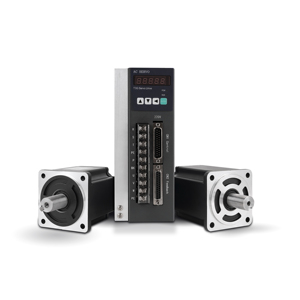
AC Servo Motor 1300W 220V Support Pulse / RS485 Control for Medical Devices
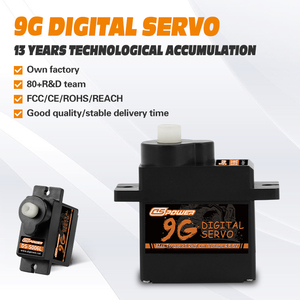
SG90 Servo Motor PWM 180° Plastic Gear Micro Servo MG90S 9g DSPOWER
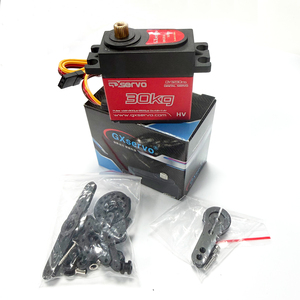
GXservo 30KG Torque Digital Servo Motor Waterproof Metal Gear RC Series
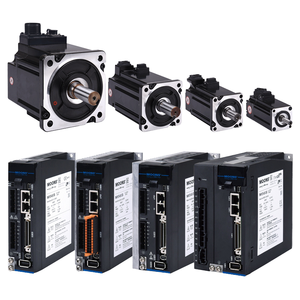
Servo Motor With Drive XP 750W 220VAC 2.4N.M Controller Kit with 3m Cable
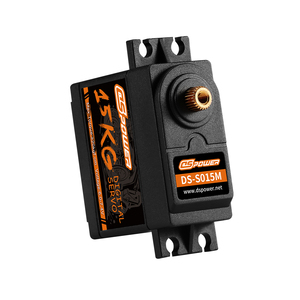
High-Speed RC Robot Motor with Position Feedback & 15kg Torque Capacity
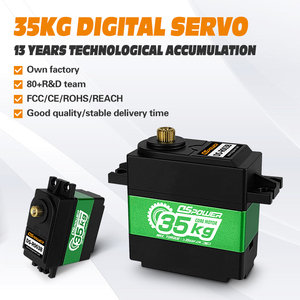
35KG Micro Servo Motor High Torque Digital 25KG Metal Servo Universal Series
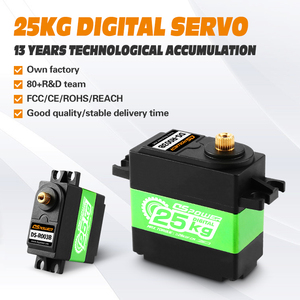
25kg Metal Gear Semi-Aluminum Case Robotic Arm PWM Micro Servo Motor
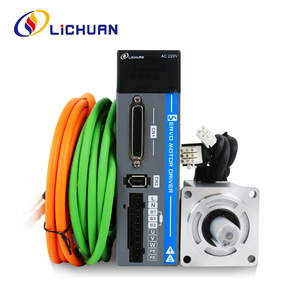
Lichuan 220V 3000RPM IP65 AC Servo Motors & Drivers A5 Series 200W-1000W Kit
China Stepper Motor Manufacturing Ecosystem: Engineering Evaluation & OEM Sourcing Architecture
Selecting the optimal motion control supplier within the China stepper motor manufacturing ecosystem requires evaluating structural mechanical execution, magnetic design, and manufacturing consistency. High-precision hybrid stepper motors, linear actuators, and integrated brushless servo platforms serve as the core mechanical drive in medical diagnostics, 3D additive manufacturing, automated optical inspection (AOI), and multi-axis robotics.
To eliminate step loss, thermal drift, and acoustic resonance, engineering procurement teams must evaluate manufacturers based on lamination silicon steel grade, magnetic saturation density, and rotor balancing standards. China's top tier manufacturing plants utilize high-permeability cold-rolled silicon steel sheets (such as 35WW300 grade) with lamination thicknesses as low as 0.35mm. This reduces eddy current losses by up to 32% compared to standard industrial grade steel.
| Performance Dimension | Standard Commercial Grade Stepper | Telco Precision OEM Stepper Platform | Engineering Benefit |
|---|---|---|---|
| Stator Lamination Steel | 0.50mm standard iron core | 0.35mm ultra-low loss silicon steel | Reduces core temperature rise by 15-20°C |
| Magnet Material | N35 NdFeB Permanent Magnets | N42SH / N45UH High-Temp Neodymium | Prevents demagnetization up to 150°C continuous |
| Rotor Air Gap Precision | 0.05 mm ± 0.01 mm | 0.02 mm ± 0.003 mm concentricity | Increases holding torque by 18-22% per frame size |
| Winding Insulation Class | Class B (130°C rated) | Class H (180°C rated) heavy-build enameling | Extends operational MTBF beyond 40,000 hours |
| Bearing Selection | Generic domestic bearings | NSK / NMB ABEC-5 Precision Shielded | Eliminates axial play & reduces acoustic noise (<38 dB) |
By leveraging advanced FEA (Finite Element Analysis) magnetic circuit optimization, leading manufacturing facilities produce 2-phase hybrid steppers (1.8° and 0.9° step angle) and 3-phase high-torque models that deliver maximum torque density per unit volume. This structural integrity allows OEM equipment designers to achieve repeatable positioning down to sub-micron microstepping resolutions without thermal overload.
40 Years of OEM Motion Control Engineering: The Telco Supply Advantage
Founded in 1985 in Houston, Texas, Telco Intercontinental Corp. (operating across specialized divisions including TelcoMotion, Medical & Laboratory, and TelcoGreen Energy Storage) provides a dual-sourcing framework for global OEMs. By uniting US-based application engineering with fully audited, state-of-the-art manufacturing facilities in China and North America, Telco bridges technical innovation with cost efficiency.
Medical & IVD Compliance
Strict engineering adherence to ISO 13485 quality protocols, cleanroom-compatible synthetic lubricants (FDA approved), and low-EMI winding layouts compliant with IEC 60601-1 medical device standards.
Custom Electromagnetic Windings
Tailored resistance and inductance optimization to match specific battery DC voltages (12V, 24V, 48V, 310V DC bus) and driver peak current parameters, ensuring peak torque output at operational RPMs.
Integrated Motion Subassemblies
Delivery of complete motion sub-assemblies: precision planetary or worm gearboxes, magnetic/optical incremental encoders, wire harnesses, custom lead screws, and sodium-ion/lithium battery power systems.
Next-Generation Stepper & Servo Technology Trends
The motion control market is transitioning from legacy open-loop step-and-direction setups toward highly integrated, intelligent electro-mechanical units.
1. Closed-Loop Field Oriented Control (FOC) Integration
Traditional open-loop steppers suffer from resonance at low speeds and torque roll-off at high RPMs. Modern China manufacturing lines are rapidly embedding magnetic 14-bit absolute encoders into NEMA 17, 23, and 34 frames. Driven by Field-Oriented Control (FOC) space-vector algorithms, these hybrid closed-loop steppers behave like high-pole AC servos—consuming energy proportional only to load torque, eliminating heat buildup, and completely preventing lost steps.
2. Smart Integrated Motor-Drive Units (RS485 / CANopen / EtherCAT)
Control cabinet space is at a premium in modern industrial automation. Sourcing trends show a shift toward all-in-one motion drives where the microstepping driver, encoder feedback processing, and industrial bus communications (Modbus RTU over RS485, CANopen, or EtherCAT) are mounted directly to the rear endbell of the motor. This reduces wiring harnesses from 8+ leads to a single power supply and communication daisy-chain cable.
3. Miniature Linear Actuators for IVD & Microfluidics
In laboratory automation and point-of-care medical diagnostic equipment, captive, non-captive, and external-nut hybrid stepper linear actuators (NEMA 8, 11, and 14) are replacing mechanical linkages. With Teflon-coated stainless steel lead screws and custom anti-backlash nuts, these precision actuators achieve linear movement steps down to 0.0015mm per step, facilitating liquid dispensing accuracy down to the microliter scale.
4. Energy-Dense Power Coupling (Sodium-Ion & BLDC Integration)
With the rapid electrification of automated guided vehicles (AGVs), autonomous mobile robots (AMRs), and field robotics, motors are increasingly paired with low-voltage high-discharge battery chemistry. Integrating sodium-ion battery pack platforms (such as TelcoGreen power solutions) provides stable terminal voltages under surge acceleration currents, extending equipment operation across sub-zero cold-storage facilities.
Global Procurement Trends: Navigating China Stepper Factory Partnerships
Sourcing stepper motors and servo controllers directly from Chinese factories requires balancing unit cost against long-term operational resilience. Global supply chain strategies have evolved beyond simple purchase-order transactions to structured engineering partnerships. Sourcing directors and engineering VP teams evaluate the following critical factors when auditing a China stepper motor factory:
Design for Manufacturability (DFM)
Top-tier factories conduct formal DFM sign-offs before tooling cut. Reviewing shaft flat geometry, keyways, helical pinion cutting, and lead wire strain relief early prevents expensive engineering change orders (ECOs) during mass production releases.
Dual-Source Sourcing Risk Mitigation
Relying on a single manufacturing plant introduces vulnerability to geopolitical and regional supply chain shocks. Leading partners manage dual manufacturing nodes (Asia & North America) backed by localized buffer stocking in Houston, Texas.
Total Lifecycle & Obsolescence Control
Industrial and medical products typically maintain production lifespans of 7 to 15 years. Qualified manufacturers lock lamination dies, tooling records, and component bill-of-materials (BOM) to guarantee identical form-fit-function units across long production runs.
Frequently Asked Questions for Stepper Motor Sourcing
Essential technical and commercial clarity for procurement managers, application engineers, and OEM project leaders.
What is the typical Minimum Order Quantity (MOQ) for custom stepper motor programs in China?
For modified standard stepper motors—such as modified shaft lengths, custom lead wire harness connectors, special winding inductances, or customized mounting flanges—the minimum order quantity usually starts between 250 to 500 units per year. For fully custom electromagnetic frame developments involving dedicated lamination stamping dies or custom housing castings, MOQs typically start at 1,000 units annually. Prototype and engineering sample batches (typically 5 to 20 units) are supported during initial evaluation to allow validation prior to tooling sign-off.
How do engineers calculate the correct stepper motor torque safety margin for dynamic duty cycles?
Engineering best practices dictate selecting a stepper motor with a pull-out torque rating that exceeds the required application torque by a minimum safety factor of 1.3 to 1.5 (30% to 50% margin) across the operational RPM range. To calculate required torque accurately, engineers must factor in load inertia ($J_L$), motor rotor inertia ($J_M$), desired acceleration time ($\Delta t$), friction torque ($T_f$), and gravity/inclination loading. When microstepping is utilized, dynamic torque drops slightly per microstep level; hence, closed-loop stepper or AC servo platforms are recommended when operating at speeds above 1,000 RPM.
What lead times should OEMs expect from initial drawing specification to pilot delivery?
Standard off-the-shelf samples ship within 3 to 7 business days. Modified standard platforms requiring custom shaft machining, special winding re-tooling, or connector assemblies generally require 4 to 6 weeks for first-article inspection (FAI) samples. Ground-up bespoke designs requiring dedicated lamination tooling dies, plastic injection molds, or specialized IP67 sealing enclosures typically require 10 to 14 weeks, which includes Finite Element Analysis (FEA) thermal verification, preliminary sample builds, and full endurance testing.
How do Telco and top Chinese factories support medical device standards (ISO 13485 & IEC 60601)?
Medical diagnostics and laboratory automation require strict change-control management. Telco supports medical OEMs with fully documented lot traceability, material certification records (RoHS, REACH, UL 94-V0 flame retardant plastics), low-outgassing FDA synthetic greases, and low-EMI winding topologies. Production records are locked under formal engineering revision control to guarantee that no internal supplier or sub-component change occurs without written customer notification and qualification audit sign-off.
What technical parameters must an OEM provide to receive an accurate motion sizing proposal?
To deliver a rapid, precise sizing proposal, OEMs should provide:
1. Operating Voltage & Current Limits: DC Bus voltage (e.g., 24V, 48V DC) and available drive current ($A_{RMS}$).
2. Torque-Speed Curve Targets: Continuous holding torque, peak acceleration torque, and required operating RPM.
3. Duty Cycle Profile: On/off cycle duration, thermal environment ambient bounds (-20°C to +50°C), and IP sealing rating (IP40, IP65, IP67).
4. Feedback & Mechanical Envelope: NEMA frame restriction, mechanical shaft requirements (D-cut, round, threaded screw), and encoder type (Incremental, Absolute, Hall Sensors).
Can Telco deliver integrated assemblies combining motors, gearboxes, drivers, and energy packs?
Yes. Rather than sourcing individual components from fragmented suppliers, Telco provides complete, factory-validated motion sub-assemblies under a single part number. This includes high-precision planetary or right-angle worm gearboxes, magnetic absolute encoders, integrated microstepping drivers, wire harnesses with strain relief, and custom sodium-ion or lithium-ion battery energy packs tailored for mobile equipment autonomy.
Request a Custom Stepper & Servo Engineering Evaluation
Whether you require a modified standard NEMA stepper motor prototype, an integrated AC servo system, or a ground-up motion subassembly build, our application engineers in Houston and China will analyze your duty cycle, envelope, and target cost.