Featured High-Precision Ball Screw Assemblies
Engineered for high-rigidity CNC machinery, automated positioning systems, medical devices, and micro-stepper applications. Built to strict C3, C5, and C7 precision tolerance specifications.
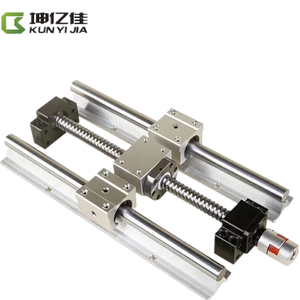
Ball Screw SFU1605 Length 300mm Whole Set Lead Screw for CNC Machine
- Diameter: 16mm | Lead: 5mm
- Accuracy Class: ISO C7 Rolled
- Includes End Machining & Nut
- High Axial Rigidity & Smooth Drive
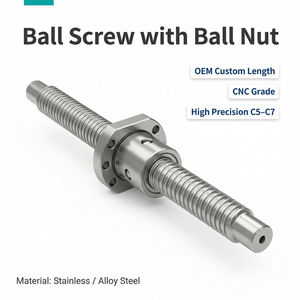
High Precision SFU1605 Rolled Ball Screw & Custom End Manufacturing
- Cold-Rolled GCr15 Chrome Steel
- Customized BK/BF End Journaling
- Zero-Backlash Single Nut Available
- Optimized Recirculation Ball Geometry
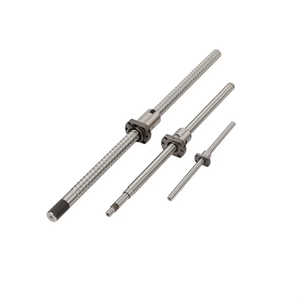
High Precision SFU2005 Ball Screw and Nut Pairs 20mm Diameter 5mm Pitch Wholesale
- 20mm Shaft Diameter | 5mm Lead
- Heavy Dynamic Load Capacity
- Preloaded Nut System (P1/P2)
- Ideal for Industrial CNC Milling
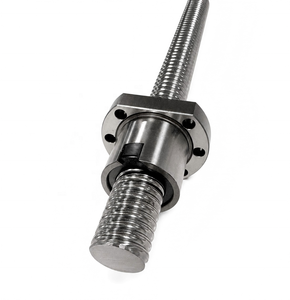
SFU Ball Screw Series SFU1205 SFU1605 SFU2005 SFU2505 SFU3210 C7 C5 Precision
- Full Range: 12mm to 40mm Dia
- C5 Ground / C7 Rolled Options
- DIN 69051 Flange Nut Geometry
- Low Operating Noise Architecture
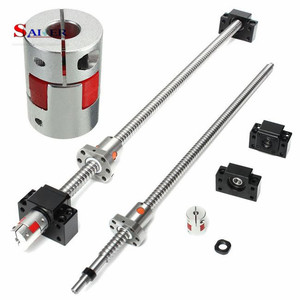
CNC Complete Kits 1000mm Ball Screws SFU1204 SFU1604 SFU2005 SFU2505 Lead Screws
- Complete Kit: Shaft, Nut, Housing, Bearings
- 1000mm Standard & Custom Lengths
- Rigid Bearing Supports Included
- Plug-and-Play Automation Ready
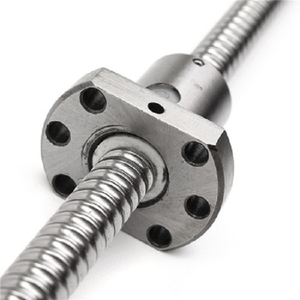
Factory Direct High Precision SFU1204 Ball Screw Shaft C7 Single Nut for Mini CNC
- Ultra-Compact 12mm Diameter
- High Speed Pitch & Fast Response
- Designed for 3D Printers & Lab Equipment
- Dust-Proof Seal Wiper Integration
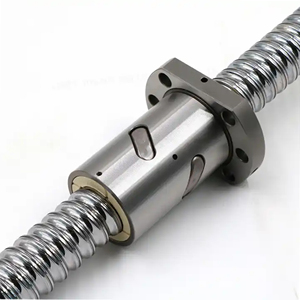
Precision Ground Ballscrew and Ballnut CNC 3205 Router Motion Drives
- Ultra-Precision C3/C5 Ground Thread
- High Heavy-Duty Dynamic Load Load Ratings
- Sub-Micron Positioning Repeatability
- Hardened Ball Races (HRC 58-62)
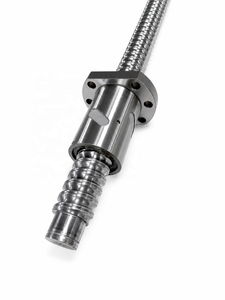
SFU2005 SFU2510 Ball Screw With Nut C7 Precision Linear Motion Custom End Machining
- High-Lead Pitch Configurations
- Custom Turn-Key Journal Machining
- Synthetic Reservoir Self-Lubrication
- 100% Quality Inspected Ball Recirculation
Precision Motion Engineering: The Strategic Procurement Guide for China Ball Screws
A comprehensive analysis of material science, thread geometry, preloading strategies, and manufacturing capabilities defining China's top precision linear motion suppliers.
1. The Evolution of Chinese Ball Screw Manufacturing: From Scale to Micron-Level Accuracy
Over the past two decades, China’s linear motion manufacturing ecosystem has undergone a fundamental technological transformation. Driven by heavy investments in CNC thread grinding technology, German-imported laser metrology, and advanced vacuum heat treatment processes, premier Chinese ball screw manufacturers have bridged the historical gap between high-volume commercial production and high-precision ultra-rigidity linear actuation.
Modern ball screw manufacturing relies on strict alignment with international standards, primarily ISO 3408-3 and DIN 69051. Top-tier Chinese OEM factories utilize continuous induction hardening for rolled shafts and multi-axis CNC thread grinders (such as Klingelnberg and Matrix machines) for precision ground ball screws. This technical maturity allows global procurement teams to source drive screws achieving travel deviation tolerances within C3 (0.008mm / 300mm) and C5 (0.018mm / 300mm) grades at significant total cost of ownership (TCO) advantages compared to traditional European or Japanese counterparts.
Key Takeaway for B2B Procurement Engineers:
Specifying linear drive assemblies requires balancing pitch accuracy, preloading class, and surface fatigue limits. Partnering with a supplier capable of offering both high-efficiency rolled threads (SFU/SFE series) and precision-ground threads ensures optimal component matching across multi-axis linear setups.
2. Technical Deep Dive: Manufacturing Tolerances & Metallurgical Rigidity
The mechanical longevity and positioning fidelity of a ball screw assembly depend on three fundamental pillars: material metallurgy, raceway profile geometry, and recirculation dynamics.
A. Metallurgical Integrity (GCr15 / AISI 52100 Steel): Premium ball screws are manufactured using high-purity, vacuum-degassed GCr15 bearing steel. The raw shafts undergo controlled induction quenching to achieve a surface hardness of 58 to 62 HRC while maintaining a tough, ductile core to resist high dynamic torque forces. Sub-zero cryogenic treatments are frequently applied to stabilize retain austenite, preventing dimensional drift over years of high-duty continuous operation.
B. Gothic Arch Raceway Profile: Unlike simplified semi-circular grooves, top-tier Chinese manufacturers implement an optimized Gothic Arch groove profile. This geometry provides a dual-point contact angle (typically 45°) per ball bearing, minimizing differential slip, reducing internal friction losses, and facilitating precise preload control without inducing binding.
| Accuracy Class | Manufacturing Method | Lead Error Tolerance (ep / 300mm) | Typical Industrial Applications | Surface Finish (Ra) |
|---|---|---|---|---|
| C3 Grade | Precision Thread Grinding | ≤ 0.008 mm | 5-Axis CNC Machining Centers, Semiconductor Inspection | ≤ 0.10 μm |
| C5 Grade | Precision Grinding / High-Accuracy Rolling | ≤ 0.018 mm | Industrial Robotics, EDM Machines, Automation Cells | ≤ 0.20 μm |
| C7 Grade | Cold Thread Rolling | ≤ 0.050 mm | 3D Printers, Woodworking CNC, Packaging Machinery | ≤ 0.40 μm |
| C10 Grade | Standard Rolled Shafting | ≤ 0.210 mm | General Transport Systems, Adjustable Linear Guide Fixtures | ≤ 0.80 μm |
3. Preload Engineering and Backlash Elimination
To eliminate axial lost motion in high-rigidity CNC machine tools, suppliers implement customized preloading regimes within the ball nut assembly:
- Double Nut Preloading (P2/P3): Utilizes an internal spacer shim between two single nuts to pull the ball bearings against opposing Gothic raceways. This setup delivers maximum structural stiffness and withstands heavy reversed axial loads.
- Oversized Ball Preloading (P1): Uses precision-sorted micro-size ball bearings inserted into a single nut to eliminate axial clearance (axial play ≤ 0.005mm) while minimizing friction torque.
Future Development & Global Sourcing Trends (2025–2030)
Understanding the technological trajectory and procurement models governing precision linear motion components.
1. Ultra-High Lead & Dynamic Acceleration
Modern pick-and-place automation and electric injection molding demand DN values exceeding 150,000. Ball screw design is shifting toward high-lead geometries (e.g., 20mm pitch on a 20mm shaft) equipped with tangential end-cap recirculation systems to ensure whisper-quiet operation during 2G acceleration cycles.
2. IoT Smart Ball Screws & Condition Monitoring
Integration of piezoresistive micro-sensors directly within the ball nut body allows real-time telemetry of temperature rise, vibration signature, and preload decay. This enables predictive maintenance algorithms in Industry 4.0 automated factories before micro-pitting leads to catastrophic line stoppage.
3. Self-Lubricating Maintenance-Free Seals
Environmental compliance and reduced operating costs drive the adoption of high-density synthetic oil-impregnated polymer reservoirs embedded in the ball nut wipers. These systems continuously deposit a microscopic fluid film over ball track contact points, achieving over 10,000 km of operational life without relubrication.
4. Supply Chain Resilience & Rapid Prototyping
Global OEMs are moving away from single-source dependencies. Leading Chinese manufacturers now maintain extensive modular inventories of semi-finished shafts, permitting turn-around times of standard turned/milled end journals within 5 to 7 working days from drawing verification.
5. Turnkey Integrated Motion Subassemblies
Procurement departments prefer single-part-number ordering. Sourcing trends favor purchasing pre-assembled linear packages: Ball Screw + Support Units (BK/BF, FK/FF) + Stepper/Servo Motor Mount Mounts + Flexible Couplings, eliminating stack-up tolerance errors during machine integration.
6. TCO Optimization vs. Landed Cost Analysis
Leading buyers evaluate suppliers based on Total Cost of Ownership (TCO). High-rigidity rolled screws (SFU/SFE) offering 90%+ mechanical efficiency drastically reduce motor drive torque requirements, smaller servo drivers, and overall system power consumption.
Why Partner with Our Precision Engineering Manufacturing Hub?
Combining 40 years of OEM motion engineering legacy, rigorous multi-stage quality control, and robust dual-source supply chain infrastructure.
Full Inspection & Laser Metrology Verification
Every batch of precision ball screws undergoes rigorous verification on Renishaw laser interferometers to map lead deviation curves. Optical surface profilometers verify groove micro-geometry, ensuring 100% adherence to specified pitch tolerances prior to export dispatch.
Custom End-Machining & Engineering DFM Review
Our dedicated application engineering team reviews your CAD drawings for Design for Manufacturability (DFM). We execute complex journal machining including ground snap-ring grooves, locknut threads, keyways, and splines to mate seamlessly with BK/BF or FK/FF bearing blocks.
Traceable Lot Production & Revision Control
Supporting high-spec industrial, medical, and aerospace OEM requirements with full raw material heat-number traceability, batch hardness reports, and strict drawing revision control to eliminate mid-production spec drift.
Program-Managed Stocking & Buffer Inventory
We mitigate lead-time risk for global equipment builders by offering continuous safety stock programs, Kanban releases, and scheduled delivery shipments directly from our Houston hub or overseas assembly locations.
Frequently Asked Technical & Procurement Questions
Expert answers from our linear motion engineering department regarding sizing, tolerances, preloading, and custom manufacturing.
What is the functional difference between SFU, SFE, DFU, and SFI ball nuts?
SFU features a single flange nut design with internal ball circulation, offering a compact outer diameter ideal for standard CNC setups. SFE features a high-lead single nut for fast transport speed. DFU uses a double nut design configured with a spacer washer to establish heavy mechanical preload for high-rigidity cutting tools. SFI utilizes an internal circulation mechanism with a round flange profile.
How do I select between Rolled (C7) and Ground (C3/C5) Ball Screws?
Select C7 Rolled Ball Screws for cost-effective linear transfer applications, woodworking routers, 3D printing, and automated material handling where positioning accuracy within ±50 microns per 300mm is sufficient. Choose C3 or C5 Ground Ball Screws for precision CNC milling, grinding machines, semiconductor positioning, and optical stages requiring sub-10 micron travel deviation and zero backlash under load.
What standard technical parameters should be provided for custom end-machining?
To produce accurate custom journals, provide a 2D STEP/DWG drawing specifying: total screw length (L), thread length, support bearing diameter (e.g., Ø10mm for BK12/FK12), step shoulder dimensions, thread pitch for retaining locknuts (M10x1.0), snap-ring groove locations, and shaft extension keyway/flat details.
What lubrication is recommended for high-duty ball screw operation?
For standard speeds, a lithium-soap-base grease with EP additives (NLGI grade 1 or 2) applied every 300 to 500 operating hours is ideal. For high-speed applications (DN > 60,000) or cleanroom/medical equipment, synthetic low-viscosity oil lubrication or cleanroom-certified low-outgassing grease should be continuously supplied via micro-dosing ports.
How does axial backlash affect CNC machine tool precision, and how is it minimized?
Axial backlash represents lost motion when reversing direction. It causes lost step resolution, poor surface finish during contour milling, and positioning error. It is minimized by ordering preloaded ball nuts (P1 light preload via ball sizing or P2 heavy preload via double nuts) and using zero-backlash angular contact support bearings (e.g., 7000-series matched pairs).
What is your typical production lead time for prototype and production orders?
Standard rolled ball screw shafts (SFU1605, SFU2005, SFU2505) with standard BK/BF journal machining ship within 5 to 7 business days. Custom ground C3/C5 ball screws involving specialized metallurgy, custom nut housings, or non-standard leads typically require 3 to 4 weeks including heat treatment and laser interferometer calibration.
Request Custom Ball Screw Specifications & Quotation
Need engineered linear motion solutions tailored to your machinery footprint? Download our comprehensive technical catalog or speak directly with an application engineer today.