The global energy transition has placed China at the epicenter of electrochemical storage manufacturing. Accounting for over 75% of global lithium-ion cell production capacity, Chinese suppliers set the benchmark for energy density, cycle endurance, and cost efficiency. However, navigating the vast network of Tier-1 manufacturers (such as CATL, EVE Energy, CALB, and Hithium) requires deep technical due diligence, precise cell sorting, and a robust understanding of international compliance standards.
As a senior engineering and supply chain leader backed by 40 years of international component integration experience since 1985 through Telco Intercontinental Corp., we bridge the gap between Chinese factory floors and global B2B application mandates. Whether you are assembling commercial energy storage systems (ESS), medical devices, or electric vehicle traction packs, securing verified, non-reconditioned Grade-A lithium iron phosphate (LiFePO4) and nickel manganese cobalt (NCM) battery cells is paramount to safeguarding system longevity and operational safety.
Original Factory QR Traceability
Every cell supplied features an un-scratched, original laser-engraved QR code detailing factory production date, voltage matching, and capacity grading directly from manufacturer MES databases.
Dual-Source Supply Resilience
Mitigate single-origin risk through audited manufacturing partnerships in China backed by North American engineering overwatch, inventory buffer programs, and localized EU stock.
Precision Cell-Matching & Busbars
Cells undergo strict 0.05V voltage and 0.05mΩ AC internal resistance matching prior to dispatch, paired with custom laser-welded M6/M8 studs and flexible copper busbars.
Technology Trends: The Structural Shift from 280Ah to 314Ah & 628Ah Prismatic Cells
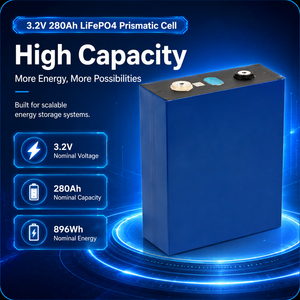
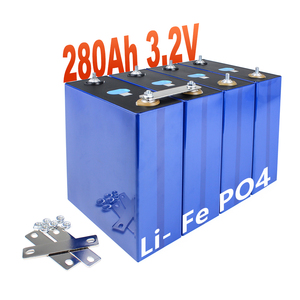
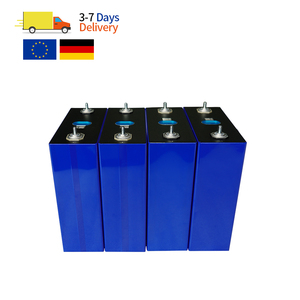
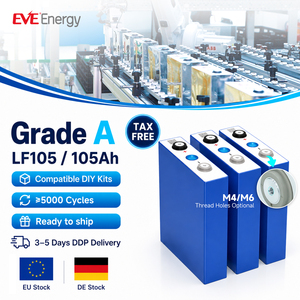
The energy storage industry is undergoing a rapid paradigm shift in cell geometry and volumetric efficiency. For several years, the 3.2V 280Ah prismatic cell (pioneered in the standard 7117320 footprint) served as the global baseline for utility-scale and commercial ESS projects. However, recent technological advancements from top Chinese cell manufacturers have introduced higher-density platforms that deliver measurable economic and operational advantages.
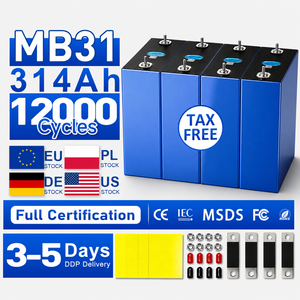
- The Rise of 314Ah & 306Ah Platforms: Without altering the standard 7117320 physical enclosure dimensions, Chinese chemical engineers upgraded anode graphite coatings and cathode lithium-loading densities. The resulting 314Ah cell yields a 12% increase in total energy per cell, allowing 20-foot containerized ESS solutions to scale from 3.72MWh to over 5MWh without increasing balance-of-system (BOS) land footprint.
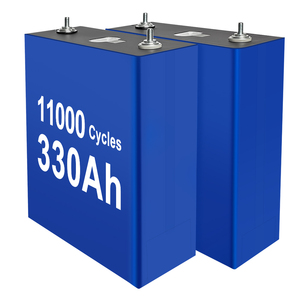
- Ultra-Long Cycle Life (10,000+ Cycles): By implementing artificial solid electrolyte interphase (SEI) pre-lithiation technologies and self-repairing electrolyte additives, next-generation cells like the CALB Grade-A+ and Hithium 314Ah achieve 10,000 EOL (End of Life at 70% retention) cycles under 0.5C/0.5C regimes.
- Mega-Capacity Form Factors (628Ah / MB31): To reduce the number of internal parallel electrical connections and thermal management complexity, suppliers are rolling out double-width 628Ah cells. These cells halve the BMS sensor point requirements, significantly lowering system failure rates in utility installations.
Technical Comparison: Primary Cell Chemistry Profiles in Procurement
Selecting the appropriate cell chemistry requires balancing gravimetric energy density against cycle longevity, operating thermal envelopes, and safety parameters.
| Chemical Form |
Nominal Voltage |
Energy Density |
Cycle Life (80% DOD) |
Thermal Runaway Temp |
Primary Application |
| LiFePO4 (LFP) Prismatic |
3.2V |
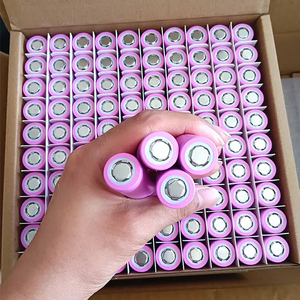
160 - 185 Wh/kg |
6,000 - 10,000 |
~270°C (High Safety) |
Solar ESS, Telecom, Commercial Storage, AGVs |
| NCM / NCA Cylindrical (18650/21700) |
3.6V - 3.7V |
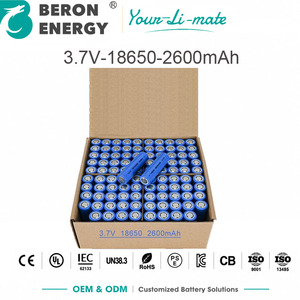
240 - 300 Wh/kg |
1,000 - 2,000 |
~210°C (Moderate) |
Medical Devices, Robotics, Power Tools, EVs |
| Sodium-Ion (Na-Ion) |
3.0V - 3.1V |
130 - 160 Wh/kg |
3,000 - 4,500 |
>300°C (Ultra Safe) |
Low-Temp Storage (-40°C), Micro-Mobility, UPS |
| Solid-State / Semi-Solid |
3.8V |
350 - 500 Wh/kg |
1,500 - 3,000 |
>350°C (Extreme) |
Aero/UAVs, Premium EVs, Portable Power Stations |
Future Procurement Trends: What Global B2B Buyers Must Prepare For (2025–2030)
Procurement strategies must evolve beyond simple price-per-kilowatt-hour ($/kWh) metrics. Navigating upcoming regulatory mandates and technical evolutions will dictate the market competitiveness of OEM products:
1. EU Battery Regulation & Carbon Footprint Transparency
From 2025 onward, battery cells imported into the European Union must carry a digital "Battery Passport." Buyers need suppliers capable of providing fully audited carbon footprint disclosures (from raw lithium extraction to cell synthesis) to avoid customs border penalties under the EU CBAM regime.
2. Localized Warehousing & DDP Logistics Execution
To circumvent extended maritime transit times (40+ days) and volatile shipping rates, top Chinese suppliers are establishing bonded fulfillment hubs. Utilizing European stock (such as Poland, Rotterdam, and Hamburg warehouses) with Delivered Duty Paid (DDP) terms allows buyers to order inventory on-demand with 48-hour delivery times.
3. Commercialization of Sodium-Ion Batteries (SIB)
Sodium-ion chemistry has transitioned from laboratory pilot lines to active commercial production. Utilizing abundant sodium precursors, SIB cells offer zero risk of thermal runaway during deep discharge, exceptional low-temperature capacity retention (over 85% at -20°C), and resistance to raw material price spikes seen in lithium markets. SIB is rapidly capturing market share in telecom backup power and cold-climate energy storage.
Ensuring Quality Assurance: How Telco Eliminates Risk in Cell Sourcing
The battery industry suffers from significant quality asymmetry. Secondary market brokers frequently re-wrap degraded, B-grade, or decommissioned EV cells with counterfeit shrink sleeves and forged QR codes. Implementing a multi-tier engineering validation protocol is non-negotiable for enterprise buyers:
- Laser-Engraved Code Inspection: Verifying that the 24-digit factory barcode is deeply etched into the aluminum top-cap, matching the manufacturer's batch records for chemistry, capacity rating, and internal resistance.
- OCV & ACIR Testing Protocol: Every cell shipped under our program undergoes 100% automated Open Circuit Voltage (OCV) and AC Internal Resistance (ACIR) testing using Hioki precision meters. Cells deviating by more than 0.05V or 0.05mΩ are rejected.
- Compression Frame Assembly: Prismatic LiFePO4 cells expand naturally during charge/discharge cycling. Our engineering team designs custom structural aluminum frames to apply the recommended 300kg to 3,000N constant mechanical pressure, extending cell cycle life by over 20%.
- Compliance Certification: Full documentation packages including UN38.3, MSDS, IEC 62619, CE, and UL 1973 certifications accompany all OEM bulk orders for streamlined local utility interconnection approval.