Engineered Battery Packs & Precision Motion Modules
Explore our core OEM solutions engineered for extreme durability, precise energy management, and high-performance actuation in industrial, medical, and robotic environments.
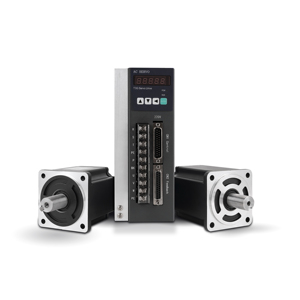
AC Servo Motor 1300W 220V Support Pulse / RS485
Designed for medical devices and automated energy storage test rigs requiring high precision and ultra-low noise handling.
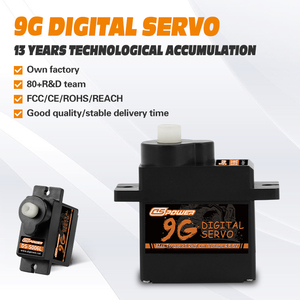
SG90 Servo Motor PWM 180° Micro Servo Motor
Ultralight motion module for micro-robotic battery disconnect switches and diagnostic instrumentation mechanisms.
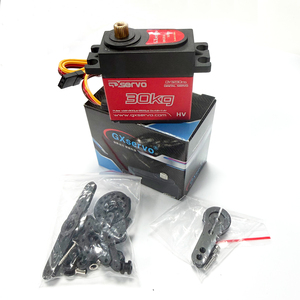
GXservo 30KG Torque Digital Servo Waterproof
Heavy-duty waterproof digital actuator for outdoor battery maintenance crawlers and autonomous robotic vehicles.
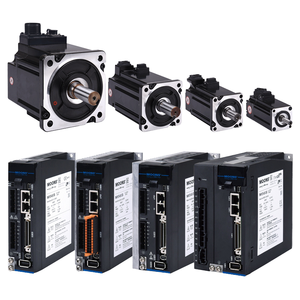
Servo Motor With Drive XP 750W 220VAC Kit
Matched controller and motor subassembly optimized for high-efficiency battery pack production automation lines.
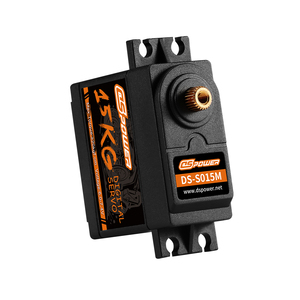
High-Speed Robot Motor with Position Feedback
High-rpm actuator featuring integrated position telemetry for dynamic load balancing in portable battery units.
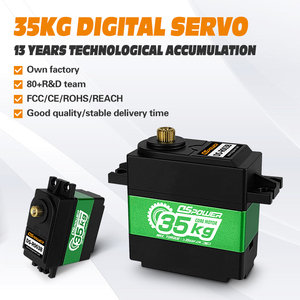
35KG Micro Servo Motor Universal Digital Servo
Full metal gear construction engineered to withstand extreme mechanical shock in rugged battery-powered AGVs.
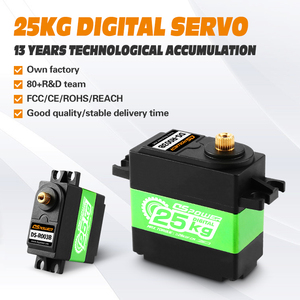
25kg Metal Gear Semi-Aluminum Case Servo
Heat-dissipating aluminum mid-case designed for continuous thermal management in high-duty actuator joints.
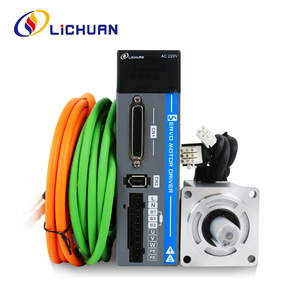
Lichuan 220V IP65 AC Servo Motors & Drivers Kit
Industrial-grade IP65 sealed motor driver kit optimized for automated battery module assembly & handling robotics.
Why Global Original Equipment Manufacturers (OEMs) Trust Telco
Combining four decades of North American engineering oversight with China's top-tier supply chain efficiency for custom sodium-ion energy storage, battery packs, and integrated motion control.
End-to-End System Co-Engineering
We eliminate single-component failure modes by validating battery chemistry, custom Smart BMS logic, wiring harnesses, motor drives, and gearbox gear trains as a unified system under single part number control.
Rigorous Quality & Regulatory Compliance
Our manufacturing protocols align with ISO 13485 medical device standards, UN38.3 transport certification, UL2580, IEC 62133, and IEC 60601 requirements. Full lot traceability ensures seamless audit defense.
Pioneering Sodium-Ion Integration
As a pioneer in commercializing Sodium-Ion (Na-ion) battery pack technology, Telco offers thermal stability down to -40°C, zero-volt transport safety, and exceptional C-rate performance for critical industrial systems.
Dual-Source Supply Chain Resilience
Headquartered in Houston, Texas with audited partner manufacturing campuses in Asia, we provide forecast-driven buffer stock, local warehouse fulfillment, and risk mitigation against supply disruptions.
DFM & Cost-Down Optimization
Our application engineering team conducts thorough Design for Manufacturability (DFM) reviews to right-size battery pack capacity, thermal potting, lamination, and enclosure materials without sacrificing safety margins.
Lifecycle Continuity Management
We commit to extended component life cycles with guaranteed engineering support, change management notifications (PCN), and guaranteed legacy part availability throughout multi-year production programs.
Industry Whitepaper: The Evolution of Industrial Battery Architecture
A comprehensive analysis of next-generation electrochemistry, smart battery management systems (BMS), and power-motion convergence for 2025–2030 sourcing strategy.
1. The Shift Toward Sodium-Ion (Na-Ion) Chemistry in Heavy-Duty Applications
While Lithium Iron Phosphate (LiFePO4) and Nickel Manganese Cobalt (NMC) have dominated energy storage for over two decades, the industrial battery landscape is undergoing a paradigm shift toward Sodium-Ion (Na-ion) cell chemistry. Driven by volatility in lithium carbonate pricing and geopolitical supply chain bottlenecks, global OEMs are turning to China's leading sodium-ion manufacturing ecosystems to secure scalable energy storage solutions.
Sodium-ion batteries present distinct technical advantages for industrial motion control, medical mobility, and standby power. Na-ion cells maintain over 85% capacity retention at extreme sub-zero operating temperatures (-40°C to -20°C), where conventional lithium-ion packs experience catastrophic internal resistance spikes and severe power drop-offs. Furthermore, sodium-ion battery packs can be safely discharged to 0 Volts (0V) for transport and storage, completely removing thermal runaway hazards during air or sea transit.
Comparative Analysis: Industrial Battery Pack Chemistries
| Performance Parameter | Sodium-Ion (Na-Ion) | Lithium Iron Phosphate (LiFePO4) | NMC (Lithium Nickel Manganese Cobalt) |
|---|---|---|---|
| Volumetric Energy Density | 130 – 160 Wh/kg | 160 – 190 Wh/kg | 240 – 300 Wh/kg |
| Low-Temp Performance (-30°C) | > 85% Capacity | 50% - 65% Capacity | 70% - 80% Capacity |
| Cycle Life (80% DOD) | 3,000 – 5,000 Cycles | 4,000 – 8,000 Cycles | 1,500 – 3,000 Cycles |
| Thermal Runaway Start Temp | ~260°C (Extremely Safe) | ~270°C (High Safety) | ~210°C (Moderate Safety) |
| 0V Deep Discharge Tolerance | Fully Supported (Safe 0V) | Cell Damage / Irreversible | Cell Damage / Irreversible |
| Raw Material Abundance | High (Sodium Salts Everywhere) | Medium (Lithium Supply Risks) | Low (Cobalt/Nickel Constraints) |
2. Advanced Smart BMS Architecture & Closed-Loop Motion Control
Modern industrial automation requires seamless synchronization between energy delivery and electromechanical actuation. Traditional standalone battery packs operating without dynamic feedback to the motor controller are prone to voltage sag under peak load spikes, causing unpredicted system resets and shortened cycle life.
Telco’s customized battery packs feature integrated Smart BMS (Battery Management System) modules supporting CANbus 2.0B, RS485, Modbus, and EtherCAT communication protocols. By establishing real-time telemetry between the battery BMS and precision servo drives (such as AC servo controllers or high-torque micro actuators), the master system can dynamically adjust acceleration profiles and peak current draw based on the battery pack’s internal temperature, state of charge (SoC), and state of health (SoH).
Active Cell Balancing
High-efficiency inductive active balancing transfers charge between cells rather than dissipating excess energy as heat, extending overall pack runtime by up to 12%.
Predictive Thermal Cutoff
Multi-point NTC thermistor monitoring provides real-time thermal gradient mapping across cell clusters to trigger adaptive cooling or power throttling.
Solid-State BMS Switches
Replacing mechanical relays with ultra-low RDS(on) MOSFET switch arrays eliminates contact arc erosion and guarantees sub-millisecond fault isolation.
Strategic Procurement Roadmap: Navigating 2025–2030 Sourcing
Key recommendations for procurement directors, supply chain managers, and OEM design leads evaluating custom battery pack suppliers in China.
Mandatory Compliance with Battery Passport & Traceability
Global regulatory frameworks, including the EU Battery Regulation, mandate transparent lifecycle documentation from raw material extraction to recycling. Forward-thinking OEMs must partner with China battery suppliers that provide QR-code embedded digital battery passports recording cell origin, carbon footprint metrics, and chemical composition. Telco provides comprehensive lot traceability for every cell array and BMS sub-assembly.
Modularization vs. Custom Structural Enclosures
While standard off-the-shelf battery modules reduce initial NRE costs, they frequently waste spatial volume in tightly packaged OEM equipment. Sourcing trends favor semi-custom modular designs: standard internal cell bricks coupled with custom-molded IP67 aluminum or polycarbonate structural housings. This approach secures optimal volumetric energy density while avoiding full re-certification overhead.
Mitigating Supply Chain Geopolitical Friction
Relying strictly on single-region factory direct procurement creates vulnerability to tariffs and shipping bottlenecks. Procurement strategies require hybrid support: local engineering, warehousing, and customs clearance in North America/Europe paired with high-volume cell manufacturing in China. Telco’s dual-presence model provides localized customer support backed by China's manufacturing scale.
Total Cost of Ownership (TCO) vs. Initial Cell Price
Evaluating battery pack suppliers solely on initial cost-per-watt-hour ($/Wh) leads to higher long-term warranty exposure. Factors such as BMS balancing efficiency, cell degradation curves under high temperature, shock/vibration potting, and warranty support dictate true lifetime TCO. Telco engineers for 5+ year operational lifespans with documented mean time between failures (MTBF).
Frequently Asked Questions for Technical Sourcing Teams
Clear, engineering-focused answers to common queries regarding custom battery pack design, manufacturing capabilities, certification, and order fulfillment.
- Nominal voltage, continuous load current, and peak pulse current duration.
- Target capacity (Ah or Wh) and envelope dimensions (L x W x H mm).
- Operating temperature range and IP ingress protection rating (e.g., IP65/IP67).
- Communication protocol requirements (CANbus, RS485, SMBus, etc.).
- Required safety standards (UN38.3, IEC 62133, UL2054, UL2580, or IEC 60601).
Ready to Engineer Your Custom Battery & Motion Solution?
Connect directly with our senior application engineering team in Houston and China. Receive tailored duty-cycle analysis, thermal modeling, cell matching recommendations, and commercial quotations within 48 hours.