Navigating China's Energy Storage & Precision Electromechanical Supply Chain
As global equipment manufacturers transition toward higher energy densities, fast-charging topologies, and integrated electromechanical drives, sourcing from premier Chinese lithium battery factories and precision motor engineering centers has become a strategic imperative. This technical guide delivers high-information-gain insights into cell chemistry selection, integrated BMS telemetry, dual-source procurement risk management, and exact product specifications for next-generation industrial applications.
Featured Motion Control & Power Subassemblies
High-precision AC/DC servo actuators and custom battery-compatible drive platforms designed for automated guided vehicles (AGVs), robotics, and medical equipment.
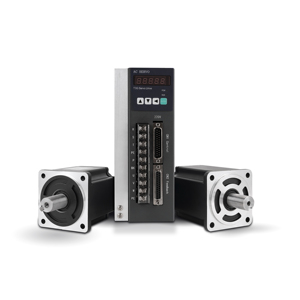
AC Servo Motor 1300W 220V Support Pulse / RS485 for Medical Devices
- Rated Power: 1300W | 220VAC Input
- Protocol: Pulse / RS485 Communication
- Target: High Precision Surgical & Diagnostic Devices
- Features: Ultra-Low EMI, High Dynamic Response
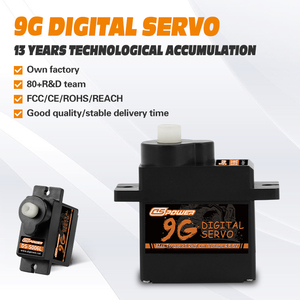
SG90 Servo Motor PWM 180° Plastic Gear & MG90S 9g Micro Servo
- Operating Voltage: 4.8V – 6.0V DC
- Rotation: 180° Angle PWM Control
- Applications: Lightweight Robotics, Actuator Locks
- Weight: 9g Micro Form-Factor
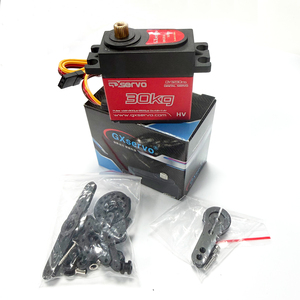
GXservo 30KG Torque Digital Servo Motor Waterproof Metal Gear
- Stall Torque: 30 kg-cm at 7.4V
- Protection Class: IP67 Waterproof Rated
- Gearing: Hard-Anodized Titanium Metal Gears
- Use Case: Heavy Duty Crawler, Industrial Robotics
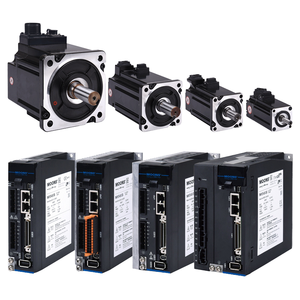
Servo Motor With Drive XP 750W 220VAC Controller & 3m Cable
- Output Rating: 750W (0.75kW) / 2.4 N.m
- Compatibility: Matched Delta Drive Protocol
- Cable Rating: High-Flex 3m Shielded Power/Encoder
- Efficiency: Class F Insulation Standards
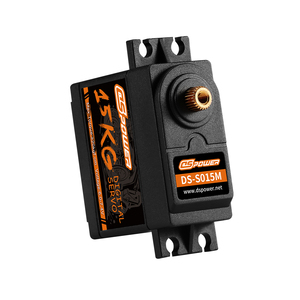
High-Speed RC Robot Motor with Position Feedback (15kg Torque)
- Torque Output: 15 kg-cm Peak Capacity
- Feedback: Magnetic Rotary Encoder Feedback
- Response: High RPM Low-Latency Winding
- Target: Autonomous Inspection Platforms
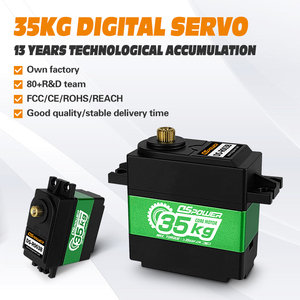
35KG Universal High Torque Micro Servo Motor (Digital Metal)
- Rating: 35 kg-cm High Holding Torque
- Housing: Full CNC Machined Aluminum Case
- Core: Coreless High-Speed DC Motor Driver
- Voltage Range: 6.0V – 8.4V Direct Lipo Drive
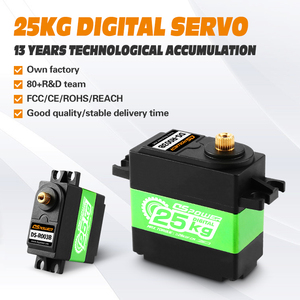
25kg Metal Gear Semi-Aluminum Case PWM Servo Motor
- Gear Train: Steel & Copper Precision Gears
- Case: Thermal-Dissipating Mid-Aluminum Shell
- Control: Standard PWM Signal Input
- Application: Robotic Arms, Automation Grippers
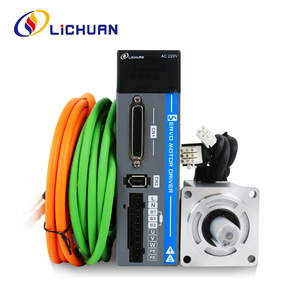
Lichuan 220V 3000RPM IP65 AC Servo Motor & Driver Kit (A5 Series)
- Power Options: 200W / 400W / 750W / 1000W
- Speed & Rating: 3000 RPM Nominal, IP65 Sealing
- Kit Contents: Motor, Driver, Power & Encoder Cables
- System Target: Industrial CNC & Robotics Automation
Why Global OEMs Partner with Tier-1 Chinese Manufacturers & Engineering Systems
Selecting a manufacturing partner for custom lithium battery packs and high-torque motion systems requires balancing raw chemical density with structural safety, regulatory approval, and long-term procurement stability.
Dual-Source Supply Risk Mitigation
By pairing North American engineering design offices (headquartered in Houston, Texas) with fully audited partner factories across China's battery hubs (Shenzhen, Dongguan, Jiangsu), OEMs gain local technical oversight alongside cost-optimized volume manufacturing. This eliminates single-point supply failure risks.
Full Traceability & Compliance
Every cell lot, micro-servo winding, and BMS assembly undergoes strict quality gate validation. Manufacturing facilities maintain compliance with ISO 9001, ISO 13485 (Medical Devices), UL 1973, UN 38.3, and IEC 60601 standards, ensuring full safety records across product lifecycles.
Turnkey Subassembly Integration
Rather than managing isolated vendors for cells, BMS boards, brushless/servo motors, planetary gearboxes, and wire harnesses, our unified engineering strategy supplies completely tested drive and power subassemblies under a single BOM line item.
Future Procurement Trends in China's Lithium & Energy System Market
The global sourcing landscape for energy storage systems and high-performance electromechanical actuators is undergoing rapid technological and geopolitical structural shifts. Sourcing directors and chief technology officers must align their sourcing roadmaps with four definitive industry trends:
1. Vertical Integration of Battery Chemistry with Motion Controllers
Historically, battery packs and motor drives were designed in isolation, leading to system inefficiencies, unoptimized transient voltage drops, and thermal throttling. Top Chinese factories are now integrating micro-BMS boards directly into servo drive enclosures. Communication over unified CANopen, Modbus RS485, or EtherCAT protocols permits real-time dynamic balancing of motor torque limits based on real-time cell state-of-charge (SoC) and internal cell resistance.
2. Commercialization of Sodium-Ion (Na-Ion) alongside LFP Chemistries
While Lithium Iron Phosphate (LFP) remains the baseline for heavy-cycle mobility and stationary power due to its thermal stability and cycle longevity (>3,500 cycles), Sodium-Ion battery packs are rapidly emerging as a cost-effective alternative for low-temperature operating environments (-40°C to 60°C) and cost-sensitive applications. Chinese tier-1 factories lead global scaling of Na-Ion cells, offering procurement managers a dual-track strategy to hedge against lithium carbonate price volatility.
3. Stringent Environmental Carbon Footprint Tracking & EU Battery Passport Alignment
Under the latest European Union Battery Regulation and North American ESG mandates, procurement teams must verify the embedded carbon footprint of lithium supply chains. Top Chinese battery factories are transitioning cell manufacturing to renewable-powered microgrids in Southwestern China while maintaining digital ledger tracking for raw materials (Lithium, Cobalt, Nickel, Graphite) from extraction to final pack assembly.
4. Customization Over Commodity Off-the-Shelf Sourcing
Off-the-shelf battery packs and generic motor designs rarely fit tight spatial envelopes, aggressive thermal profiles, or specialized medical cleanliness requirements. Leading manufacturers now offer modified standard platforms—permitting quick modification of cell holder layouts, customized winding turns for unique KV/voltage constants, high-flex cables, and bespoke IP67 aluminum housings in as little as 4 to 6 weeks.
Key Technological Development Trends in Power & Motion Systems
To maintain high power density and reliable mechanical positioning in miniaturized platforms, modern battery pack engineering and AC/DC servo development are focusing on four core innovations:
High C-Rate Continuous Discharge Cells
Advancements in nanostructured cathode coatings and ultra-thin copper/aluminum current collectors enable custom lithium packs to sustain 10C continuous and 25C peak discharge rates without thermal runaway. This is essential for high-acceleration robotics and heavy-lift servo actuators.
Active Cell Balancing with Smart AI-BMS
Traditional passive balancing bleeds off excess energy as heat. Next-generation smart BMS boards utilize high-efficiency inductive active balancing, transferring charge between cells during both charge and discharge cycles, extending pack life by up to 22%.
Submersible IP67/IP68 Semi-Aluminum Enclosures
Robotic arms, industrial crawlers, and marine automation demand compact mechanical protection. Modern servo motors (such as 25kg–35kg metal-gear digital servos) combine CNC-machined semi-aluminum shells with specialized fluororubber O-rings to deliver sub-millimeter sealing under extreme washdown conditions.
Battery Cell Chemistries & Motion Control Compatibility Guide
Compare key engineering metrics across primary commercial energy storage chemistries supplied by top Chinese battery factories for industrial OEM integration:
| Chemistry Type | Energy Density (Wh/kg) | Cycle Life (80% DoD) | Thermal Runaway Threshold | Low-Temp Performance (-20°C) | Primary Industrial Motion Applications |
|---|---|---|---|---|---|
| LiFePO4 (Lithium Iron Phosphate) | 160 – 190 Wh/kg | 3,500 – 6,000 | 270°C (Extremely Safe) | ~65% Capacity Retention | AGVs, AMRs, Warehouse Logistics, Heavy Servo Arms |
| NMC (Nickel Manganese Cobalt) | 230 – 280 Wh/kg | 1,500 – 2,500 | 210°C (Requires Active BMS Cooling) | ~80% Capacity Retention | Portable Medical Devices, Aerial Robotics, Handheld Tools |
| Sodium-Ion (Na-Ion) | 110 – 150 Wh/kg | 2,000 – 4,000 | 260°C (High Thermal Stability) | ~90% Capacity Retention | Cold-Storage AGVs, Outdoor Telecommunications, Backup Power |
| Solid-State (Advanced Polymer/Ceramic) | 350 – 400 Wh/kg | 1,000 – 2,000 | >300°C (Non-Flammable) | ~75% Capacity Retention | Aerospace Actuation, High-End Surgical Robotics, Defense |
Frequently Asked Sourcing & Engineering Questions
Direct, transparent technical answers to help purchasing agents and mechanical design engineers evaluate vendor qualifications.
What is the typical Minimum Order Quantity (MOQ) for custom battery pack and motor programs?
For modified standard platforms (e.g., custom wire harness lengths, shaft turnings, alternative gearbox ratios, or connector integration), MOQs typically start at 250 to 500 units per year. Fully clean-sheet ground-up engineering designs—involving custom lamination dies, bespoke aluminum extrusion molds, or dedicated BMS PCB layouts—generally begin at 1,000 units annually. Prototype pilot quantities (5–20 units) are fully supported during early qualification phases prior to tooling lock.
How long does custom engineering take from specification approval to first sample delivery?
Minor modifications to standard catalog servo motors or stock battery cell arrangements take approximately 4 to 6 weeks for working sample delivery. Ground-up custom programs require 10 to 14 weeks, encompassing initial Finite Element Analysis (FEA) thermal modeling, Design for Manufacturability (DFM) sign-off, prototype mold fabrication, assembly, and comprehensive bench endurance testing.
What specific parameters should an OEM provide to receive an accurate engineering quotation?
To accelerate technical sizing, engineers should provide a detailed duty cycle profile: continuous and peak torque/current requirements, nominal system voltage, envelope dimension constraints, ambient operating temperature range, required ingress protection (IP rating), target operating lifecycle (in hours or cycles), communication protocols (Pulse, RS485, CAN bus), and mandatory agency certifications (UL, CE, UN 38.3, or IEC 60601).
How do Chinese battery and motor manufacturers ensure medical device compliance (IEC 60601 / ISO 13485)?
Medical device compliance is maintained through strict lot-level component traceability, locked production revision control, cleanroom assembly options, cleanroom-grade synthetic lubricants, low-EMI drive filtering, and documented risk management files. Manufacturing partners undergo rigorous supplier quality audits to meet international medical regulatory expectations.
What testing certifications are required before shipping lithium battery packs globally?
All lithium battery packs shipped internationally must pass UN 38.3 testing standards (covering altitude simulation, thermal test, vibration, shock, external short circuit, impact, overcharge, and forced discharge). For stationary or vehicle electrification, UL 1973, UL 2580, or IEC 62619 certifications are additionally secured based on target market requirements.
Can you supply integrated subassemblies containing motor, gearbox, drive electronics, and battery pack?
Yes. Supplying matched, fully integrated subassemblies is a core capability. Engineering teams integrate precision AC/DC servo motors, planetary or worm gearheads, magnetic/optical encoders, closed-loop servo drives, and custom lithium/sodium-ion power packs into a single pre-tested assembly under a unified part number, reducing supply chain complexity and BOM management overhead.
Ready to Engineer Your Custom Battery & Motion Solution?
Collaborate directly with our technical application engineers to evaluate your duty cycle sheet, optimize battery cell selection, and receive a competitive commercial proposal.
Send an Inquiry