High-Precision Servo Controllers & Motor Drives
Engineered for demanding OEM applications spanning automated robotics, medical diagnostics, RC systems, and industrial processing. Browse our certified motion hardware optimized for power density, positional accuracy, and thermal efficiency.
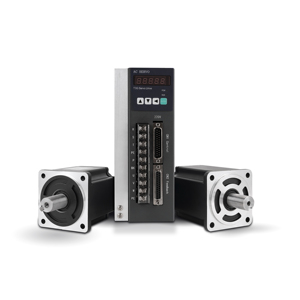
AC Servo Motor 1300W 220V Support Pulse / RS485 for Medical Devices
- Rated Power: 1300W (220VAC)
- Control Interface: Pulse / Dir & RS485 Modbus
- Application: Medical Devices & Diagnostics
- High Efficiency & Low Cogging Torque
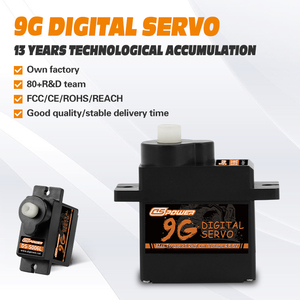
SG90 Servo Motor PWM 180° Micro Servo Motor MG90S 9g DSPOWER
- Operating Voltage: 4.8V - 6.0V
- Rotation Angle: 180° PWM Control
- Gear Type: Precision Polymer / Micro Gear
- Weight: 9g Ultra-Lightweight Construction
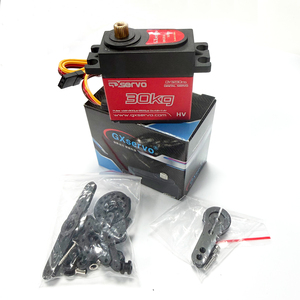
GXservo 30KG Torque Digital Servo Motor Waterproof Metal Gear
- Max Torque: 30kg-cm High Output
- Enclosure: IP67 Waterproof & Dustproof
- Gearing: Reinforced Titanium/Metal Alloys
- Target: 1/8 1/10 Crawler Car & Robotics
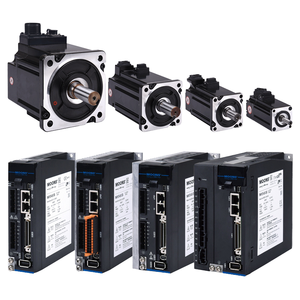
Servo Motor With Drive XP 750W 220VAC 2.4N.m Delta Compatible
- Output Power: 750W (0.75kW) / 2.4 N.m
- Supply Voltage: Single/Three Phase 220VAC
- Includes: Integrated Driver & 3m Cable Set
- Feedback: High-Resolution Optical Encoder
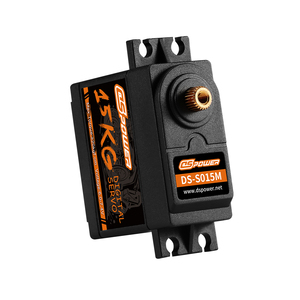
High-Speed RC Robot Servo Motor with Position Feedback (15kg Torque)
- Peak Torque: 15kg-cm Capacity
- Feedback: Real-time Analog/Digital Position
- Speed: Ultra-fast Transient Response
- Usage: Autonomous Robotics & Actuation
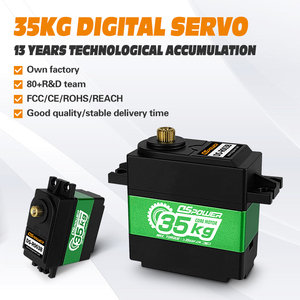
35KG Universal Micro Servo Motor Digital Metal Gear Controller
- Torque Range: 25KG to 35KG Dynamic Load
- Case Design: Anodized Heat-Dissipating Core
- Signal Protocol: High-Frequency Digital PWM
- Versatility: Model Aircraft, AGVs & Arms
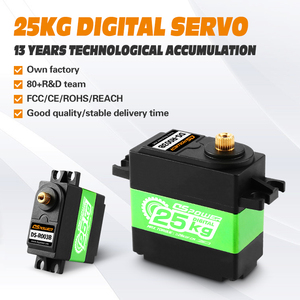
25kg Metal Gear Semi-Aluminum Case Robotic Arm PWM Servo Motor
- Housing: CNC Machined Semi-Aluminum Shell
- Internal Gears: Heavy-Duty Stainless Steel
- Accuracy: Zero-Backlash Positional Control
- Application: Industrial & Robotic Articulation
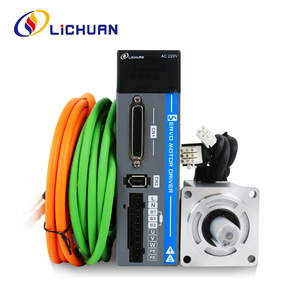
Lichuan A5 Series 220V 3000RPM IP65 AC Servo Motor Driver Kits
- Power Range: 200W, 400W, 600W, 750W, 1000W
- Protection Rating: IP65 Sealed Motor Body
- Speed Rating: 3000 RPM Continuous
- Kit Includes: Motor, Match Driver, Power Harness
1. Strategic Landscape: Navigating China’s Servo Controller Ecosystem
The global industrial landscape is undergoing a profound paradigm shift driven by high-density automation, autonomous robotics, and strict energy efficiency mandates. At the core of this transition lies the modern servo controller and driver architecture. As original equipment manufacturers (OEMs) worldwide strive to achieve tighter motion tolerance, minimal thermal dissipation, and seamless fieldbus communications, China has solidified its position as the premier manufacturing hub for advanced servo motion technologies.
Selecting a qualified China top servo controller supplier is no longer merely a transactional unit-cost decision; it is a critical strategic partnership. High-performance motion control requires harmonious integration between electromagnetic coils, feedback optical/magnetic encoders, field-oriented control algorithms (FOC), and robust drive electronics. Whether designing sub-gram precision dosing actuators for medical laboratory automation or heavy-duty 1000W AC servo drives for 6-axis articulated industrial arms, global procurement leaders require suppliers with proven design engineering, rigorous quality assurance standards, and resilient supply chain logistics.
Information Gain Note for OEM Procurement Engineers: Modern servo system evaluation must go beyond continuous torque rating. Modern evaluation requires analyzing dynamic frequency response (kHz), bus latency (EtherCAT/CANopen microsecond synchronization), and thermal equilibrium under peak duty cycles to prevent field failures.
Key Electromagnetic & Electronic Benchmark Factors
When vetting Chinese manufacturing partners for custom motion assemblies, senior engineering directors emphasize three foundational pillars:
- Silicon Controller Architecture: Transitioning from classic microcontrollers to 32-bit dual-core DSPs and FPGA-based real-time control loops capable of space vector pulse width modulation (SVPWM) at frequencies exceeding 20 kHz.
- Feedback Resolution: Integration of high-bit absolute encoders (17-bit to 24-bit magnetic/optical single-turn and multi-turn) that eliminate the need for homing cycles upon system initialization.
- Thermal Management & Form Factor: Utilization of high thermal conductivity aluminum housings, direct-bond copper (DBC) power modules, and specialized potting compounds allowing compact drive integration directly onto motor end-bells (Integrated Servo Motors).
Why Global Fortune 500 OEMs Partner With Us
Building on nearly four decades of OEM motion engineering experience since 1985, Telco Intercontinental Corp. bridges the gap between Asian manufacturing scale and Western quality engineering.
ISO 13485 & IEC 60601 Rigor
Full device history record (DHR) tracking, cleanroom-compatible lubricants, low-EMI drive designs, and component traceability tailored for medical devices and lab diagnostic platforms.
Finite Element Analysis (FEA)
Every modified magnetic structure, custom winding design, and housing flange undergoes advanced electromagnetic and thermal FEA simulations before physical sample production.
Dual-Source Supply Resiliency
Mitigate single-point geopolitical and shipping risks through fully audited manufacturing infrastructure across North America and Asia, backed by regional buffer stocking.
OEM Customization Expertise
From custom shaft splines, IP68 underwater sealing, and specialty gearhead ratios (planetary, worm, harmonic) to fully customized embedded firmware protocols.
Rapid Prototyping (4-6 Weeks)
Accelerate your time-to-market. Standard modified sample builds delivered in 4 to 6 weeks; ground-up bespoke electromagnetic frames qualified within 10 to 14 weeks.
Complete System Integration
We deliver fully tested modular subassemblies: motor + gearbox + encoder + smart controller + wiring harness + custom battery pack under a single SKU.
2. Technical Development Trends Shaping Servo Motor & Controller Innovation
The field of precision motion control is experiencing rapid technological evolution. Designers who anticipate these technological shifts can engineer equipment with higher throughput, lower maintenance costs, and extended operating lifetimes.
A. Adoption of Wide Bandgap (WBG) Semiconductors: SiC & GaN FETs
Traditional AC servo drives and brushless DC (BLDC) controllers rely on silicon IGBTs or traditional MOSFETs, limiting switching frequencies typically to 8–16 kHz. Next-generation Chinese servo controllers are aggressively adopting Gallium Nitride (GaN) and Silicon Carbide (SiC) power stages. Switching frequencies exceeding 100 kHz enable significantly smoother current waveforms, reducing high-frequency motor ripple, lowering acoustic noise, and dramatically shrinking passive filter components.
B. Decentralized Architecture & Smart Integrated Servos
The industrial market is moving away from centralized control cabinets filled with bulky servo drives connected to motors via long, shielded multi-core cables. Modern machinery utilizes decentralized smart servo motors—where the drive power stage, digital signal processor, and multi-turn absolute encoder are physically integrated into the rear end-housing of the motor. This architecture reduces machine cabinet footprint by up to 80%, eliminates complex external cabling, and virtually eradicates EMI/RFI interference over long cable runs.
C. Predictive Maintenance via Edge AI & Sensor Fusion
Leading China servo controller manufacturers are embedding low-power Edge AI microcontrollers directly into drive electronics. By continuously capturing high-rate phase current ripples, internal thermal gradients, and vibration signatures from 3-axis MEMS accelerometers, smart servo drives perform real-time frequency-domain FFT analysis. This enables detection of bearing race degradation, winding insulation breakdown, or mechanical backlash long before catastrophic failure occurs, supporting True Predictive Maintenance (PdM).
D. Advanced Communication Fieldbuses & Functional Safety Integration
Real-time motion control demands deterministic networking. Industrial Ethernet protocols—specifically EtherCAT (CoE / CiA 402 profile), PROFINET IRT, and CC-Link IE TSN—are replacing legacy pulse/direction interfaces in medium-to-high complexity machinery. Furthermore, modern safety standards require integrated Safe Torque Off (STO), Safe Stop 1 (SS1), and Safe Limited Speed (SLS) implemented directly on the controller board according to SIL 3 / PL e requirements.
3. Technical Specification Matrix: Servo Controller Categories Compared
To assist procurement managers and system integrators in specifying the optimal motion hardware, the benchmark table below compares the four primary servo controller classes available from premier Chinese manufacturing partners.
| Controller Category | Voltage & Power Range | Control Protocols | Encoder Feedback | Primary OEM Use Cases |
|---|---|---|---|---|
| Micro PWM RC Servos (e.g., SG90, MG90S, 25kg-35kg) |
4.8V – 8.4V DC (5W – 50W) |
Standard PWM (50Hz), High-Freq Digital | Potentiometer / 10-bit Magnetic | Educational Robotics, RC Vehicles, Small Actuators, UAV Gimbal Control |
| Low-Voltage BLDC Servo Controllers (Integrated DC Systems) |
12V – 48V DC (50W – 750W) |
CANopen (CiA 402), RS-485 Modbus, Pulse/Dir | Hall Sensors, 12-bit / 17-bit Magnetic | AGVs / AMRs, Medical Pumps, Battery-Powered Mobility, Surgical Tools |
| High-Precision AC Servo Drives (e.g., Lichuan A5, XP 750W) |
220V / 380V AC (200W – 7.5kW) |
EtherCAT, PROFINET, RS-485, Analog Voltage | 17-bit / 23-bit Optical Absolute | CNC Machinery, Packaging Lines, Automated Assembly, Semiconductor Tools |
| Heavy-Duty Waterproof Servos (e.g., GXservo 30kg IP67) |
6.0V – 14.8V DC (30W – 120W) |
Digital PWM, Bus Servo Protocols | High-Precision Potentiometer / Magnetic | All-Terrain Mobile Robots, Subsea Arms, Outdoor Automation, Defense |
4. Future Global Procurement Trends in Motion Control Sourcing
Global supply chain disruptions, fluctuating raw material prices, and shortening product life cycles have transformed how Fortune 500 procurement teams approach servo motor and drive purchasing from China. Key purchasing trends include:
A. Shifting from Component Sourcing to Full Subassembly Kitting
Historically, buyers sourced motors from one vendor, gearheads from another, optical encoders separately, and drives from a fourth supplier. This fragmented approach resulted in complex component matching, vendor finger-pointing during failure analysis, and excessive inventory carrying costs. Today’s procurement teams demand fully integrated subassemblies. Sourcing a single SKU containing a matched motor, tuned driver, custom gearbox ratio, factory-tested wiring harness, and pre-configured parameter tables reduces total cost of ownership (TCO) by 15% to 28%.
B. Total Cost of Ownership (TCO) vs. Initial Unit BOM Cost
While initial purchase price remains vital, forward-thinking buyers evaluate TCO over an operational lifecycle of 20,000 to 50,000 hours. Factors such as drive electrical efficiency (IE4 / IE5 efficiency standards), motor thermal rise, MTBF (Mean Time Between Failures), and regional warranty support carry significantly greater weight in supplier audits.
C. Environmental Sustainability & Energy Efficiency (IE4/IE5 Compliance)
With carbon neutrality mandates taking effect across North America, Europe, and Asia, energy consumption in continuous-duty pump, fan, and conveyor motion systems is heavily scrutinized. High-efficiency permanent magnet synchronous motors (PMSM) paired with dynamic regenerative braking servo drivers are fast replacing inefficient AC induction platforms.
Frequently Asked Questions by OEM Buyers & Engineers
Direct technical guidance regarding MOQs, customization lead times, compliance certification, and system integration.
What is the standard Minimum Order Quantity (MOQ) for custom servo controller programs?
For modified standard platforms (e.g., custom winding turn count, shaft flat modification, connector harness alterations, or pre-loaded parameter firmware), MOQ typically ranges between 250 and 500 units per year. Ground-up bespoke designs requiring custom lamination tooling, specialized housing dies, or custom PCB layout start at 1,000 units annually. Prototype and engineering validation samples (5 to 20 units) are supplied to support pilot evaluation prior to full production releases.
How do you ensure electromagnetic compatibility (EMC) and IEC 60601-1 / CE compliance?
Our drive and motor subassemblies incorporate multi-layer PCB layouts with dedicated ground planes, integrated common-mode chokes, inline LC filters, and conductive aluminum housing shields. We perform full pre-compliance radiated and conducted emission testing, transient immunity checks, and surge testing in accordance with EN 61800-3 (Adjustable speed electrical power drive systems) and IEC 60601-1-2 for medical devices.
What is the typical lead time from initial specification to functional engineering samples?
Modified standard motor platforms typically reach sample delivery in 4 to 6 weeks. Ground-up custom programs—involving finite element magnetic simulation, new stator tooling, custom gear hobbing, and bespoke firmware development—generally take 10 to 14 weeks, inclusive of full factory acceptance testing (FAT) data sheets.
Can Chinese servo controllers seamlessly interface with Western PLC ecosystems (e.g., Beckhoff, Rockwell, Siemens)?
Yes. Our AC and DC servo controllers support standardized industrial communication profiles. Specifically, our EtherCAT servo drives comply with the CiA 402 (CANopen over EtherCAT) device profile, enabling instant plug-and-play XML/ESI configuration file importing into TwinCAT, Codesys, Siemens TIA Portal, or Rockwell Studio 5000 control environments.
How is absolute multi-turn positional memory maintained during power loss?
We offer two primary absolute encoder technologies: battery-backed multi-turn optical encoders (utilizing a long-life lithium battery mounted on the drive or cable assembly) and energy-harvesting Wiegand-effect multi-turn magnetic encoders. Wiegand-based systems generate an electrical pulse from magnet rotation alone, counting turns without requiring an external battery.
What thermal protection mechanisms are built into your high-torque servo motors?
Every industrial servo motor incorporates embedded thermal sensors (PT100, PTC thermistors, or NTC sensors) directly embedded within the stator winding heads. Furthermore, the intelligent drive software monitors an internal $I^2t$ thermal accumulation algorithm to trigger safe current foldback or warning flags before winding insulation thresholds (Class B, F, or H) are compromised.
Ready to Engineer Your Custom Motion Solution?
Consult directly with our senior application engineering team. Whether you need a low-cost micro PWM servo, a high-torque waterproof robotic drive, or a custom 220V EtherCAT AC servo system, we deliver tailored motion hardware backed by 40 years of engineering leadership.