Featured Precision Fan & Servo Motor Products
Standard, modified, and bespoke motion control units exported globally with factory-direct quality verification and low-EMI compliance.
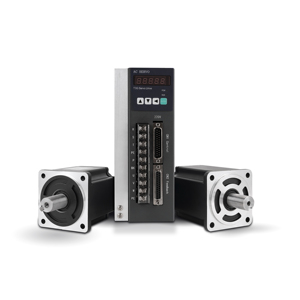
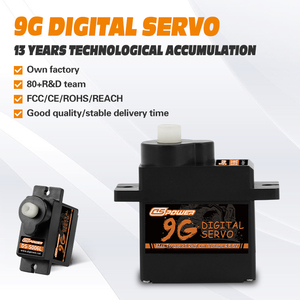
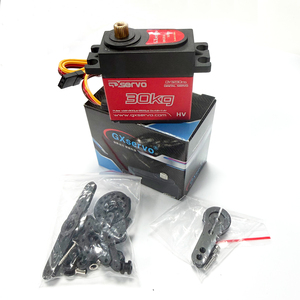
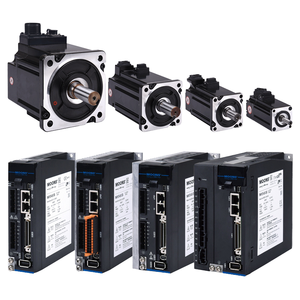
Engineering & Sourcing Matrix for Chinese Fan Motor Manufacturing
Navigating global supply chain dynamics, electromagnetic design optimization, thermal management, and factory qualification protocols for international OEMs.
Information Gain Index: Why Motor Sourcing Requires Engineering Rigor
Selecting a wholesale fan motor factory in China goes far beyond catalog price comparisons. Modern cooling systems, HVAC blowers, medical ventilators, and industrial ventilation demand strict compliance with international thermal endurance standards (Class B, F, H insulation), electromagnetic compatibility (EMC/EMI), ingress protection (IP54 to IP68), and acoustic decibel controls. Sourcing teams must evaluate factories based on stator lamination grade, copper wire purity, dynamic balance precision, and long-term bearing reliability under continuous duty cycles.
Thermal Management & Insulation
Precision-engineered fan motors utilize Class H (180°C) magnet wire combined with vacuum pressure impregnation (VPI) resins. This prevents dielectrical breakdown, resists moisture, and ensures over 50,000 hours of continuous MTBF under harsh thermal cycles.
Acoustic & Cogging Reduction
By implementing skewed stator lamination stacks and optimized slot-pole configurations (e.g., 9-slot 6-pole or 12-slot 8-pole BLDC designs), our partner facilities reduce cogging torque and acoustic resonance down to under 38 dBA for noise-sensitive medical environments.
Dual-Source Supply Chain Protection
To mitigate geopolitical and logistics risks, major Chinese exporters maintain dual-manufacturing hubs across Eastern and Southern China, backed by U.S.-based engineering leadership in Houston, Texas for seamless qualification and inventory buffering.
Fan Motor Technology Comparison for Global Procurement
Detailed evaluation of Motor Topologies: Electronically Commutated (EC/BLDC), Permanent Split Capacitor (PSC), Shaded Pole, and AC Servo Platforms.
| Motor Technology | Efficiency Rating | Speed Control Protocol | Acoustic Noise Level | Service Life (MTBF) | Primary Industrial Applications |
|---|---|---|---|---|---|
| EC / BLDC Fan Motor | 85% - 92% (IE5) | PWM, 0-10VDC, Modbus RS485 | Very Low (< 40 dBA) | > 50,000 Hours | Cleanroom FFU, HVAC VAV boxes, Data Center Cooling |
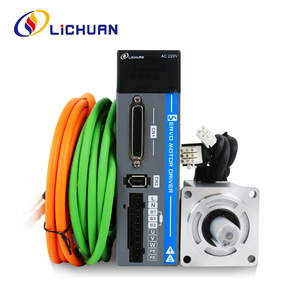
| AC Servo Motor Kit | 90% - 95% | Pulse/Dir, CANopen, EtherCAT | Ultra Quiet (< 35 dBA) | > 40,000 Hours | Precision Robotic Arm, Medical Surgical Equipment |
| PSC (Permanent Split Cap) | 60% - 72% (IE2) | Multi-tap Voltage / TRIAC | Moderate (45 - 55 dBA) | 25,000 Hours | Commercial Exhaust Fans, Condensing Units |
| Shaded Pole AC Motor | 30% - 45% (IE1) | Fixed Speed / Single Voltage | Moderate to High | 15,000 Hours | Small Appliance Venting, Refrigerator Evaporators |
Future Sourcing & Technology Roadmap for Wholesale Buyers
Key market shifts transforming the global motor export landscape from 2025 to 2030.
1. Transition to EC and Sensorless BLDC Integration
Global energy mandates (such as EU ErP 2024 directives and US DOE standards) are accelerating the obsolescence of low-efficiency AC shaded-pole motors. China’s leading fan motor manufacturers are re-tooling production lines toward integrated EC motors that house inverter electronics directly within the end-bell. Sensorless field-oriented control (FOC) algorithms allow smooth starting torque, reduced cabling complexity, and full telemetry capabilities over RS485 Modbus industrial networks.
2. Sodium-Ion Battery & Autonomous Power Packs
Emerging motion control programs in mobile HVAC units, agricultural robotics, and off-grid ventilation systems are pairing low-voltage BLDC fan motors directly with sodium-ion (Na-ion) battery chemistry. Sodium-ion packs offer superior low-temperature performance (-40°C thermal stability) and lower raw material volatility compared to conventional lithium-ion, presenting OEMs with a highly sustainable alternative for remote equipment deployments.
3. Rare-Earth Reduction & Ferrite Hybrid Magnetics
Due to neodymium price volatility, OEM engineering teams are increasingly qualifying high-performance ferrite rotors and Synchronous Reluctance (SynRM) designs. Chinese exporters with strong finite element analysis (FEA) capabilities are delivering specialized lamination geometries that achieve IE4/IE5 efficiency thresholds without heavy reliance on dysprosium and neodymium rare-earth elements.
4. Traceable Quality Management & Cleanroom Manufacturing
Medical diagnostic equipment and semiconductor cleanroom fan filter units (FFUs) demand rigorous contamination controls. Approved Chinese exporters operate ISO Class 7 cleanrooms for rotor assembly, utilizing synthetic low-outgassing lubricants, dynamic balancing down to G1.0 standards, and lot-traceable serialization records that align with ISO 13485 and IEC 60601 supplier quality frameworks.
Why Top Global Brands Partner With Experienced Motor Exporters
Blending North American engineering management with Chinese manufacturing scale to eliminate sourcing friction.
Application-First Engineering
We do not force standard catalog units onto complex duty cycles. Our application engineers analyze your continuous and peak torque, thermal dissipation curve, axial/radial loads, and voltage headroom before issuing technical proposals.
Cost-Down Optimization
By reviewing your magnet grade, wire gauge fill factor, gear train ratios, and housing tooling, we eliminate over-engineered components that pad BOM costs without contributing to actual operational margin of safety.
End-to-End Subassembly Integration
Streamline your supply chain by managing a single part number. We integrate matched fan blades, motor stators, planetary gearheads, optical encoders, custom wiring harnesses, and digital drives into a single pre-tested assembly.
Frequently Asked Questions (FAQ)
Direct answers for procurement officers, hardware design leads, and global supply chain directors.
1. What is the typical Minimum Order Quantity (MOQ) for custom wholesale fan motor programs?
2. How long does the customization process take from initial spec review to working samples?
3. What critical technical data should an OEM supply when submitting an RFQ?
4. How do EC and BLDC fan motors compare against traditional PSC motors in Total Cost of Ownership (TCO)?
5. Can fan motors be designed to satisfy strict medical grade (IEC 60601) and ultra-low EMI standards?
6. How are quality control and incoming lot inspections managed at Chinese factory partner facilities?
7. What options exist for integrating gearing, encoders, and custom drive controllers?
8. How does dual-sourcing and buffer inventory protection work for international shipments?
Ready to Optimize Your Motor Procurement & Duty Cycle?
Whether you require minor modifications to an existing AC/BLDC platform or a complete ground-up motion engineering proposal, our engineering team is ready to analyze your specification sheet.
Send an Inquiry