Featured Custom OEM Products & Integrated Systems
Engineered for high-reliability medical automation, industrial robotics, AGV platforms, and mission-critical power systems.
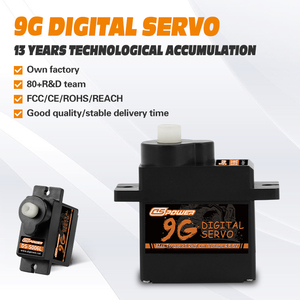
SG90 Micro Servo Motor PWM 180° Plastic & Metal Gear Series (MG90S 9g)
Get a Quote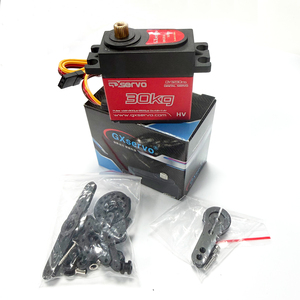
GXservo 30KG High-Torque Digital Servo Motor Waterproof Metal Gear
Get a Quote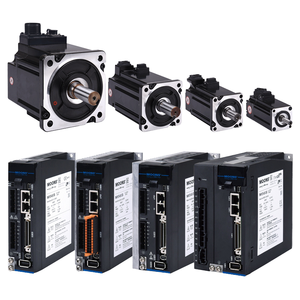
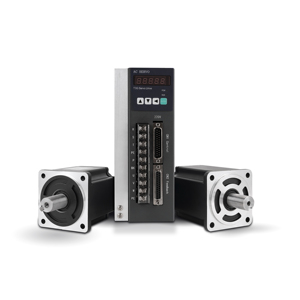
Servo Motor With Integrated Drive XP 750W 220VAC Controller Subassembly
Get a Quote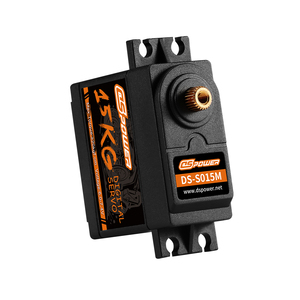
High-Speed Robot Actuation Motor with Encoder Position Feedback (15kg)
Get a Quote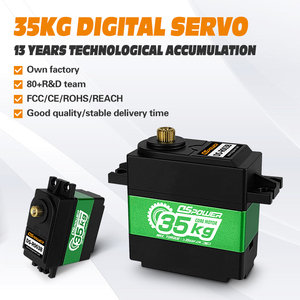
35KG Micro Servo Motor High-Torque Universal Digital Metal Gear Assembly
Get a Quote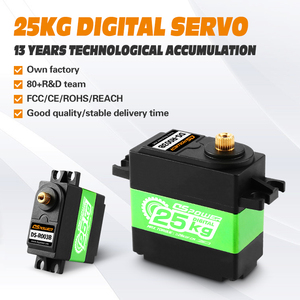
25kg Metal Gear Semi-Aluminum Case Robotic Arm PWM Micro Servo Motor
Get a Quote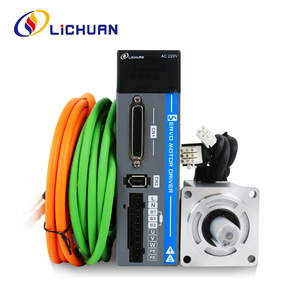
Lichuan 220V 3000RPM IP65 AC Servo Motor & Driver Kit (200W-1000W)
Get a Quote40+
Years of OEM Engineering (Since 1985)
6000+
LFP Life Cycles @ 80% DoD
100%
Traceable Lot Build Integrity
ISO13485
Medical & Quality System Certified
1. Technical Whitepaper: The Paradigm Shift to OEM Custom LFP Battery Packs
In modern commercial, industrial, and medical equipment manufacturing, energy storage can no longer be viewed as a commodity off-the-shelf component. As high-torque actuation, integrated motion systems, and autonomous robotics scale, the underlying power delivery system dictates system lifespan, thermal tolerance, safety compliance, and overall operational expenditure. Lithium Iron Phosphate ($LiFePO_4$ or LFP) has emerged as the definitive chemistry for industrial original equipment manufacturers (OEMs) seeking non-combustible energy storage with unparalleled lifecycle characteristics.
Unlike legacy Lithium Nickel Manganese Cobalt ($NMC$) or Lithium Cobalt Oxide ($LCO$) formulations, custom LFP battery packs possess an intrinsically safe olivine crystal structure. The iron-phosphate bond is chemically resistant to thermal runaway under extreme mechanical rupture, overcharging, and high ambient thermal stress. When engineered by an experienced factory partner like Telco Intercontinental Corp. (Houston, TX), custom OEM LFP battery packs deliver over 3,500 to 6,000 full charge-discharge cycles while maintaining over 80% of original capacity.
Electrochemical & Structural Superiority of Custom LFP Chemistry
Custom OEM manufacturing allows mechanical and electrical engineering teams to tailor the pack architecture precisely to the application's unique voltage profile, continuous discharge currents, and mechanical envelope. By optimizing cell matching, internal busbar impedance, thermal dissipation pathways, and Smart Battery Management Systems (BMS), custom LFP solutions eliminate the traditional compromises associated with generic battery modules.
| Battery Chemistry / Metrics | OEM Custom LFP ($LiFePO_4$) | Standard NMC ($LiNiMnCoO_2$) | Sodium-Ion ($Na^+$ Alternative) |
|---|---|---|---|
| Thermal Runaway Temp | 270°C – 300°C (Extremely Safe) | 210°C (High Risk) | 260°C (Safe) |
| Cycle Life (80% DoD) | 3,500 – 6,000+ Cycles | 1,000 – 2,000 Cycles | 2,000 – 4,000 Cycles |
| Volumetric Energy Density | 300 – 420 Wh/L | 550 – 700 Wh/L | 250 – 350 Wh/L |
| Nominal Cell Voltage | 3.2 V | 3.6 V – 3.7 V | 3.0 V – 3.1 V |
| Low Temp Discharge (-20°C) | 70% - 80% Capacity | 80% - 90% Capacity | 85% - 92% Capacity |
| Raw Material Supply Risk | Low (Iron / Phosphate abundant) | High (Cobalt / Nickel constrained) | Very Low (Abundant Sodium) |
*Data synthesized from Telco Intercontinental Corp. electrochemistry laboratory empirical testing across 12V, 24V, 48V, and 72V OEM platform deployments.
Why World-Class OEMs Partner with Telco Intercontinental Corp.
Combining 40 years of precision motion engineering with tier-1 battery pack manufacturing discipline.
Unified Power + Motion Engineering
Managing separate vendors for motors, gearboxes, drives, and battery packs creates integration conflicts. Telco delivers fully validated subassemblies under a single BOM line item.
- Matched LFP discharge rates to motor peak torque
- Unified CANbus / RS485 telemetry integration
- Single point of technical accountability
Medical & Industrial Compliance
Operating under strict ISO 13485 and ISO 9001 quality management systems, our manufacturing facilities ensure full lot traceability, change control, and regulatory readiness.
- UN 38.3 & UL 1973 transport & safety certification
- IEC 60601 compliant low-EMI drive architecture
- Cleanroom-compatible assembly protocols
Dual-Source Supply Chain Resilience
Headquartered in Houston, Texas since 1985, Telco mitigates geopolitical disruptions through audited manufacturing hubs in North America and Asia with managed buffer stock.
- Staged buffer inventory management in US hubs
- FEOC-compliant cell sourcing strategies
- 10-year component lifecycle obsolescence protection
2. Custom OEM LFP Battery Pack Product Architecture & Solutions
Telco designs custom LFP battery systems tailored to specific industrial duty cycles. Whether your engineering requirements demand compact 12V micro-pack configurations or multi-kilowatt high-voltage traction systems, our battery design team optimizes three critical subsystems:
A. Smart BMS & Telemetry Architecture
Every OEM pack integrates an application-specific Battery Management System utilizing Texas Instruments or Analog Devices Automotive-grade AFEs. Features include active cell balancing, precise State-of-Charge (SOC) Coulomb counting, State-of-Health (SOH) tracking, and dual temperature sensing across cell groups. Communication protocols support CANbus 2.0B, Modbus RS485, SMBus, and Bluetooth Low Energy (BLE).
B. Mechanical Enclosure & Thermal Management
Offered in extruded aluminum, CNC-machined alloy, or high-impact flame-retardant ABS/PC polymer enclosures rated up to IP67. Thermal propagation protection utilizes phase-change materials (PCM), silica aerogel insulation blankets, and structural potting compounds that isolate individual prismatic or 26650/32700 cylindrical cells against severe mechanical vibration.
Target Industry Deployment Scenarios
- Autonomous Mobile Robots (AMR) & AGVs: 24V, 36V, and 48V LFP power units engineered for rapid 1C to 3C opportunity charging during downtime, seamlessly interfaced with heavy-duty servo traction motors like the Lichuan 220V/3000RPM IP65 AC Servo kit or 35KG high-torque steering actuators.
- Medical Devices & Diagnostic Analyzers: Ultra-quiet, low-EMI 12V and 24V battery back-up power packs designed to meet IEC 60601-1 safety standards. Paired with high-precision 1300W AC Servo systems and position-feedback actuators for smooth fluidic dispensing and patient bed adjustment.
- Untethered Industrial & Off-Grid Equipment: Ruggedized 48V to 72V energy storage systems with integrated heaters for operation down to -20°C, providing sustained power to heavy motorized valves, linear actuators, and remote monitoring arrays.
3. Future Procurement Trends in Custom OEM Battery Manufacturing
As procurement directors and engineering leads navigate global energy transition mandates, several macro trends are reshaping how custom LFP battery packs are specified, audited, and purchased:
A. Transition toward Cell-to-Pack (CTP) & Structural Battery Modules
Traditional battery assembly relied on grouping individual cells into modules, which were then wired into a larger battery housing. Modern OEM battery factories are shifting rapidly to Cell-to-Pack (CTP) designs. By eliminating module housings and intermediate wiring harnesses, CTP architecture increases volumetric utilization by 15% to 25%, reduces overall pack weight, and eliminates up to 40% of manual manufacturing steps. This translates directly to lower BOM costs for high-volume OEM programs.
B. Strict Traceability & Digital Battery Passports
Impending regulatory frameworks, including the EU Battery Regulation and North American ESG reporting guidelines, require complete supply chain transparency. Tier-1 OEM suppliers must now provide digital battery passports detailing raw material provenance (lithium, iron, synthetic graphite), carbon intensity per kWh produced, and recyclable component indexing. Telco supports OEMs with batch-level barcode tracking and documented raw material audits.
C. Co-Existence of Sodium-Ion ($Na^+$) and Advanced LFP Solutions
While LFP remains the gold standard for high cycle life and thermal stability, alternative chemistries such as Sodium-Ion ($Na^+$) are gaining momentum for cost-sensitive, cold-temperature applications. Forward-thinking OEMs are requesting hybrid platform designs where battery enclosures can accept either LFP or Sodium-Ion chemistry depending on regional cost structures and ambient operating temperatures (-40°C performance advantages of Sodium-Ion vs high energy density of LFP).
D. Shift from Component Sourcing to Single-Source Subassembly Contracting
Leading OEMs are moving away from sourcing batteries, motor controllers, servo drives, and mechanical gearheads from separate suppliers. Sourcing integrated subassemblies reduces incoming inspection costs, simplifies assembly line labor, and transfers subassembly tolerance stack-up risks entirely to the contract engineering partner.
4. Technological Trends Shaping Next-Generation Motion & Power Integration
The convergence of advanced power storage and high-efficiency motor control is driving rapid innovation across industrial design:
1. AI-Assisted BMS Predictive Maintenance
Next-generation BMS algorithms integrate machine learning models to track internal cell impedance growth in real-time. By analyzing micro-changes in voltage recovery during dynamic load pulses from high-torque motors (e.g., GXservo 30KG or 750W Servo drives), the BMS predicts remaining useful life (RUL) and alerts operators long before catastrophic cell failure occurs.
2. Semi-Solid State LFP Electrolytes
The integration of semi-solid gel electrolytes into standard $LiFePO_4$ cathode matrixes eliminates free liquid electrolyte within the cell. This innovation increases energy density beyond 200 Wh/kg while maintaining zero flame propagation even under severe nail penetration and 100C overdischarge spikes.
3. Direct-Drive Servo Actuation Integration
To maximize system efficiency, battery-powered robotics are replacing high-friction gearing with direct-drive high-torque BLDC and AC servo motors. These systems demand battery packs capable of handling high peak-to-continuous current ratios without experiencing instantaneous voltage sag that triggers low-voltage cutoffs.
4. Closed-Loop Position Telemetry over Power Lines
Modern motion platforms are integrating communication protocols directly into the battery power distribution lines, reducing harness pin counts, total weight, and connector failure points in articulated robotic arms and remote industrial actuators.
OEM Buyer & Engineering FAQ: Custom LFP Battery Procurement
Direct technical answers from Telco's application engineering group in Houston, Texas.
What is the typical minimum order quantity (MOQ) for a custom OEM LFP battery program?
Custom OEM programs typically begin at 250 to 500 units annually for modified standard battery module architectures (custom wiring harnesses, specific BMS telemetry profiles, or specialized connectors). For fully bespoke battery packs requiring custom tooling for extrusions, plastic injection molds, and dedicated cell layout configurations, initial production volumes are scoped from 1,000 units per year. Engineering prototype samples and pilot qualification batches (10 to 50 units) are fully supported during early NPI (New Product Introduction) phases.
How long does it take from technical specification sign-off to receiving functional prototypes?
For modified standard platforms utilizing pre-certified LFP cell formats (prismatic or 32700 cylindrical) and established Smart BMS platforms, functional prototype samples are delivered within 4 to 6 weeks. Ground-up bespoke engineering programs requiring custom enclosures, FEA thermal modeling, specialized PCB layout for custom BMS features, and dedicated UN 38.3 transport certification typically require 10 to 14 weeks from 3D CAD sign-off to verified first-article samples.
Which technical parameters must an OEM engineering team provide to request a quote?
To receive an optimized battery engineering recommendation and fast-track quotation, supply your application's continuous and peak discharge current requirements (A), nominal and operating voltage range (V), spatial envelope constraints (L x W x H in mm), target operating temperature range (°C), expected operational cycle life, IP sealing requirement (e.g., IP65/IP67), and required communication telemetry (CANbus 2.0B, RS485, SMBus). Providing details on connected motion components (such as AC servo motors or linear actuators) allows our engineers to evaluate voltage sag and thermal margin.
Does Telco support medical device quality standards and regulatory filings?
Yes. Telco Intercontinental Corp. supports medical equipment manufacturers and in-vitro diagnostic (IVD) OEMs with rigorous documented revision control, lot-traceable cell matching, low-EMI circuit layouts, cleanroom-compatible materials, and design verification records that align with ISO 13485 quality management systems and IEC 60601-1 safety requirements.
How does Telco ensure cell quality consistency and prevent early capacity fading in multi-cell packs?
Every individual cell undergoing pack assembly passes through automated 100% capacity grade testing, internal resistance (AC-IR / DC-IR) sorting, and voltage delta matching. Cells within a single OEM pack are matched within strict tolerances ($\Delta IR < 0.5m\Omega$, $\Delta V < 5mV$). Combined with smart active balancing BMS circuits, this eliminates localized cell degradation and guarantees maximum pack longevity.