Engineered OEM Battery & Motion Solutions
Precision-matched Lithium Iron Phosphate (LiFePO4) power platforms and integrated motion assemblies designed for mission-critical industrial, medical, and robotic applications.
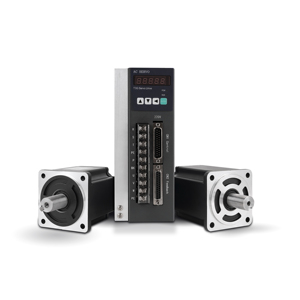
Custom High-Precision Integrated Power & Servo Drive Module
- Voltage: 220V / 48V Integrated
- Control: RS485 / CANbus Communication
- Target: Medical Devices & Precision Automation
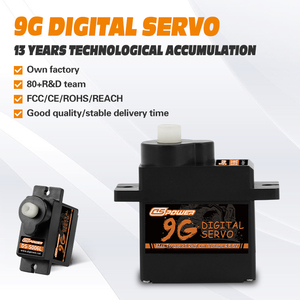
Ultra-Compact Micro Actuator & Low-Voltage Power System
- Feedback: PWM 180° / Micro Control
- Gear Type: High-Durability Metal / Plastic Option
- Target: RC Robotics & Portable Diagnostics
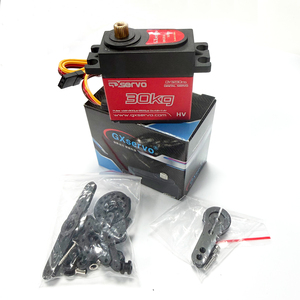
Heavy-Duty Waterproof High-Torque Power Package
- Torque Rating: 30KG High Efficiency
- Protection: IP67 Waterproof Metallic Shell
- Target: Outdoor AGVs & Autonomous Marine Systems
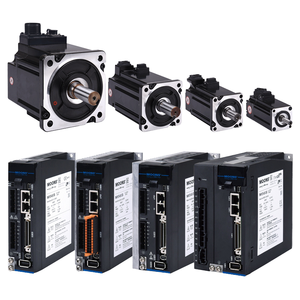
Industrial Grade AC Servo Controller & Battery Backup System
- Power Output: 750W 2.4N.M Continuous
- Harness: 3m Industrial Shielded Cable
- Target: Automated Material Handling & Manufacturing
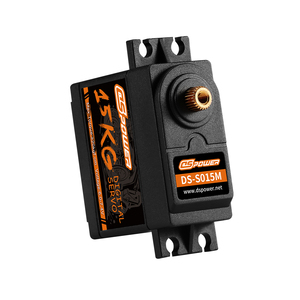
High-Speed Robotics Power Module with Position Telemetry
- Torque/Speed: 15kg Dynamic Output
- Telemetry: Integrated Position Feedback
- Target: Mobile Inspection Robots & UAV Payload Drives
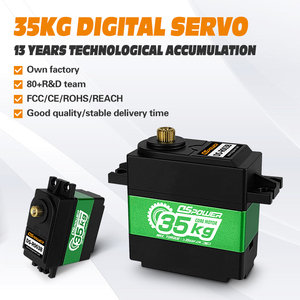
Custom Modular High-Torque Battery Actuation Drive
- Torque Range: 25KG - 35KG Peak
- Structure: Full Metal Reinforced Casing
- Target: Industrial Robotic Arms & Heavy Automation
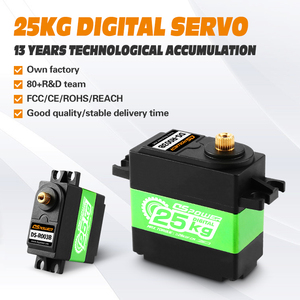
Semi-Aluminum Sealed Micro Power & Motion Assembly
- Case: Semi-Aluminum Heat Dissipation Frame
- Control Interface: High-Precision PWM
- Target: Medical Laboratory & Specimen Dispensers
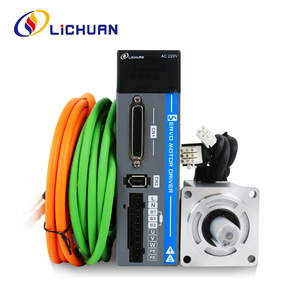
IP65 Multi-Range AC/DC Energy Storage Drive System Kit
- Power Scaling: 200W to 1000W Modular
- Speed: 3000RPM High-Efficiency Core
- Target: Heavy-Duty Industrial Motion & Logistics
Technical Whitepaper: Custom OEM LiFePO4 Battery Design & Cell Manufacturing Integration
As industrial automation, medical robotics, electromobility, and remote energy storage platforms undergo massive technological pivots toward higher power densities and zero-compromise safety profiles, selecting a specialized Custom OEM LiFePO4 Battery Factory & Supplier has transitioned from a routine procurement task to a vital strategic engineering partnership. Lithium Iron Phosphate (LiFePO4 or LFP) chemistry has established itself as the dominant cathode formulation for mission-critical industrial applications due to its intrinsic thermal stability, non-toxic environmental footprint, exceptional lifecycle longevity (exceeding 3,500 to 6,000 deep discharge cycles), and superior total cost of ownership (TCO).
Information Gain Insight: Unlike conventional consumer-grade ternary lithium (NMC/LCO) battery packs that suffer from thermal runaway risks at elevated operating temperatures (above 150°C), industrial-grade LiFePO4 retains structural P-O covalent bond stability up to 500°C. This renders LFP the definitive chemical choice for automated guided vehicles (AGVs), medical devices governed by IEC 60601 standards, and unmanaged outdoor commercial equipment.
1. Advanced Electrochemical Architecture & Customized Cell Sorting
A true OEM battery manufacturing facility does not simply purchase off-the-shelf cells and wrap them in shrink tubing. Sustainable engineering begins at the electrochemical level. At our global production and engineering hubs (operating under decades of refined motion and power control heritage since 1985), every custom LiFePO4 battery program undergoes rigorous cell-sorting protocol:
- Internal Resistance (IR) Matching: Cells are sorted using high-precision AC milliohm meters to ensure IR variances remain strictly below ±0.5 mΩ across the entire series-parallel array, eliminating premature heat generation during high-rate discharge.
- Capacity Balancing (AQL 0.4 Standard): Dynamic charge-discharge profiling ensures absolute capacity matching within a delta of <1.0%, preventing individual cell undervoltage tripping during continuous operation.
- Voltage Delta Verification: Post-aging stabilization guarantees cell voltage equilibrium within ±2mV prior to weld-assembly, directly maximizing pack-level usable energy capacity.
Prismatic vs. Cylindrical Form Factors
We tailor the physical layout to envelope constraints: high-capacity Prismatic cells (100Ah–300Ah) for station power systems, or ultra-rugged 26650/32700 Cylindrical cells for vibration-intensive mobile robotics.
Smart BMS Topology Integration
Integrated proprietary Battery Management Systems (BMS) equipped with Texas Instruments or NXP chipsets offering real-time SOC/SOH tracking, CANbus 2.0B, RS485, and Modbus protocol compatibility.
Thermal & Mechanical Insulation
Structural potting, phase-change thermal interface materials (TIM), and custom extruded aluminum housings built to withstand extreme shock, vibration (MIL-STD-810G), and IP67 ingress ratings.
Future B2B Procurement Trends in Energy Storage & OEM Battery Manufacturing (2025–2030)
The global procurement landscape for custom battery systems is experiencing structural changes driven by international regulatory shifts, supply chain regionalization, and strict carbon accounting standards. Corporate buying teams and principal design engineers must account for the following macro trends when establishing OEM manufacturing partnerships:
A. Shift Toward Cell-to-Pack (CTP) & Structural Battery Designs
Traditional pack manufacturing relies on individual modules wired together inside a secondary enclosure, adding up to 25% parasitic dead weight. Emerging OEM procurement strategies prioritize Cell-to-Pack (CTP) and Cell-to-Chassis (CTC) engineering. By eliminating intermediate module housings, CTP designs boost volumetric energy density up to 160Wh/L for LiFePO4 systems, allowing equipment designers to reduce total vehicle or device footprints without sacrificing runtime.
B. Carbon Footprint Traceability & EU Battery Passport Compliance
With the enforcement of the European Union’s new Battery Regulation and global ESG mandate mandates, procurement executives require suppliers to deliver comprehensive environmental product declarations (EPDs). Future-proof OEM factories must provide full material traceability—verifying ethically sourced raw materials (Lithium, Iron, Phosphate)—alongside audited carbon-intensity metrics for energy consumed during cell synthesis and pack assembly.
C. Dual-Source Supply Chains & Geopolitical Risk Hedging
Single-region reliance introduces catastrophic supply chain single-points-of-failure. Enterprise OEMs now overwhelmingly mandate dual-sourcing manufacturing models. Suppliers with dual operational footprints—combining cost-optimized Asian production assets with Western engineering design, customer support, and local buffer inventory hubs (such as our Houston, Texas distribution headquarters)—offer the optimal equilibrium of cost competitiveness and risk mitigation.
Technological Evolution Trends in Lithium Iron Phosphate Architecture
To maintain a competitive edge, OEM design engineering teams must anticipate chemical and physical innovations transforming the LiFePO4 technology roadmap over the coming decade:
1. Lithium Manganese Iron Phosphate (LMFP) Hybrid Cathodes
The addition of Manganese to traditional LFP crystal lattices creates Lithium Manganese Iron Phosphate ($LiFe_{1-x}Mn_xPO_4$), elevating the nominal cell voltage from 3.2V to 3.7V. This chemical evolution increases gravimetric energy density by up to 15-20% while retaining the core safety and thermal stability benefits of pure LiFePO4. Forward-thinking OEM factories are already prototyping LMFP configurations for space-constrained mobility platforms.
2. Ultra-Fast Charging (3C–5C) & Low-Temperature Electrolytes
Historically, low-temperature charging (below 0°C) posed severe lithium plating risks for standard LFP cells. Breakthroughs in nanostructured cathode coatings, artificial graphite anodes, and specialized fluorinated electrolytes now enable safe, high-rate charging at temperatures as low as -20°C using integrated low-power heating films governed by intelligent BMS pre-conditioning cycles.
3. AI-Driven BMS Telemetry & Cloud-Connected Predictive Maintenance
Modern OEM battery packs are transitioning into fully interactive edge-computing nodes. By incorporating IoT microcontrollers and AI-trained electrochemical models, advanced battery management systems continuously estimate remaining useful life (RUL), detect micro-short circuits prior to thermal events, and transmit predictive maintenance alerts directly to cloud platforms via MQTT or cellular gateways.
Enterprise Advantage & Provenance: Why Global OEMs Partner With Us
With an engineering legacy rooted in high-precision motion control, electrical machines, and custom power solutions established in 1985, our organization provides a unique multi-disciplinary advantage that standard battery pack assemblers cannot match.
Integrated Motion & Power System Engineering
We solve systemic electrical engineering challenges by co-designing the electric motor, precision gearhead, drive electronics, and LiFePO4 battery pack as a single optimized powertrain—eliminating impedance mismatches and reducing BOM line items.
ISO 13485 & ISO 9001 Documented Traceability
Our manufacturing workflow follows rigorous engineering change orders (ECO), strict lot traceability, cleanroom-compatible lubricants, and documented revision controls required by medical device and aerospace OEMs.
Comprehensive International Agency Certifications
We navigate global compliance seamlessly. Custom battery packs are delivered fully certified to UN 38.3 (transport safety), UL 1642 / UL 2580, IEC 62133, and CE standards, significantly accelerating your product's time-to-market.
Design for Manufacturing (DFM) Commitment: Every custom battery proposal includes comprehensive FEA thermal modeling, electrical stress analysis, and structural vibration simulations prior to tooling sign-off. We support pilot production runs from 250 units to seamless scaling above 100,000 units annually.
Frequently Asked Questions (FAQ) for OEM LiFePO4 Procurement
Ready to Engineer Your Custom OEM LiFePO4 Solution?
Consult directly with our senior application engineers to review your duty cycle, thermal constraints, and dimensional envelope. Receive a comprehensive sizing proposal and commercial quotation tailored to your production schedule.