Featured Precision Servo Motors & Drive Solutions
Explore high-torque, medical-grade, and industrial closed-loop motion control platforms custom-engineered for demanding OEM duty cycles.
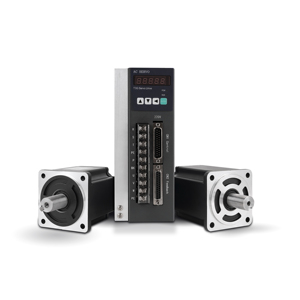
AC Servo Motor 1300W 220V Support Pulse / RS485 Control for Medical Devices
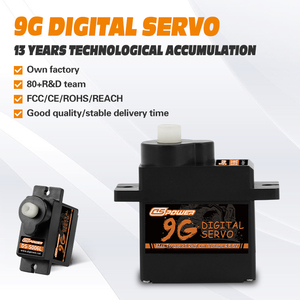
SG90 Servo Motor PWM 180° Micro Servo Motor RC Servo MG90S 9g Micro Actuator
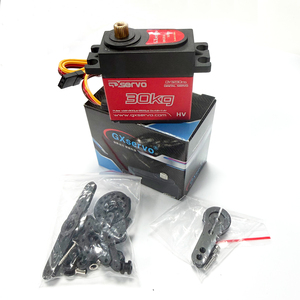
GXservo 30KG Torque Digital Servo Motor Waterproof Metal Gear RC Mechanism
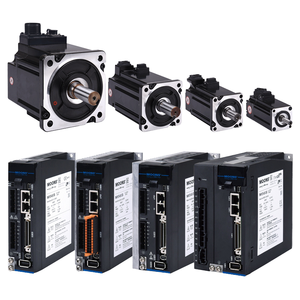
Servo Motor With Drive XP 750W 220VAC 2.4N.m Integrated Controller System
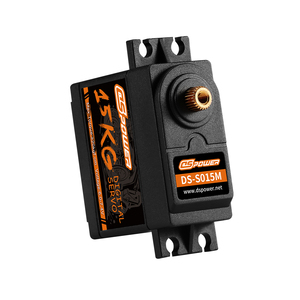
High-Speed RC Robot Motor with Integrated Position Feedback & 15kg Torque
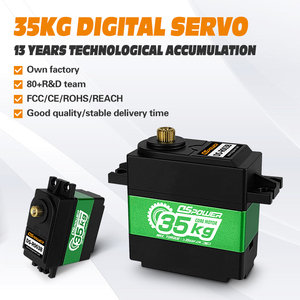
35KG Micro Servo Motor High Torque Universal Digital Metal Servo Drive Kit
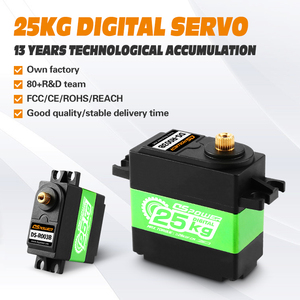
25kg Metal Gear Semi-Aluminum Case Servo for Robotic Arm PWM Systems
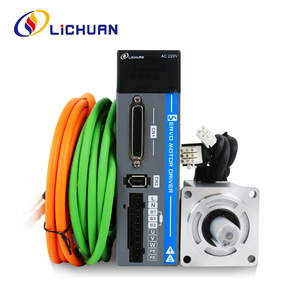
Lichuan 220V 3000RPM IP65 AC Servo Motors & Drivers A5 Series (200W-1000W)
Engineering Whitepaper: Next-Generation OEM Stepper Driver Architecture
An authoritative evaluation of power electronics topology, vector current control, thermal management, and EMI mitigation for precision equipment design engineers.
1. Closed-Loop Field Oriented Control (FOC) vs. Conventional Open-Loop Drives
In classical stepper motor deployment, open-loop pulse/direction drivers force a continuous rated current through the stator windings regardless of dynamic load demands. This operational model leads to substantial energy loss, elevated operating temperatures (frequently exceeding 80°C), thermal degradation of rotor magnetics, and susceptible resonance bands that induce mid-range stall conditions.
As a leading Custom OEM Stepper Driver Factory, our engineering team optimizes high-efficiency vector drive architectures using Field Oriented Control (FOC). By processing high-resolution quadrature encoder feedback (up to 4096 pulses/rev) via 32-bit floating-point Digital Signal Processors (DSPs), our custom drivers dynamically decompose phase currents into field-directing ($d$-axis) and torque-producing ($q$-axis) components.
- Elimination of Stall & Step-Loss: Real-time closed-loop correction guarantees absolute position retention under dynamic overload.
- Thermal Operating Reduction: Current is continuously scaled to actual load torque, lowering drive & motor thermal signatures by up to 40%.
- Acoustic Noise Attenuation: Pure sinusoidal current switching mitigates harmonic torque ripple, achieving sub-35 dB ultra-quiet performance in medical laboratory instruments.
2. DSP-Driven Microstepping & Resonance Damping
Low-speed vibration in 2-phase hybrid steppers originates from discrete rotor positioning steps. Standard microstepping attempts to smooth motion by dividing full steps into fractional currents. However, non-linear motor inductance distorts true spatial sinusoids.
Our custom OEM stepper driver platforms integrate programmable non-linear compensation tables. By applying anti-resonance algorithm filters and electronic damping techniques, our drivers calculate torque ripple harmonics in real time, canceling mechanical resonance points across 1 to 5 RPS speed bands. This enables ultra-smooth liquid handling, optic positioning, and high-speed pick-and-place automation without requiring mechanical damper hardware.
Custom OEM Engineering Capabilities & Form-Factor Integration
From board layout modification to proprietary fieldbus firmware development—how we solve complex spatial, thermal, and electrical integration challenges.
Custom PCB Layout & Mechatronic Packaging
When off-the-shelf rectangular drive modules fail to fit within constrained mechanical envelopes, our layout engineers design custom circular, annular, or modular L-shaped PCB substrates. We support direct motor-stack mounting (Integrated Motor-Drive Units) to minimize cabling EMI and simplify assembly BOMs.
Industrial Communication Protocols
Modern machine architectures demand seamless connectivity. We engineer tailored firmware supporting low-latency industrial communication stacks including EtherCAT, CANopen (DS402), Modbus RTU, RS-485, and IO-Link. Custom cyclic synchronous position (CSP) profile firmware ensures synchronized multi-axis trajectory execution.
Advanced Power Electronics & Thermal Management
Utilizing high-efficiency Gallium Nitride (GaN) and low $R_{DS(on)}$ MOSFET H-bridge power stages, our OEM driver designs achieve over 95% electrical efficiency. Integrated aluminum heatsinks, direct-copper-bonded (DCB) thermal vias, and dynamic over-temperature foldback protect electronics under harsh ambient duty cycles.
Future OEM Procurement Trends in Motion Control
Strategic analysis for supply chain managers, procurement leaders, and chief technology officers navigating global manufacturing landscapes.
Shift Towards Decentralized Motion & Smart Drivers
Centralized control cabinets with massive wiring harnesses are rapidly being replaced by decentralized IP65/IP67 integrated motor-driver subassemblies. Sourcing managers are prioritizing suppliers capable of delivering pre-validated subassemblies (motor, driver, gearbox, encoder, and cable harness under a single OEM part number).
Decentralization reduces cabinet thermal footprint by up to 60%, eliminates costly shielded cabling, and drastically lowers total cost of ownership (TCO) during factory installation and field servicing.
Dual-Sourcing & Supply Chain Resiliency
Global disruption events have underscored the danger of single-source component reliance. Forward-thinking OEMs require drive suppliers with dual-region manufacturing footprints (such as combined North American technical desks and audited high-volume Asian production lines).
Our operational framework ensures identical bill-of-materials (BOM) sourcing, standardized Automated Optical Inspection (AOI) testing, and global inventory buffer management to protect equipment builders against component obsolescence and geopolitical bottlenecks.
Emerging Motion Control Innovations & Market Trends
1. Sensorless Load Estimation & Predictive AI Maintenance
Next-generation custom drivers monitor back-EMF variations and phase current phase shifts to estimate external mechanical load torque without external sensors. By trending friction resistance over operating hours, the drive forecasts bearing degradation or mechanical binding, alerting cloud dashboards prior to machine failure.
2. Integration of Wide Bandgap (GaN) Semiconductors
Transitioning from traditional silicon MOSFETs to Gallium Nitride (GaN) power stages allows switching frequencies to increase from 20 kHz up to 100+ kHz. This completely eliminates audible motor squeal, dramatically reduces power stage footprint, and enables sub-millimeter position accuracy in micro-fluidic dosing pumps.
3. SIL2 / SIL3 Functional Safety Compliance
Safety standards in robotic equipment require Safe Torque Off (STO) hardware inputs on the stepper driver board. Custom OEM driver designs incorporate redundant dual-channel STO circuits certified to IEC 61800-5-2, eliminating the need for external safety relays and main power contactors.
Why Global OEMs Partner with Telco Intercontinental Corp.
Since 1985, Telco Intercontinental Corp. has functioned as an engineering-first motion control pioneer based out of Houston, Texas. We do not simply supply catalog drivers—we collaborate as an embedded engineering extension of your development team.
Our rigorous application-first qualification process ensures every drive topology, winding impedance, and control firmware curve is rigorously matched to your machine's real load profile before tooling commitment.
- ISO 9001 & ISO 13485 Manufacturing Alignment: Complete traceability, revision lock, and change control discipline tailored for regulated medical devices and in-vitro diagnostics (IVD).
- Full In-House Engineering & FEA Validation: Thermal imaging, electromagnetic simulation (FEA), vibration stress testing, and EMI/EMC pre-compliance laboratory verification.
- 40 Years of Field Reliability: Millions of motion control platforms deployed globally across industrial automation, HVAC, medical handling, semiconductor, and mobile robotics.
OEM Customization Workflow
Stage 1: Application Duty Cycle Profiling
We analyze speed-torque curves, thermal boundaries, voltage supply limits, spatial envelopes, and target agency approvals (UL, CE, IEC 60601).
Stage 2: Topology & Firmware Selection
Evaluation of open vs. closed loop control, fieldbus stack integration, board trace routing, and current density optimization.
Stage 3: Prototyping & Bench Testing (4-6 Weeks)
Rapid prototyping of modified standard or custom layout driver PCBs for bench-top mechanical testing.
Stage 4: DFM, Tooling & Volume Release
Design for Manufacturing validation, automated ICT test jig production, and scheduled volume manufacturing releases.
Frequently Asked Questions (FAQ) for OEM Buyers & Engineers
Key technical, commercial, and logistical considerations when sourcing custom stepper driver solutions.
Ready to Engineer Your Custom OEM Stepper Driver Solution?
Connect directly with our Houston-based engineering team to evaluate your duty cycle sheet, review mechanical drawings, and receive a complete technical and commercial proposal.