Featured Motion Control & Storage Subassemblies
Our industrial motor, drive, and energy storage platforms provide the robust physical foundations required by automation OEMs, medical diagnostics, and untethered robotic systems.
Custom OEM Battery Storage Architecture: Engineering Beyond Off-the-Shelf Cells
In modern industrial automation, medical equipment manufacturing, critical infrastructure backup, and mobile robotics, energy storage systems are no longer treated as isolated commodity components. Modern original equipment manufacturers (OEMs) demand highly integrated energy platforms where battery management systems (BMS), thermal architecture, mechanical enclosures, and power distribution electronics are matched directly to specific load duty cycles. Selecting a custom OEM storage battery factory involves evaluating cell chemistry dynamics, structural integration options, safety certifications, and long-term supply chain security.
Information Gain Key Insight: Transitioning from standard off-the-shelf lithium-ion modules to custom-engineered OEM energy storage packs reduces volumetric footprint by up to 32%, eliminates parasitic busbar resistance, and improves system thermal uniformity under continuous high-C discharge cycles.
Comparative Electrochemical Dynamics: Sodium-Ion vs. LFP vs. NMC in OEM Applications
Evaluating cell chemistry requires looking beyond theoretical energy density. Engineering procurement teams must balance cycle life, thermal tolerance, rate performance, material costs, and regulatory shipping conditions. As global manufacturing shifts toward sustainable and cold-weather resilient energy storage, Sodium-Ion (Na-Ion) chemistries have emerged alongside traditional Lithium Iron Phosphate (LFP) and Nickel Manganese Cobalt (NMC) platforms.
| Electrochemical Parameter | Sodium-Ion (Na-Ion) | Lithium Iron Phosphate (LFP) | Nickel Manganese Cobalt (NMC) |
|---|---|---|---|
| Gravimetric Energy Density | 130 – 160 Wh/kg | 160 – 190 Wh/kg | 230 – 280 Wh/kg |
| Cycle Life (80% DOD) | 3,000 – 6,000+ Cycles | 4,000 – 7,000+ Cycles | 1,500 – 3,000 Cycles |
| Low-Temp Capacity Retention (-20°C) | 85% – 90% Retention | 55% – 65% Retention | 70% – 75% Retention |
| Thermal Runaway Initiation Temp | > 260°C (Extremely Stable) | > 270°C (High Stability) | > 210°C (Moderate Risk) |
| Raw Material Supply Risk | Very Low (Abundant Sodium) | Moderate (Lithium/Phosphorus) | High (Cobalt/Nickel Supply Chokepoints) |
| Optimal OEM Application Field | Extreme cold operational environments, telecom backup, stationary grid storage, micro-mobility | Heavy industrial AGVs, stationary ESS, long-life medical carts, high-use robotics | Weight-constrained aerospace, high-performance EVs, compact wearable medical diagnostics |
Integrated Battery Management Systems (BMS) & Safety Control Engineering
A custom OEM storage battery pack is only as reliable as its internal monitoring and protection architecture. Our custom BMS engineering focuses on active cell balancing, multi-point thermal monitoring, dynamic state-of-charge (SoC) estimation algorithms, and robust physical communication protocols including CANbus (CANopen, J1939), RS485, and Modbus.
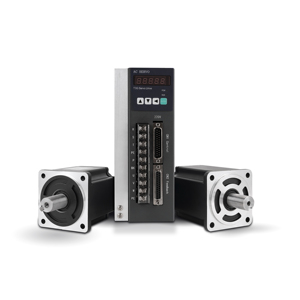
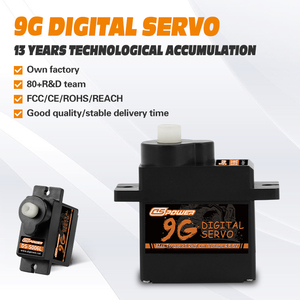
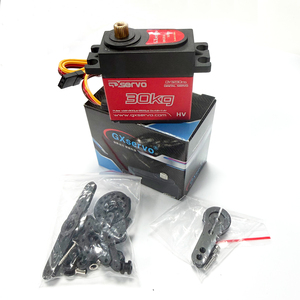
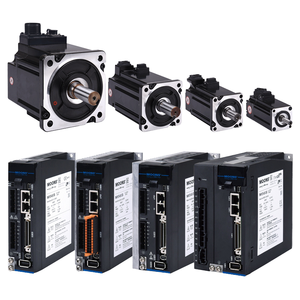
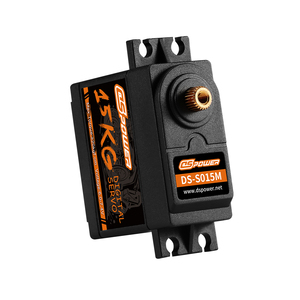
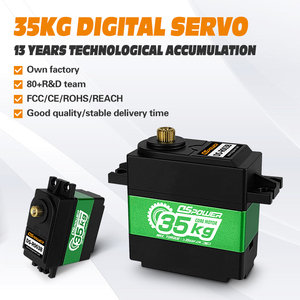
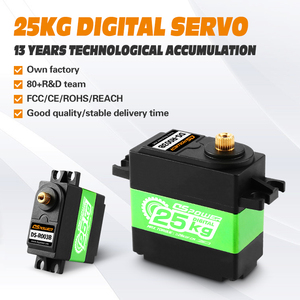
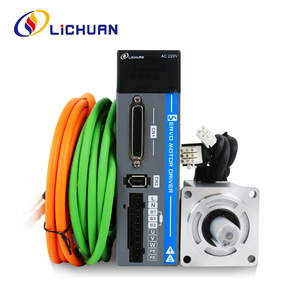
By implementing hardware-level dual-redundant overcharge, over-discharge, over-current, and short-circuit protection alongside firmware-level thermal throttling, OEM battery packs maintain operational parameters even under harsh industrial conditions. For specialized medical and industrial equipment requiring seamless motion and power synergy, combining advanced battery monitoring with high-precision servo controls—such as matched AC servo motors or digital feedback actuators—creates a single, optimized power block.
Why Top Global Tier-1 OEMs Partner with Telco Intercontinental Corp.
Engineering custom energy storage and motion components from Houston, Texas since 1985. We bridge the gap between initial electrochemical sizing and full-scale contract manufacturing.
Dual-Source Manufacturing Security
Audited manufacturing facilities across North America and Asia eliminate single-point supply chain vulnerabilities. OEM programs benefit from localized technical support backed by scalable volume production capacity.
Traceable Quality Management
Strict serial-number and lot-level traceability for every cell, BMS board, and welded interconnect. Fully compliant with ISO 9001 and ISO 13485 supplier expectations for medical and laboratory automation platforms.
Custom Mechanical & Electrical DFM
Our application engineers optimize enclosure geometry, thermal interface materials (TIM), potting materials, and busbar configurations before tooling sign-off, protecting your margins against unnecessary revisions.
Future Strategic Procurement Trends in OEM Storage Batteries
As industrial electrification accelerates and regulatory frameworks around battery safety and carbon footprint intensify, corporate sourcing directors must anticipate technology and supply chain shifts. The next decade of custom battery manufacturing will be defined by three critical vectors:
Convergence of Power Storage & Motion Control Hardware (Single-BOM Subassemblies)
Procurement teams are shifting away from sourcing batteries, motor controllers, servo drives, and gearboxes from isolated vendors. Sourcing pre-tested subassemblies under a single part number eliminates inter-component compatibility issues, reduces internal assembly labor costs, and centralizes warranty accountability with one manufacturing partner.
Mandatory Adoption of UL 9540A & IEC 62619 Safety Certifications
Global safety standards now require thermal runaway fire propagation testing at the pack level. Future OEM storage battery procurement mandates that factory suppliers supply empirical test data demonstrating that a single cell thermal failure will not propagate to adjacent cells, guaranteeing fire containment within the sealed enclosure.
Cell-Chemistry Agnostic Hardware Packaging
To hedge against raw material price volatility, leading OEMs are designing battery enclosures and BMS hardware capable of accommodating both LFP and Sodium-Ion cell form factors (e.g., 32140 cylindrical or prismatic formats). This modularity allows purchasing departments to swap cell chemistries depending on regional supply availability without re-tooling structural chassis components.
Frequently Asked Sourcing & Engineering Questions
Common inquiries from OEM design engineers, procurement specialists, and supply chain managers.
Accelerate Your Custom Energy & Motion Project
Work directly with our Houston-based application engineers to size your battery pack or motion subassembly today.