Precision Servo & Synchronous Motor Solutions
Engineered for zero-defect automation, medical instrumentation, and high-torque robotics. Every platform is fully customizable by voltage, winding ratio, shaft geometry, feedback protocol, and IP rating.
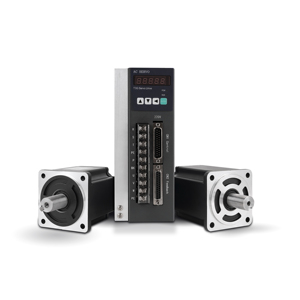
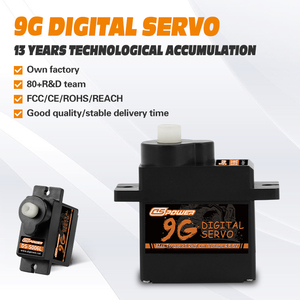
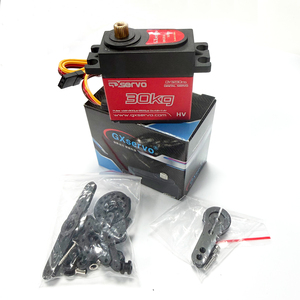
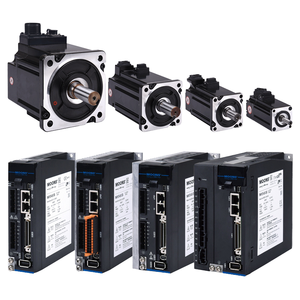
Engineering Architecture & Selection Framework for Custom OEM Synchronous Motors
In modern precision engineering, selecting the optimal electric motor architecture is no longer a matter of browsing off-the-shelf catalogues. Original Equipment Manufacturers (OEMs) building medical automated analyzers, high-speed robotics, semiconductor handling systems, and heavy-duty industrial positioners require tailored electric drives. As a dedicated Custom OEM Synchronous Motor Factory & Exporter, Telco Intercontinental Corp. (TelcoMotion) bridges the gap between theoretical electromagnetic modeling and volume manufacturing.
Synchronous motors—specifically Permanent Magnet Synchronous Motors (PMSM) and AC Brushless Servo Motors—stand at the apex of energy efficiency and dynamic accuracy. Unlike asynchronous induction motors, where the rotor slips relative to the rotating stator magnetic field, a synchronous motor operates in absolute synchronization with the supply frequency or inverter drive. This yields zero rotor slip, minimal thermal rotor dissipation, and superior torque-to-frame size ratios.
Surface PMSM (SPMSM)
Magnets are mounted directly on the rotor outer surface. Provides a linear torque-to-current response, smooth rotation, low cogging torque, and low acoustic signature ideal for micro-dosing pumps and medical infusion equipment.
Interior PMSM (IPMSM)
Rare-earth magnets are embedded inside the rotor lamination stack. Utilizes both magnetic torque and reluctance torque, enabling high-speed field weakening and maximum physical protection for rugged traction and industrial robotics.
Closed-Loop Servo Drive Integration
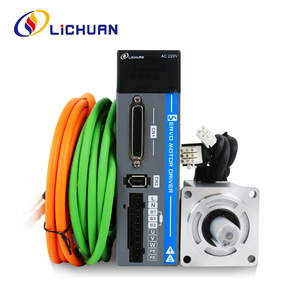
Matched drive electronics utilizing Field-Oriented Control (FOC) algorithms. Accepts RS485, CANopen, EtherCAT, and PWM pulse inputs to deliver sub-arcminute spatial resolution and instantaneous load reaction.
Technical Comparison: Synchronous PMSM vs. Conventional Motor Platforms
To assist procurement directors and chief mechanical engineers in determining the ideal technology vector, the table below illustrates real-world performance trade-offs across common OEM motion platforms:
| Performance Vector | Custom OEM Synchronous (PMSM) | Standard AC Induction | Hybrid Stepper Motor | Brushed PMDC Motor |
|---|---|---|---|---|
| Electrical Efficiency | 92% – 97% (IE4/IE5 Ultra Premium) | 75% – 85% (IE2/IE3) | 65% – 75% | 60% – 75% |
| Torque Density (N·m/kg) | Highest (Optimized Neodymium) | Moderate | High (at low speed) | Low to Moderate |
| Rotor Thermal Rise | Minimal (No rotor currents) | High (Induced rotor slip) | High (Constant phase current) | Moderate (Joule brush losses) |
| Maintenance & Service Life | > 30,000 Hours (Brushless) | > 20,000 Hours | > 20,000 Hours | 2,000 – 5,000 Hours (Brush wear) |
| Position Feedback & Control | Absolute Encoder / Resolver / Hall | Open-loop / Optional VFD | Open-loop (Microstepping) | Optional Tachometer/Encoder |
Future Procurement Trends in Global OEM Motion Control (2025–2030)
Strategic procurement of motion components is undergoing a paradigm shift. Supply chain vulnerabilities, rising energy mandates, and the acceleration of Industry 4.0 automation require buyer organizations to rethink vendor selection. Modern engineering buyers no longer evaluate suppliers solely on piece-part unit price; they quantify Total Cost of Ownership (TCO), joint engineering responsiveness, and component-level carbon footprints.
Smart Edge Sensing & Predictive Maintenance
Next-generation synchronous motors are evolving into intelligent edge nodes. OEM buyers are increasingly specifying motors embedded with micro-vibration sensors, phase-temperature telemetry, and digital twin compatibility. By transmitting real-time operational data via RS485 or IO-Link to central controllers, these motors alert machine operators to bearing degradation long before total failure occurs.
Supply Chain De-risking & Dual-Sourcing
Geopolitical volatility and freight disruptions have made single-region manufacturing a critical business vulnerability. Forward-thinking OEMs require suppliers with redundant, audited manufacturing locations. Partnering with an established exporter like Telco—combining Houston-based application engineering and logistics with audited dual-source production facilities—guarantees stable component supply under fluctuating global conditions.
Hybrid Subassemblies (Motor + Gear + BMS)
Procurement teams are reducing vendor counts by ordering unified, single-part-number subassemblies. Instead of independently sourcing a motor, planetary gearbox, optical encoder, drive controller, and battery power supply, OEMs demand pre-validated subassemblies. Telco supports this trend by integrating synchronous motors directly with high-efficiency gearing and proprietary Sodium-Ion or Lithium battery storage systems.
Technological Innovation & Development Trends in Synchronous Drives
The underlying physics of synchronous motion control are experiencing rapid technological breakthroughs driven by material science, computational electromagnetics, and thermal management:
1. Advanced Stator Lamination & Slot Fill Optimization
By utilizing ultra-thin silicon steel laminations (0.2mm – 0.35mm thickness), hysteresis losses at elevated frequencies are dramatically curtailed. Coupled with automatic needle-winding technologies that maximize slot fill factors beyond 65%, modern synchronous motors generate higher magnetic flux densities without increasing overall frame volume.
This structural advancement enables compact NEMA and metric frame sizes to deliver continuous torque signatures that previously required motors 30% larger, opening new design horizons for compact medical robots and space-constrained surgical equipment.
2. Frameless & Direct-Drive Synchronous Form Factors
In high-precision indexing tables, robotic joints, and gimbal systems, backlash introduced by traditional gearboxes impairs system performance. The market is aggressively shifting toward frameless synchronous rotor-stator kits.
These kits are integrated directly into the machine frame, eliminating shafts, keyways, couplings, and additional bearings. Direct-drive synchronous solutions eliminate mechanical play, drastically boost servo bandwidth, and provide virtually silent operating acoustics.
Why Global OEMs Partner with Telco Intercontinental Corp.
Founded in Houston, Texas in 1985, Telco Intercontinental Corp. (incorporating TelcoMotion) brings four decades of rigorous motion control experience to global manufacturing partners. Sourcing a custom synchronous motor requires absolute confidence in supplier engineering capability, quality control systems, and continuous design support.
Application-First Design Philosophy
We do not force standard catalog items onto custom engineering challenges. Our engineering group evaluates your exact operating duty cycle—accounting for peak torque duration, thermal dissipation limits, ambient humidity, EMI susceptibility, and mechanical radial/axial loads before recommending a winding or magnet topology.
Medical & Industrial Regulatory Compliance
We maintain rigorous ISO 9001 and ISO 13485 supplier processes. Our medical laboratory automation motors feature cleanroom-compatible lubricants, low-EMI drive pairings, and strict revision control. Every lot build is fully traceable back to raw magnet melt batches and copper wire spools.
FEA Simulation to Rapid Prototyping
Utilizing advanced Finite Element Analysis (FEA) software for electromagnetic modeling and thermal simulation, we accelerate custom sample lead times to 4–6 weeks for modified standard platforms and 10–14 weeks for ground-up bespoke laminations, protecting your time-to-market advantage.
Frequently Asked Questions (FAQ) for OEM Synchronous Motor Sourcing
What is the minimum order quantity (MOQ) for a custom OEM synchronous motor program?
For modified standard synchronous platforms (e.g., custom shaft flats, specific winding voltage constants, custom connectors, or customized planetary gear ratios), our typical annual program threshold starts between 250 and 500 units. Ground-up custom designs requiring dedicated lamination tooling or proprietary die-cast aluminum endbells are scoped starting at 1,000 units annually. Prototype and pre-production pilot quantities are fully supported during the initial validation phase.
How does a Permanent Magnet Synchronous Motor (PMSM) differ from a Brushless DC (BLDC) Motor?
While both motor types share similar mechanical rotor/stator structures (permanent magnets on the rotor, phase windings on the stator), they differ in back-EMF waveform design and control strategy. BLDC motors feature a trapezoidal back-EMF signature typically driven by 6-step block commutation. PMSM motors feature a pure sinusoidal back-EMF profile driven by Field-Oriented Control (FOC) inverters. PMSMs provide smoother rotation, zero torque ripple at low speeds, higher operating efficiency, and lower acoustic sound output.
What technical data should our engineering team provide to receive a custom motion proposal?
To accelerate engineering review, please furnish: (1) Continuous and peak torque requirements (N·m or oz-in), (2) Operating speed range (RPM), (3) Input supply voltage (VDC or VAC), (4) Mechanical envelope limits and shaft loading restrictions, (5) Duty cycle profile (e.g., 20% duty cycle over 10-second intervals), (6) Ingress protection rating (IP54, IP65, IP67), and (7) Required regulatory standards such as UL, CE, RoHS, or IEC 60601-1 for medical equipment.
Can Telco provide waterproof or washdown IP65/IP67 rated synchronous motors?
Yes. We offer sealed IP65 and IP67 motor configurations utilizing double-lip Viton shaft seals, precision O-rings on housing endbells, potted stator wire passages, and anodized aluminum or stainless steel enclosures. These units withstand direct high-pressure spray, chemical washdowns, and harsh outdoor ambient conditions in agricultural automation, food processing, and marine applications.
How does Telco guarantee lot-to-lot consistency and revision control over long production runs?
We operate under formalized engineering change order (ECO) controls. Once a custom drawing, winding specification, magnetic grade, and inspection protocol is approved by your team, those parameters are locked in our ERP system. No material substitutions or process modifications can occur without formal engineering review and written customer authorization.
Partner with a Trusted OEM Synchronous Motor Manufacturer
Accelerate your product development cycle with customized motion engineering backed by 40 years of global OEM expertise. Contact our engineering team today to request technical sizing, FEA analysis, or rapid prototyping pricing.