High-Precision Servo Systems & Energy Storage Drivers
Engineered for seamless integration into smart microgrids, wall-mounted battery units, medical equipment, and high-load industrial automation.
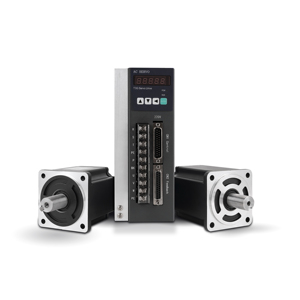
AC Servo Motor 1300W 220V Support Pulse / RS485 Control for Medical Devices
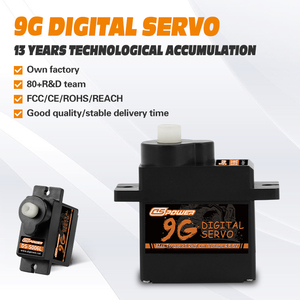
SG90 Servo Motor PWM 180° Micro Servo Motor RC Servo MG90S 9g DSPOWER
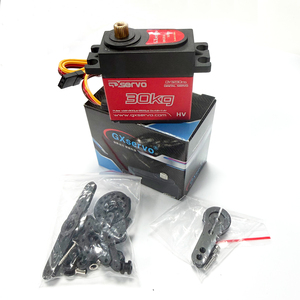
GXservo 30KG Torque Digital Servo Motor Waterproof Metal Gear RC Crawler
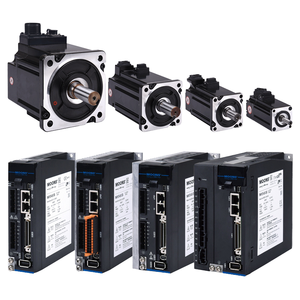
Servo Motor With Drive XP 750w 220VAC Controller Delta Drive AC Servo System
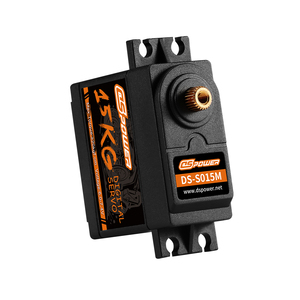
High-Speed RC Robot Motor with Position Feedback & 15kg Torque Capacity
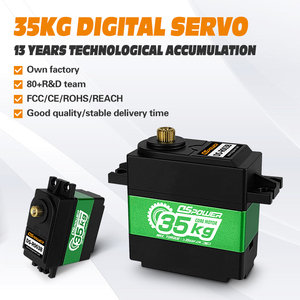
35KG Micro Servo Motor High Torque Digital 25KG Metal Servo Motor
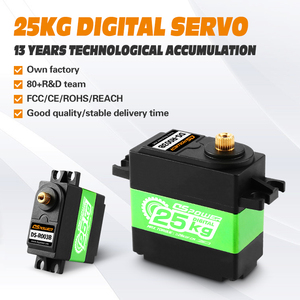
25kg Metal Gear Semi-Aluminum Case Servo Robotic Arm PWM Micro Servo Motor
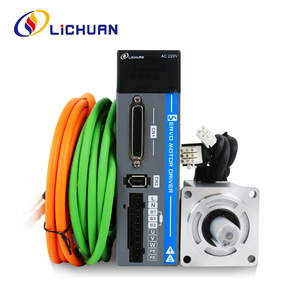
Lichuan 220V 3000RPM IP65 AC Servo Motors & Drivers A5 Series Kit (200W-1000W)
The Evolution of Modern OEM/ODM Power Wall Systems & Integrated Smart Microgrids
The global energy landscape is undergoing a structural transition toward decentralized power architectures, driven by the rapid growth of distributed energy resources (DERs), commercial solar-plus-storage projects, and residential microgrids. At the core of this transition is the Power Wall energy storage system (ESS)—a high-density, wall-mounted battery platform engineered to provide reliable backup power, perform peak-shaving, enable self-consumption optimization, and deliver grid-stabilization services.
As premier OEM/ODM Power Wall manufacturers and exporters, leading engineering firms such as Telco Intercontinental Corp. (operating across specialized divisions including TelcoMotion and TelcoGreen) are redefining how stationary energy storage interacts with precision power electronics, motion controls, and thermal management subsystems. Modern Power Wall platforms require more than high-grade lithium iron phosphate (LiFePO4) or sodium-ion (Na-ion) chemistry; they demand sophisticated battery management systems (BMS), high-efficiency bidirectional inverters, active thermal regulation via low-EMI servomotors and actuators, and seamless communication protocols such as RS485, CAN-bus, and Modbus.
Key Technical Insight: The modern Power Wall market is shifting from static energy storage containers to dynamic, software-defined energy ecosystems. OEM/ODM buyers now require integrated solutions that couple long-cycle battery packs with intelligent cooling, position-feedback servo drives, and multi-tier safety shutdown mechanisms certified to UL 1973, UL 9540A, and IEC 62619 standards.
Whether deploying low-voltage (48V/51.2V) residential wall-mounted units or high-voltage (300V–800V) commercial energy walls, tier-1 procurement teams must evaluate manufacturers across strict criteria: cell balancing algorithms, round-trip efficiency (RTE), thermal runaway prevention, duty cycle longevity, and supply chain auditability.
Future Procurement Trends in OEM/ODM Power Wall & Energy Storage
Detailed analysis for B2B importers, EPC contractors, and regional brands navigating supply chain shifts, regulatory updates, and technical innovations from 2025 through 2030.
1. Adoption of Sodium-Ion (Na-ion) Chemistry
While LiFePO4 remains the benchmark for volumetric energy density, Sodium-ion technology is rapidly gaining market share for stationary Power Walls due to superior low-temperature performance (-40°C to 60°C operational range), raw material abundance, reduced thermal runaway risk, and cost stability independent of lithium market volatility.
2. Multi-Layer Fire Suppression & UL9540A Mandates
Global regulatory bodies are enforcing stringent thermal runaway propagation standards. Advanced OEM Power Wall designs incorporate aerosol fire-extinguishing modules, phase-change materials (PCM), unit-level isolation valves, and automated physical disconnects driven by high-torque micro-servos.
3. Smart V2G & Bidirectional Micro-Inverter Coupling
Power Walls are expanding beyond simple passive storage. Next-gen procurement demands Vehicle-to-Grid (V2G) and Vehicle-to-Home (V2H) compatibility, requiring internal power switches, high-speed position feedback actuators, and CAN 2.0B / Ethernet communication interfaces.
4. Modular "Plug-and-Play" Capacity Expansion
Distributors prefer modular Power Wall chassis that allow end-users to scale capacity from 5kWh to 30kWh without rewiring the main distribution panel. Automated busbar alignment and self-configuring master-slave BMS architecture are essential for reducing field installation labor.
5. Dual-Sourcing & Regional Final Assembly
To mitigate geopolitical tariffs and logistics bottlenecks, major buyers contract with original equipment manufacturers operating dual-source manufacturing hubs (e.g., North American engineering & distribution combined with audited global fabrication facilities).
6. AI-Driven Predictive Maintenance & Cloud Analytics
OEM Power Walls are increasingly integrated with edge-computing modules that analyze internal cell impedance, voltage drift, temperature gradients, and cooling fan servomotor health in real time, delivering OTA firmware updates to prevent catastrophic failure.
Product Development Trends: Coupling Energy Storage with Precision Motion Control
A critical engineering insight often overlooked by standard pack assemblers is the reliance of advanced Power Wall units on precision motion control and mechanical automation subsystems. Modern smart energy walls do not operate in thermal or mechanical isolation. They utilize automated louvers, smart heat-sink deflectors, liquid-cooling valve actuators, and automatic mechanical disconnect switches—all driven by specialized AC servo motors, brushless DC (BLDC) motors, and digital micro-servos.
For example, high-capacity 10kW to 30kW wall units installed in extreme environments rely on active thermal management. Servo-driven coolant valves (utilizing components like 25kg metal gear micro-servos or IP65 AC Servo Motor kits) dynamically adjust liquid flow rates based on real-time C-rate discharge heat generation. Furthermore, medical-grade backup Power Walls deployed in mobile hospitals or laboratory automated sampling units incorporate ultra-precise servo motors (such as the 1300W 220V Pulse/RS485 AC Servo Motor) to maintain uninterrupted power quality and precise structural positioning during emergency power transfer events.
Comparative Architecture: Standard ESS vs. Advanced OEM/ODM Smart Power Wall
| Technical Feature | Standard Tier-3 Commodity Power Wall | Telco Class OEM/ODM Smart Power Wall |
|---|---|---|
| Battery Chemistry Options | Generic Grade-B LiFePO4 cells | Tier-1 Automotive Grade A LiFePO4 & Custom Sodium-Ion (Na-ion) |
| Thermal Management | Passive convection or continuous fan noise | Dynamic servo-controlled liquid cooling & IP65 active louvers |
| Communication Protocols | Basic RS485 / Limited Modbus | Dual CAN 2.0B, RS485, Pulse/PWM, IoT Wi-Fi/Ethernet & Cloud Telemetry |
| BMS Active Balancing | Passive dissipation (0.05A balance current) | High-efficiency active transformer balancing (2.0A to 5.0A) |
| Safety & Compliance | Basic CE / UN38.3 standard test report | UL 1973, UL 9540A, IEC 62619, IEC 60601 & ISO 13485 Traceable |
| Customization Scope | Fixed metal box, silk-screen logo only | Clean-sheet mechanical, custom voltage/capacity, bespoke firmware & enclosure |
Why Global Tier-1 OEMs Partner with Telco Intercontinental Corp.
Combining 40 years of precision motion control heritage with modern energy storage engineering to deliver uncompromised reliability.
Four Decades of Engineering E-E-A-T (Since 1985)
Headquartered in Houston, Texas, Telco Intercontinental Corp. brings nearly 40 years of continuous motion engineering, power electronics development, and OEM manufacturing expertise. Our long-standing industry presence guarantees that your long-term production runs are backed by an established, financially stable enterprise partner.
ISO 13485 & Medical-Grade Quality Controls
We apply rigid medical device manufacturing protocols (ISO 13485 alignment, IEC 60601 low-EMI standards, traceable lot builds, and strict change management) across all our industrial motion controls and Power Wall energy storage lines. Every unit undergoes 100% full-load burn-in and thermal cycle validation.
Turnkey OEM/ODM Customization & Integration
From custom winding profiles, specialized gear ratios, and high-torque servomotors to custom sodium-ion battery pack form factors, our US and international engineering teams collaborate directly with your design group—reducing time-to-market from concept to first qualified prototype in 4 to 6 weeks.
Dual-Source Supply Chain Risk Mitigation
Telco eliminates single-point delivery risk by combining North American technical account management and inventory buffering with audited, world-class manufacturing plants in Asia and America. We maintain forecast-driven safety stock to protect your assembly lines against global trade fluctuations.
Frequently Asked Questions for Power Wall & Motion Control Procurement
Direct technical and commercial answers for sourcing managers, system integrators, and engineering executives.
Ready to Accelerate Your Power Wall or Custom Motion Program?
Work directly with Telco's Senior Application Engineers in Houston, Texas. We will analyze your duty cycle, thermal load, and volume expectations to deliver a tailored OEM/ODM proposal within 48 business hours.
Contact Us