Precision Motor & Servo Drive Solutions for Robotic Joints
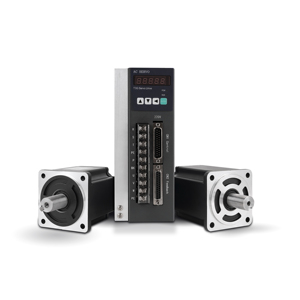
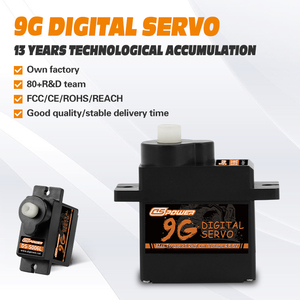
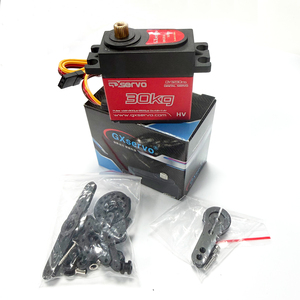
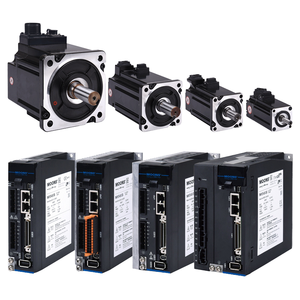
High-density AC servo motors, micro PWM actuators, waterproof digital servos, and integrated drive kits engineered for OEM robotic arms, medical equipment, and autonomous mobility.
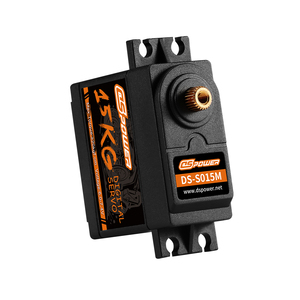
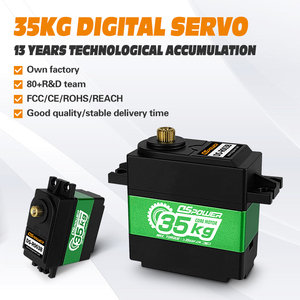
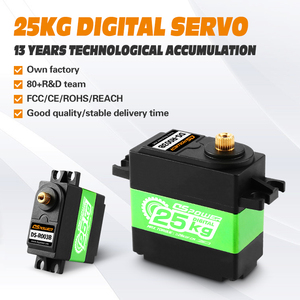
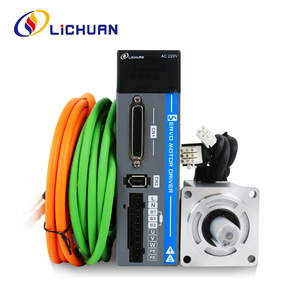
Why World-Class Robotics OEMs Select Our Factory Partnerships
Combining 40 years of precision motion engineering legacy with specialized OEM/ODM joint manufacturing capabilities to deliver uncompromised torque density, continuous reliability, and single-BOM simplicity.
40 Years of Motion Engineering
Operating since 1985 (established by Telco Intercontinental Corp in Houston, TX), our engineering team possesses decades of empirical field data optimizing magnetic circuits, lamination stacks, and stator windings for extreme thermal envelopes.
Dual-Source Supply Chain Resilience
We mitigate geopolitical and logisitic risk by operating audited manufacturing facilities in both North America and Asia. Our dual-sourcing framework guarantees production continuity and staged buffer inventory.
Medical & Cleanroom Compliance
Our OEM robot joint production lines follow ISO 13485 quality management guidelines and align with IEC 60601 safety standards, utilizing cleanroom-grade synthetic lubricants and low-EMI electromagnetic shieldings.
Custom Winding & FEA Modeling
Using finite element analysis (FEA), we model magnetic flux densities and cogging torque before cutting metal. We customize wire gauges, turn counts, and slot fill factors to match your exact DC bus voltage and speed targets.
Integrated Module Assemblies
Eliminate multi-vendor friction. We deliver fully integrated robot joint subassemblies combining frameless BLDC motors, strain wave (harmonic) gearheads, absolute dual encoders, electromechanical brakes, and CANopen/EtherCAT drivers.
Traceable Revision Control
Every custom joint program is backed by strict engineering change order (ECO) protocols, serial identification, and material lot traceability to ensure zero component drift across multi-year commercial releases.
The Architectural Evolution of Next-Generation Robot Joints: An OEM Procurement & Engineering White Paper
The global robotics landscape is undergoing a paradigm shift driven by the explosion of humanoid robotics, collaborative automation (cobots), precision surgical platforms, and high-payload mobile manipulators. At the core of this transition lies the robotic joint module—a tightly coupled mechatronic actuator that dictates the dynamic performance, payload-to-weight ratio, positional accuracy, and thermal endurance of the entire system.
Historically, robot manufacturers relied on discrete component sourcing: purchasing a motor from one vendor, a harmonic reducer from another, an optical encoder from a third, and spending months solving thermal dissipation, axial runout, and control latency issues during assembly. Today, leading OEMs are migrating toward custom OEM/ODM integrated joint modules built directly by specialized motion control factories.
1. Key Technological Trends Driving Robot Joint Actuator Design
To gain a structural competitive advantage, motion system architects must align their custom OEM specs with five overarching industry trends:
- Transition to Frameless BLDC Motors with High Copper Slot-Fill: Frameless rotor and stator kits integrated directly into the joint housing eliminate redundant bearings and shaft couplings, reducing axial length by up to 40%. Advanced orthocyclic winding techniques achieve slot-fill factors exceeding 60%, boosting continuous torque density while reducing internal thermal resistance.
- Dual-Absolute Encoder Architectures: Modern safety standards (ISO 10218 / ISO 13849) demand absolute position sensing on both the motor shaft (for high-speed commutation) and the output flange (after the gear reducer) to dynamically compensate for harmonic gear elasticity, hysteresis, and torsional deflection.
- Harmonic & Planetary Strain-Wave Integration: Selecting the correct gearhead geometry is vital. While strain-wave (harmonic) reducers provide near-zero backlash (<1 arcmin) and high gear ratios in a single stage for wrists and elbows, modified planetary gearheads offer higher shock resistance for bipedal quadruped hip and knee joints subject to impact loads.
- Field-Oriented Control (FOC) Drive Embedded at the Joint: Distributing the servo drive directly onto the joint casing using high-density GaN (Gallium Nitride) switching FETs drastically cuts cable wire count. Instead of routing dozens of high-current phase wires through flexible robot conduits, a single high-voltage DC bus and a high-speed industrial Ethernet bus (EtherCAT or CANopen) daisy-chains all robot axes.
- Thermal Management via Phase-Change Packaging: Thermal dissipation remains the primary bottleneck for continuous payload torque. Advanced OEM joint factories now utilize aluminum-silicon matrix housings, direct-stator thermally conductive potting compound (thermal conductivity > 3.0 W/m·K), and internal temperature monitoring to maintain magnet operating temperatures below the Neodymium Curie threshold under peak dynamic cycles.
2. Benchmark Comparison Matrix: Joint Motor Technologies
Selecting the optimal electromagnetic configuration requires evaluating the trade-offs between speed, torque density, backlash tolerance, and overall BOM cost. The matrix below outlines standard metrics observed across our custom OEM/ODM production runs:
| Motor Technology / Joint Type | Torque-to-Weight Ratio | Backlash Range | Thermal Dissipation Efficiency | Typical Application Fit |
|---|---|---|---|---|
| Frameless High-Pole BLDC + Harmonic Drive | Extreme (High) | < 1.0 Arcmin | Superior (Direct Stator Potting) | Humanoid Wrists, Cobot Elbows, Surgical Arms |
| Frameless BLDC + Planetary Reducer | High | 3.0 – 5.0 Arcmin | Good (Aluminum Casing) | Quadruped Leg Actuators, AGV Drive Wheels |
| High-Voltage AC Servo (Hollow Shaft) | Moderate to High | < 2.0 Arcmin | Excellent (Active Fan/Heatsink) | 6-Axis Heavy Industrial Manipulators |
| Coreless / Micro DC Servo + Spur Gear | Moderate | 5.0 – 10.0 Arcmin | Moderate (Convection) | Robotic End-Effector Grippers, Dexterous Hands |
| Waterproof Digital Servo Actuator | Standard | 10.0 – 15.0 Arcmin | Standard (Internal Heatsink) | Subsea Inspection, Outdoor Mobile Robots |
3. Future Sourcing & Procurement Trends for OEM Buyers
Sourcing robot joints is no longer a simple catalog selection process; it is a long-term strategic partnership. Over the next five years, procurement directors and engineering leads should anticipate the following market dynamics:
- Single-BOM Procurement Models: Procurement teams are reducing supplier risk by contracting specialized joint manufacturers to deliver completely tested mechatronic subassemblies under one part number. This shifts the burden of backlash matching, encoder calibration, and high-voltage testing back to the supplier.
- Design-for-Cost (DFC) Customization Milestones: Rather than over-specifying catalog motors, OEMs work early with engineering teams to tune lamination thickness (e.g., 0.2mm silicon steel for ultra-low iron loss at high speeds) and select cost-effective magnet grades (e.g., N42SH vs. N52H) that meet thermal safety margins without adding unnecessary cost.
- Supply Chain Localization & Inventory Buffering: Recent logistics disruptions have made single-source regional suppliers risky. Top-tier OEMs now mandate dual-region tooling assets and rolling 90-day buffer inventory programs stored at strategic distribution hubs (such as Telco’s Houston, TX facility).
Frequently Asked Questions for OEM/ODM Robot Joint Sourcing
Technical guidance regarding minimum order quantities, customization lead times, compliance standards, and custom winding parameters.
- Continuous operating torque (N.m) and peak acceleration torque requirements.
- Target output rotational speed (RPM or deg/sec) at rated load.
- Available DC bus or AC line voltage (e.g., 24VDC, 48VDC, 220VAC).
- Dimensional envelope constraints (max outer diameter and axial length).
- Feedback requirements (incremental, absolute magnetic, optical, or dual encoder).
- Environmental factors (IP rating, cleanroom classification, ambient temp range).