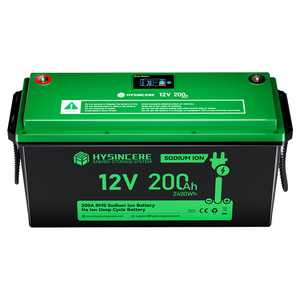
Featured OEM/ODM Solutions
Sodium-Ion Battery Modules & Custom Cell Platforms
Explore our field-proven sodium-ion battery architectures, spanning custom 12V starter platforms to IP65 floor-standing ESS and extreme low-temperature marine cells.
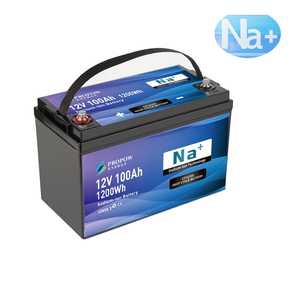
Sodium Ion Battery 12v 24v 36v 48v 500ah 100ah Functions Reliably -45°C To 75°C Car Start Battery
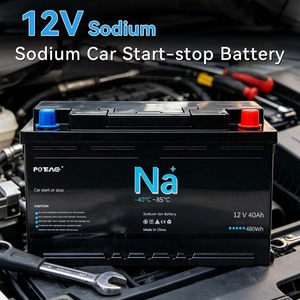
POEAE Long Life Sodium Ion Car Starter Battery 12V 40Ah 5000 Cycles High Discharge IP67 Waterproof
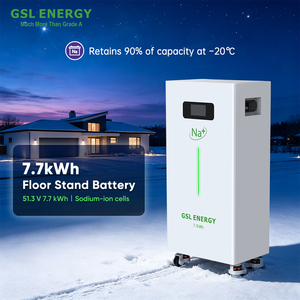
GSL ENERGY Na+ Sodium-ion Energy Storage Battery IP65 Floor Stand Power Tower 7kWh Outdoor Battery HESS
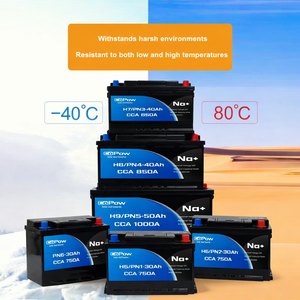
-40°C-80°C Excellent Low Temperature Performance 12 Volt Deep Cycle Battery 12V Sodium Ion
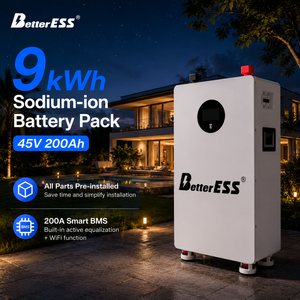
9kWh 45V 200Ah Sodium-Ion Battery Pack Home Solar ESS With 200A BMS Active Equalization + WiFi + Bluetooth
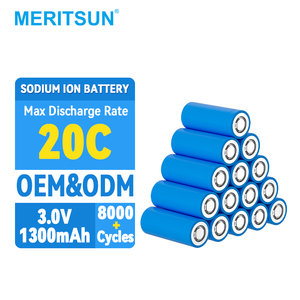
Battery Manufacturer OEM ODM Na Sodium-ion Battery Cell Sodium Solid State Battery for Electric Boat Golf Car
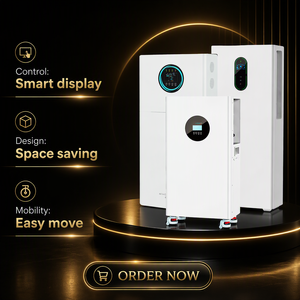
High Density Prismatic Sodium-Ion Cell 3.2V 314Ah 320Ah 340Ah Solar Storage & Starter Battery Pack
-45°C
Low Temp Discharge Limit
5,000+
Cycle Life @ 80% DoD
0.0V
Safe Transport Voltage (Zero-Volt)
40 Yrs
Telco Engineering Heritage
Technical Whitepaper & Engineering Guide
Next-Gen Electrochemical Architecture: Why Sodium-Ion (Na+) is Reshaping B2B Energy Procurement
As global energy markets shift toward resilient, earth-abundant materials, Sodium-ion (Na+) battery technology has transitioned from laboratory validation to large-scale commercial dominance. For original equipment manufacturers (OEMs), engineering design teams, and bulk exporters, sodium-ion chemistry presents an undeniable strategic advantage: immune to lithium geopolitical price volatility, structurally safe under extreme thermal stress, and capable of operating across temperature windows (-45°C to 85°C) where conventional Lithium Iron Phosphate (LiFePO4) and NMC cells experience severe capacity lockout or electrolyte freezing.
Information Gain Insight: Unlike Lithium-ion cells which suffer copper current collector dissolution if discharged below 2.0V, Sodium-ion cells utilize low-cost Aluminum current collectors at both the anode and cathode. This key electrochemical difference enables Na+ batteries to be stored and transported safely at absolute zero volts (0.0V SOC) without degradation, drastically lowering maritime cargo risks and eliminating thermal runaway liability in transit.
Electrochemical Mechanisms: Sodium (Na+) vs. Lithium (Li+)
Sodium lies directly beneath Lithium on the periodic table, sharing identical alkali metal valence characteristics ($Na^+ \to e^- + Na$). While the ionic radius of $Na^+$ (1.02 Å) is larger than $Li^+$ (0.76 Å), modern crystal engineering—specifically Prussian White analogues (PWAs), Layered Transition Metal Oxides ($Na_xMO_2$), and Polyanionic Frameworks ($Na_3V_2(PO_4)_3$)—has overcome previous rate-capability bottlenecks. The lower desolvation energy of sodium ions in polar organic solvents allows faster inter-facial charge transfer, yielding dynamic multi-C discharge rates ideal for engine starter applications and rapid grid frequency regulation.
| Electrochemical Parameter | Sodium-Ion (Layered Oxide / Hard Carbon) | Sodium-Ion (Prussian White / Hard Carbon) | Lithium Iron Phosphate (LFP) |
|---|---|---|---|
| Cell Energy Density | 140 – 170 Wh/kg | 120 – 150 Wh/kg | 160 – 190 Wh/kg |
| Low Temp Capacity Retention (-40°C) | 70% – 82% Capacity Retention | 75% – 85% Capacity Retention | < 30% (Requires Active Heating) |
| Current Collector Materials | Al (Cathode) / Al (Anode) — Zero Copper | Al (Cathode) / Al (Anode) — Zero Copper | Al (Cathode) / Cu (Anode) |
| Over-Discharge Tolerance | 0.0V (Zero-Volt Safe Storage) | 0.0V (Zero-Volt Safe Storage) | Permanent Damage below 1.5V |
| Thermal Runaway Onset Temp | > 260°C (High Thermal Stability) | > 300°C (Extreme Thermal Stability) | ~ 210°C |
| Raw Material Abundance | High (Sodium Carbonate from Sea Salt) | High (Iron, Sodium, Nitrogen) | Constrained (Lithium, Cobalt, Nickel) |
Structural Advantages for OEM Integrators
From an OEM structural perspective, custom sodium-ion battery packs seamlessly drop into existing lead-acid (12V/24V) and lithium-ion (48V/HV) mechanical enclosures. The combination of high-density hard carbon anodes and specialized liquid electrolytes containing non-flammable fluoroethylene carbonate (FEC) additives ensures that under nail penetration, overcharging, or severe mechanical crushing, Na+ cells undergo minimal gas venting without catastrophic fire propagation.
Procurement & Supply Chain Strategy
Future Procurement Trends: Navigating the B2B Battery Shift
Key drivers changing how industrial procurement teams, automotive Tier-1 suppliers, and renewable developers source next-generation energy storage.
1. De-risking Supply Chains from Lithium Volatility
Lithium carbonate prices have historically experienced 400%+ market swings. Procurement leaders are implementing dual-track sourcing strategies where high-volume, cost-sensitive energy storage systems (ESS) and telecom backup power rely entirely on sodium-ion cells to guarantee fixed 5-year BOM contracts.
2. Air Cargo & Maritime Transport De-Regulation
Because sodium-ion battery packs can be fully discharged to 0V without damaging cell internal resistance or causing dendrite growth, logistics providers can ship bulk container loads as non-hazardous material when short-circuited at zero charge, slashing international freight surcharges by up to 35%.
3. Dominance in Cold-Climate & Sub-Zero Duty Cycles
Industrial applications in Northern Europe, North America, and high-altitude solar farms suffer high field-failure rates with LFP due to lithium plating during sub-zero charging. Sodium-ion maintains smooth charging down to -30°C and discharging to -45°C without internal heating jackets.
R&D Roadmap
Emerging Technology Trends in Sodium Battery Engineering
1. Solid-State Sodium Electrolytes (Na-SSB)
R&D teams are aggressively deploying inorganic ceramic electrolytes (such as $Na_3Zr_2Si_2PO_{12}$ NASICON structures) to create solid-state sodium batteries. Na-SSBs eliminate liquid organic solvents completely, extending thermal operational limits above 100°C for downhole oil/gas sensing, aerospace auxiliaries, and heavy industrial machinery.
2. Smart BMS Integration with Bluetooth / CANbus Telemetry
Modern OEM battery contracts demand real-time diagnostics. Our customized Na+ battery platforms feature proprietary 200A active balancing BMS solutions integrated with cloud Wi-Fi, Bluetooth 5.0, and CANopen/RS485 interfaces. Active equalization redistributes energy between individual sodium prismatic cells during high C-rate charge cycles, maintaining pack capacity matching across 5,000+ deep cycles.
3. Ultra-High Discharge Rate Starter Platforms
Utilizing low-internal-resistance (IR) cylindrical (e.g., 32140, 46120) and prismatic sodium cells, engineers are replacing toxic lead-acid starter, lighting, and ignition (SLI) batteries in automotive, marine, and emergency generator systems. With peak pulse discharge rates exceeding 30C, sodium-ion starter batteries deliver instant cold-cranking amps (CCA) even after freezing overnight exposure.
Enterprise OEM Competence
Why Partner with Our Engineering & Export Division
Building on over 40 years of motion engineering and power electronics expertise (since 1985 in Houston, Texas), our organization acts as an accountable extension of your internal R&D team. We bridge the gap between advanced electrochemical science and high-reliability production runs.
Application-First Custom Sizing
We do not push standard off-the-shelf stock. Our application engineers in Houston review your exact mechanical envelope, thermal profiles, peak pulse currents, and environmental IP requirements before proposing cell chem-types.
Documented Revision Control & Traceability
Strict ISO 13485 and IEC compliance protocols ensure that every batch of sodium cells, wire harnesses, BMS PCBs, and welded busbars undergoes FEA, DFM, and complete lot traceability from raw materials to final shipping container.
Dual-Source Manufacturing Security
With audited production facilities and test laboratories across North America and Asia, we eliminate single-point supply chain bottlenecks, supporting staged release orders, buffer inventory, and predictable lead times.
Technical & Commercial FAQ
Frequently Asked Questions by OEM Engineers
Detailed technical clarification regarding OEM customization, safety compliance, performance metrics, and order logistics.
1. How does Sodium-Ion battery energy density compare to LiFePO4, and how does it impact enclosure sizing?
Current production-grade Sodium-ion prismatic and cylindrical cells deliver volumetric energy densities between 280–350 Wh/L (gravimetric: 130–165 Wh/kg), which is roughly 85-90% of standard LFP chemistry. For most stationary energy storage, telecom cabinets, marine backup, and automotive starter platforms, this requires negligible increase in pack volumetric footprint, while providing significantly superior low-temperature performance and lower raw material costs.
2. Can Sodium-Ion batteries be charged using standard solar charge controllers and LFP/Lead-Acid inverters?
Yes. Our engineering team custom-configures the integrated Smart BMS to match standard system voltage windows (e.g., 12.8V, 25.6V, 48V, 51.2V, or high-voltage 400V stack architectures). The BMS features adjustable cut-off parameters compatible with major hybrid inverters (Victron, SMA, Growatt, Deye, Sol-Ark) and custom industrial CANbus/RS485 protocols.
3. What is the minimum order quantity (MOQ) and lead time for custom OEM/ODM Sodium pack programs?
Modified standard platforms (custom busbars, connectorized wire harnesses, specialized branding, custom BMS firmware tuning) generally require MOQs of 100 to 300 units with first prototype samples ready in 4 to 6 weeks. Ground-up bespoke designs requiring custom injection-molded housings, IP67 metal frames, and UL 9540A certification typically range from 500+ units annually with pilot engineering units delivered in 10 to 14 weeks.
4. How does Sodium-Ion perform under extreme sub-zero conditions (-45°C to 0°C)?
Sodium-ion cells exhibit exceptionally low charge-transfer resistance across low temperatures. At -20°C, Na+ batteries retain over 88% of rated capacity; at -40°C, they consistently maintain 70–78% capacity retention. Crucially, unlike Lithium cells which suffer metallic lithium plating during sub-zero charging (creating short-circuit hazards), Sodium-ion can be safely charged at sub-zero temperatures down to -20°C at moderate C-rates without structural anode degradation.
5. What safety certifications do your Sodium-Ion battery exports comply with?
Our manufacturing lines operate under ISO 9001 and ISO 14001 quality management standards. Products are certified across key international transport and safety frameworks including UN 38.3 (transport safety), IEC 62619 (industrial energy storage), CE, RoHS, UL 1973 (stationary batteries), and UL 9540A thermal runaway propagation testing.
6. What is the real-world cycle life expectation for Sodium-Ion battery packs?
Depending on cathode choice (Prussian White vs. Layered Oxide), our industrial sodium batteries achieve between 3,000 to 6,000 cycles at 80% Depth of Discharge (DoD) under 0.5C/0.5C operation at 25°C. Even under continuous elevated temperature stress (45°C), Na+ cells retain extended cycle stability due to the robust structural integrity of hard carbon host materials.
Engineered Motion & Power Solutions Built for Your Program
Talk directly with our Houston-based engineering team to size your custom OEM/ODM Sodium-ion battery packs, optimize duty cycle curves, or request sample qualification units.
Get a Quote