Featured Servo & Precision Gear Motor Assemblies
Engineered for high torque density, accurate positioning feedback, robust thermal tolerance, and demanding OEM operational duty cycles.
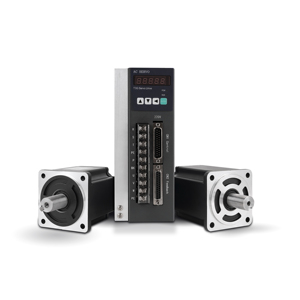
AC Servo Motor 1300W 220V Support Pulse / Rs485 Control for Medical Devices High Precision High Efficiency
- 1300W rated power output at 220VAC
- Pulse & RS485 bus control protocol
- Medical-grade acoustic & EMI compliance
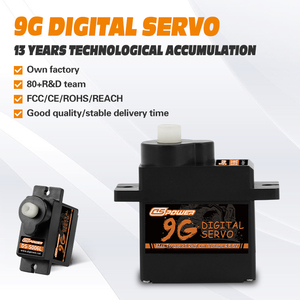
SG90 Servo Motor PWM 180° Plastic Gear, Micro Servo Motor RC Servo MG90S 9g Micro Servo Motor DSPOWER
- Ultra-lightweight 9g compact geometry
- PWM 180° precise rotational control
- Engineered polymer gear formulation
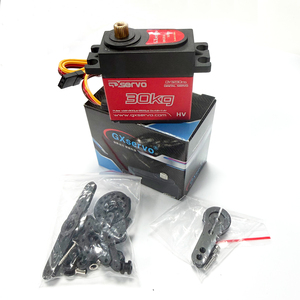
GXservo 30KG Torque Digital Servo Motor Waterproof Metal Gear RC for 1/8 1/10 Crawler Car Boat DIY 14 Years & up
- 30kg.cm extreme output torque rating
- IP67 compliant waterproof housing seal
- Full high-tensile metal gear train
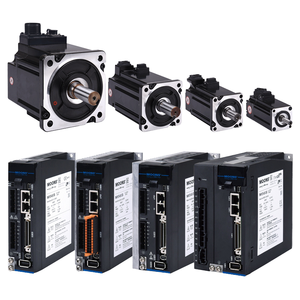
Servo Motor With Drive XP 750w 220VAC With 3m Cable 2.4N.M 0.75KW Controller Delta Drive Ac Servo Motor
- 750W / 2.4 N.m continuous rated output
- Integrated digital controller package
- 3m industrial shielded cabling harness
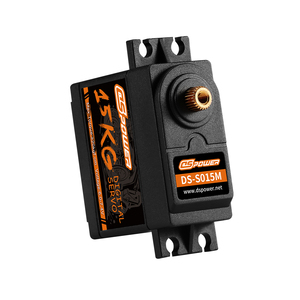
High-Speed RC Robot Motor with Position Feedback and 15kg Torque Capacity
- Closed-loop position encoder feedback
- 15kg dynamic torque capacity
- Optimized high-velocity winding spec
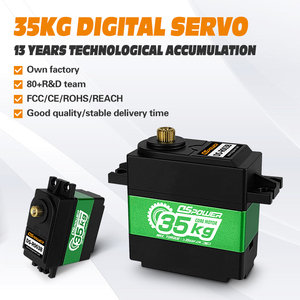
35KG Micro Servo Motor, High Torque Universal Servo Motor, Digital 25KG Metal Servo Motor, Robot Model Car Servo Motor
- Dual dynamic ratings: 25kg / 35kg variants
- Reinforced structural alloy chassis
- Low-backlash precision internal gears
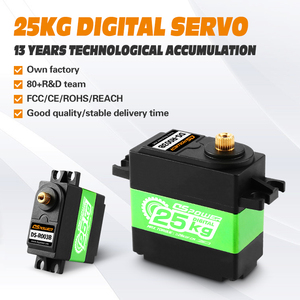
25kg Metal Gear Semi-aluminum case Servo, Robot Robotic Arm PWM Micro Servo Motor, RC Car Servo,25kg Servo
- Semi-aluminum heat-dissipating shell
- Precision PWM actuation protocol
- Heavy-duty robotic arm articulation
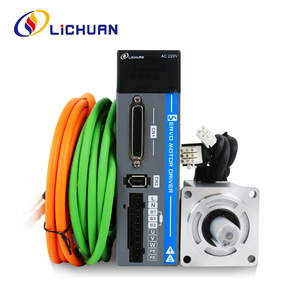
Lichuan 220V 3000RPM IP65 AC Servo Motors and Drivers A5 Series 200W 400W 600W 750W 1000W AC Servo Motor Drivers Kit for Robot
- IP65 ingress protection for harsh duty
- 3000 RPM high rated rotational speed
- Scalable driver kits (200W to 1000W)
Global Benchmark: Navigating the Top 10 Gear Motor Manufacturers & Exporters
In modern industrial automation, robotics, medical device development, and precision motion control, selecting a gear motor manufacturing partner is one of the most critical engineering and supply chain decisions an Original Equipment Manufacturer (OEM) can make. The global electromechanical drive market has shifted dramatically from standardized off-the-shelf component sourcing toward co-engineered, application-specific motion subassemblies.
This comprehensive industry whitepaper examines the technological capabilities, engineering standards, manufacturing controls, and quality validation processes that distinguish the world's leading gear motor exporters. Whether your engineering team requires planetary gearheads for high-torque robotic articulation, low-noise spur gearboxes for medical laboratory automation, continuous-duty Brushless DC (BLDC) geared motors, or heavy-duty AC induction gear motors, understanding the baseline performance metrics of top-tier manufacturers ensures optimal platform reliability and lowest Total Cost of Ownership (TCO).
Core Engineering Insight: A gear motor is not merely a combination of an electric motor and a mechanical reducer. It represents an integrated thermal, electromagnetic, and tribological system where backdriving resistance, backlash tolerance, acoustic signature, and efficiency are inextricably linked.
Electromechanical & Kinematic Baseline Comparison Across Top Manufacturers
When auditing top-tier gear motor suppliers, procurement and engineering leads must evaluate performance against standardized physical metrics rather than catalog nominal ratings:
| Gearmotor Architecture | Typical Backlash Range | Peak Efficiency | Primary Industrial Applications | Dominant Failure Mode to Guard Against |
|---|---|---|---|---|
| Precision Planetary BLDC | 1 to 7 arcmin | 85% - 94% | Robotics, AGVs, Medical Scanners, Defense | Sun gear tooth root fatigue under torsional shock |
| Helical & Spur AC Gear Motors | 15 to 30 arcmin | 75% - 88% | Conveyors, HVAC, Industrial Processing | Thermal breakdown of Class F/H winding insulation |
| High-Torque Worm Gear Drives | 20 to 45 arcmin | 55% - 75% | Lifts, Gates, Material Handling, Valve Actuation | Accelerated bronze gear wear due to lubricant shear |
| Harmonic / Strain Wave Gearmotors | < 1 arcmin (Zero) | 70% - 85% | Robotic Joints, Semiconductor Metrology | Flexspline micro-cracking under over-torque loads |
| Micro PMDC / Coreless Geared Sets | 10 to 25 arcmin | 65% - 82% | Surgical Tools, Dispensing Pumps, Micro-Robotics | Commutator brush wear and particulate contamination |
Emerging Technology Trends Reshaping Gear Motor Engineering
The electromechanical motion industry is undergoing a rapid convergence of advanced material science, integrated semiconductor intelligence, and miniaturized electromagnetic topology. Top global manufacturers and exporters are heavily investing in three core engineering domains:
1. Integrated Mechatronics & Smart Bus Drives
Transitioning from centralized control cabinets to motor-mounted smart drivers utilizing CANopen, EtherCAT, and RS-485 Modbus protocols. Integrated position encoders eliminate external homing sensors while providing real-time current signature monitoring for predictive maintenance.
2. Advanced Tribology & Polymer Materials
Integration of PEEK (Polyether ether ketone), POM-C, and powder metallurgy hybrid gear trains. Combined with cleanroom-compatible synthetic fluorinated lubricants, these materials reduce acoustic emissions by up to 14 dB(A) while extending maintenance intervals past 20,000 continuous operating hours.
3. Ultra-High Power Density Electromagnetic Cores
Utilization of high-grade neodymium-iron-boron (NdFeB) magnets, segmented stator topologies, and automated concentrated winding patterns. This allows manufacturers to achieve 35% higher continuous stall torque within identical NEMA or IEC frame dimensions.
Future OEM Sourcing & Procurement Strategies for 2025–2030
Procurement executives and senior engineering leads are recalibrating their global sourcing frameworks to mitigate supply chain volatility while locking in stringent technical performance. The evaluation matrix for leading exporters now emphasizes four key structural requirements:
1. Dual-Sourcing & Regional Engineering Support
Relying on a single manufacturing footprint introduces existential risks from geopolitical, tariff, or logistics disruptions. Leading exporters establish primary automated manufacturing plants in cost-optimized regions paired with domestic technical application centers in North America and Europe. This dual-layer approach allows engineering teams to resolve DFM (Design for Manufacturability) queries locally within hours, while benefiting from scalable volume production economics.
2. Complete Subassembly Integration vs. Piece-Part Sourcing
Managing individual vendors for electric motors, planetary gearboxes, optical encoders, holding brakes, and wire harnesses increases internal logistics overhead, component stack-up errors, and warranty ambiguity. Top exporters deliver unified, fully tested mechatronic subassemblies under a single vendor part number. If a thermal or backlash failure occurs, a single partner holds technical accountability.
3. ISO 13485 & IEC 60601 Medical Device Compliance
As medical device automation grows rapidly—ranging from IVD sample analyzers to infusion pumps and surgical robotics—suppliers must operate within strict quality control parameters. Exporters with documented lot-traceability, cleanroom assembly capabilities, low-EMI drive designs, and rigid Engineering Change Order (ECO) protocols provide a significant regulatory advantage during FDA or CE mark audits.
Enterprise Advantage: 40 Years of OEM Motion Control Engineering
Since 1985, Telco Intercontinental Corp. (including specialized engineering divisions TelcoMotion and TelcoGreen) has led the custom motion control industry from its Houston, Texas headquarters and audited global manufacturing facilities. Telco provides global OEMs with a unique combination of deep electromagnetic design expertise, comprehensive laboratory testing capabilities, and resilient supply chain structures.
FEA Electromagnetic Modeling
Every custom winding and lamination stack is simulated using Finite Element Analysis (FEA) to maximize magnetic flux density, mitigate cogging torque, and control thermal dissipation prior to physical tooling.
Custom Mechanical Gear Design
From shaft geometry modifications and custom keyways to custom gear reduction ratios (planetary, worm, spur, helical), Telco engineers tailor mechanical interfaces precisely to client envelope constraints.
Rigid Quality Validation
Every export lot undergoes 100% automated testing for acoustic noise profile, dynamic load torque curve compliance, dielectric breakdown, winding resistance, and high-frequency vibration spectrum analysis.
Frequently Asked Questions for Gear Motor Procurement
Technical guidance from our application engineering team regarding customization, lead times, compliance, and selection criteria.
Partner with a World-Class Gear Motor Manufacturer
Connect directly with our application engineering team in Houston, Texas to discuss your duty cycle requirements, review CAD drawings, or request custom sample testing.