High-Performance Motors & Servo Drive Assemblies
Engineered for extreme duty cycles, precise feedback control, medical laboratory compliance, and industrial air movement systems.
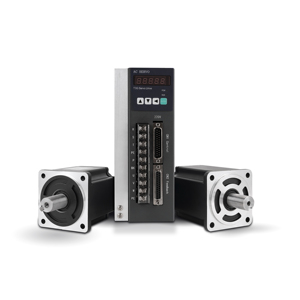
AC Servo Motor 1300W 220V Support Pulse / RS485 Control for Medical Devices High Precision High Efficiency
Get a Quote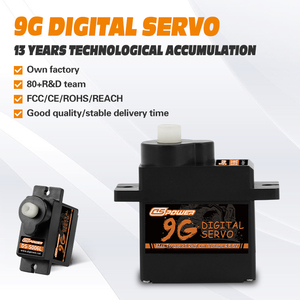
SG90 Servo Motor PWM 180° Plastic Gear, Micro Servo Motor RC Servo MG90S 9g Micro Servo Motor DSPOWER
Get a Quote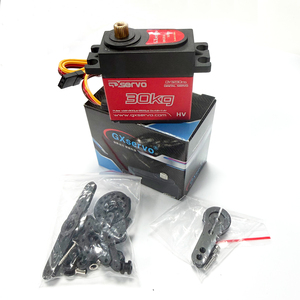
GXservo 30KG Torque Digital Servo Motor Waterproof Metal Gear RC for 1/8 1/10 Crawler Car Boat DIY 14 Years & up
Get a Quote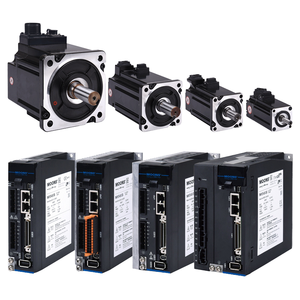
Servo Motor With Drive XP 750w 220VAC With 3m Cable 2.4N.M 0.75KW Controller Delta Drive Ac Servo Motor
Get a Quote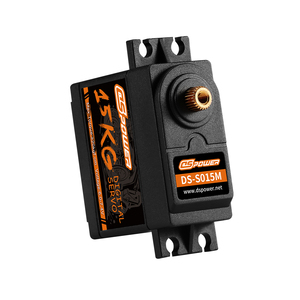
High-Speed RC Robot Motor with Position Feedback and 15kg Torque Capacity
Get a Quote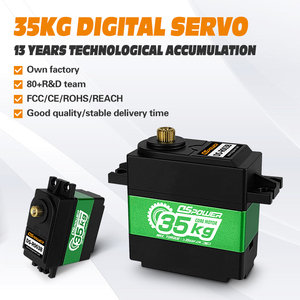
35KG Micro Servo Motor, High Torque Universal Servo Motor, Digital 25KG Metal Servo Motor, Robot Model Car Servo Motor
Get a Quote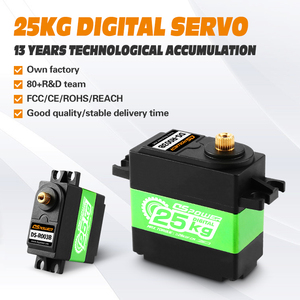
25kg Metal Gear Semi-aluminum case Servo, Robot Robotic Arm PWM Micro Servo Motor, RC Car Servo,25kg Servo
Get a Quote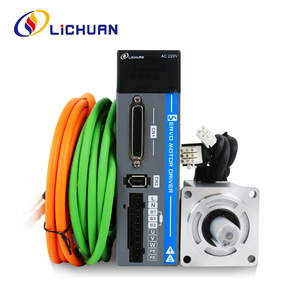
Lichuan 220V 3000RPM IP65 AC Servo Motors and Drivers A5 Series 200W 400W 600W 750W 1000W AC Servo Motor Drivers Kit for Robot
Get a QuoteExecutive Overview: Sourcing Blower Motors from China Manufacturing Hubs
Navigating the global supply chain for electric blowers, centrifugal fans, brushless DC (BLDC) motors, and precision AC servo assemblies requires a comprehensive understanding of manufacturing capabilities, electromagnetic engineering standards, and trade compliance. As original equipment manufacturers (OEMs) in industrial HVAC, medical laboratory automation, automotive climate control, and semiconductor machinery scale their production, China remains the epicenter of electric motor manufacturing, producing over 60% of the world’s fractional horsepower motors.
However, the landscape of China blower motor suppliers has undergone a structural transformation. Sourcing strategy is no longer governed strictly by baseline unit price (Bill of Materials cost). Instead, leading engineering and procurement directors evaluate suppliers based on Information Gain, electromagnetic customization capabilities, Finite Element Analysis (FEA) motor thermal modelling, dynamic balancing grades (ISO 21940 Grade G2.5/G6.3), and long-term lifecycle governance.
Geographic Manufacturing Clusters
China’s blower motor export capacity is concentrated within two primary industrial corridors: the Yangtze River Delta (Taizhou, Ningbo, Changzhou) specializing in high-efficiency EC centrifugal blowers, shaded-pole HVAC fans, and industrial induction platforms; and the Pearl River Delta (Shenzhen, Dongguan) leading in high-precision micro BLDC motors, closed-loop servo systems, and integrated driver electronics.
Upstream Supply Chain Control
Top-tier Chinese factories leverage immediate access to rare-earth Neodymium (NdFeB) magnet supply chains, high-grade cold-rolled silicon steel laminations (50WW470 to 35WW300), and automated copper magnet wire winding machinery. This localized supply ecosystem allows rapid design iterations for custom stator/rotor stacks.
Blower & Drive Technology Comparison Matrix for OEM Selection
Selecting the ideal motor topology for air movement or motion control applications depends directly on required airflow performance curves (CFM vs. Static Pressure), acoustic dB(A) restrictions, power efficiency benchmarks, and target operating life (L10 bearing life hours).
| Motor Topology | Efficiency Range (%) | L10 Bearing Life Expectancy | Speed Control Method | Acoustic Noise Floor | Primary OEM Applications |
|---|---|---|---|---|---|
| EC / BLDC Blower Motor | 85% – 92% (IE4/IE5) | 40,000 – 70,000 Hours | 0-10V PWM / RS485 Modbus / CANopen | Ultra-Quiet (< 42 dB) | Medical CPAP, Cleanrooms, Variable-Speed HVAC, Telecom Cooling |
| AC Permanent Split Capacitor (PSC) | 55% – 68% (IE1/IE2) | 20,000 – 35,000 Hours | Multi-Tap Transformer / Voltage Triac | Moderate (48 – 58 dB) | Standard Residential Air Handlers, Commercial Exhaust Fans |
| Shaded-Pole AC Blower | 30% – 45% | 10,000 – 20,000 Hours | Fixed Speed / Voltage Regulation | Higher Hum (52 – 62 dB) | Small Appliances, OEM Refrigeration, Range Hoods |
| AC Servo & Integrated Drive Kit | 88% – 95% | 30,000 – 50,000 Hours | Pulse/Direction, EtherCAT, Modbus | Low Precision (< 45 dB) | Robotic Arms, Medical Positioning, Dynamic Blower Control |
Engineering Note: Transitioning from legacy AC induction or PSC shaded-pole blowers to Electronically Commutated (EC) BLDC platforms yields up to a 70% reduction in electrical power consumption, while reducing heat dissipation within the air stream—a critical factor for laboratory diagnostics and medical enclosure design.
Future Product & Industry Development Trends in Blower Motor Manufacturing
The global electric motor industry is undergoing a systemic transition driven by environmental regulations (such as EU ErP 2024 compliance and US DOE efficiency mandates), the electrification of transport, and the demand for autonomous smart air-handling systems. OEM buyers evaluating Chinese suppliers must verify that factory R&D pipelines align with these technological shifts:
1. Smart Integrated Inverters & FOC Motion
Modern blower motors are increasingly manufactured as integrated mechanical-electronic units. Field-Oriented Control (FOC) algorithms are implemented directly on internal PCBs, eliminating bulky external drives. Built-in Modbus RTU / RS485 communication protocols enable real-time telemetry tracking of winding temperature, vibration spectrum, and bearing wear.
2. Acoustic Optimization & Aerodynamic Blade Tuning
Aerodynamic impeller design is moving from empirical testing to Computational Fluid Dynamics (CFD). Factories utilize 3D skewed backward-curved impellers combined with sinusoidal commutation in BLDC drives to suppress tonal noise at low rotational frequencies, satisfying medical IEC 60601 noise thresholds.
3. Next-Gen Insulation & High-Temp Magnetics
To accommodate higher power densities in compact envelopes, leading Chinese factories are upgrading motor insulation from Class B (130°C) and Class F (155°C) to Class H (180°C). Utilizing high-coercivity NdFeB magnets (such as N38SH or N42UH) prevents irreversible demagnetization during peak thermal overload scenarios.
Future Sourcing & Procurement Trends for Global OEM Buyers
Procurement leaders are navigating complex geopolitical dynamics, supply chain disruptions, and evolving environmental regulations. Sourcing blower motors from Chinese suppliers requires a forward-looking strategy that balances risk mitigation with technological leadership.
Dual-Source Manufacturing & Global Hubs
To mitigate single-region disruption risks, top OEMs prioritize tier-1 suppliers that maintain localized engineering hubs and buffer stocking locations in North America or Europe while maintaining high-volume component production in audited Asian manufacturing centers. This operational structure provides design flexibility with predictable lead times.
Total Cost of Ownership (TCO) Sourcing
Evaluating suppliers solely on FOB unit price often overlooks hidden expenses associated with high field-failure rates, sub-standard insulation breakdown, and warranty replacements. TCO models incorporate incoming quality yield (PPM defective rates), energy efficiency gains over 50,000 operational hours, and extended warranty support.
ESG, RoHS, and REACH Compliance Verification
Regulatory compliance is a mandatory baseline for western OEM importation. Sourcing contracts now explicitly mandate full material traceability for heavy metals (Lead, Cadmium, Hexavalent Chromium) under RoHS 3 directives, alongside REACH SVHC compliance and conflict-free mineral declarations for rare-earth elements.
Automated Factory Audits & Traceability
Leading China motor factories employ automated stator winding, laser-welded housing assemblies, and end-of-line (EOL) automated testing stations. Every motor manufactured is laser-etched with a unique serial barcode tracking lamination lot batch numbers, winding resistance measurements, dynamic balance logs, and high-potential (HIPOT) dielectric test results.
Why OEMs Partner with Telco Intercontinental Corp.
For 40 years, Telco Intercontinental Corp. (headquartered in Houston, Texas since 1985) has established itself as an engineering-first manufacturer and global supplier of custom motors, blowers, gearmotors, and integrated motion control solutions. Combining U.S.-based engineering validation with audited, high-volume production facilities in Asia, Telco delivers unmatched technical expertise across critical industries.
Custom Engineering & FEA Sizing
Telco’s application engineering team evaluates your mechanical loading, thermal duty cycle, speed-torque curves, and envelope constraints before issuing a quotation. We modify shaft dimensions, custom windings, mounting flanges, and wire harnesses—or engineer ground-up electromagnetic platforms tailored to your specific application.
ISO 13485 & Medical Traceability
Serving medical laboratory automation, IVD diagnostic analyzers, and surgical equipment OEMs, Telco operates under strict revision control discipline. We maintain complete engineering drawing locks, lot-traceable component builds, cleanroom-compatible synthetic lubricants, and low-EMI drive selections that conform to IEC 60601 standards.
Integrated Subassemblies
Instead of managing separate vendors for motors, planetary gearboxes, optical encoders, motor drives, and battery packs (including advanced sodium-ion battery solutions), Telco designs, tests, and delivers fully validated motion subassemblies under a single, accountable Part Number for your Bill of Materials.
OEM Sourcing & Engineering FAQ: Blower Motor Procurement
Detailed technical guidance answered by senior motion control engineers to assist procurement teams during supplier evaluation and qualifying stages.
Accelerate Your Motion & Blower OEM Program Today
Connect directly with senior application engineers to review your duty cycle profile, request custom prototype samples, or receive a competitive factory-direct production quotation.