Featured Precision Motors & Industrial Servo Systems
High-efficiency, custom-wound brushless DC, AC servo, and micro gear motors engineered for medical equipment, robotics, automated guided vehicles (AGVs), and severe-duty actuators.
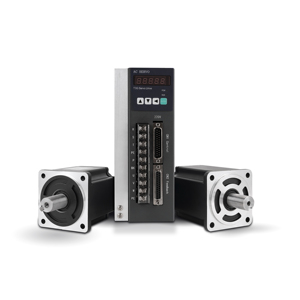
AC Servo Motor 1300W 220V Support Pulse / RS485 Control for Medical Devices
- High Precision 17-Bit / 23-Bit Encoder
- Low EMI Thermal Noise Profile
- Protocol: RS485 / Modbus / Pulse
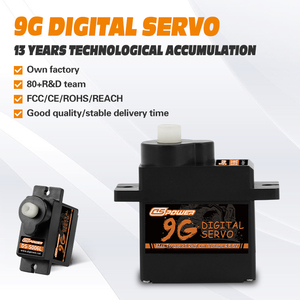
SG90 & MG90S 9g Micro Servo Motor PWM 180° Plastic/Metal Gear
- Operating Voltage: 4.8V – 6.0V
- Stall Torque: 1.8 kg·cm to 2.2 kg·cm
- Ultra-lightweight micro robotics module
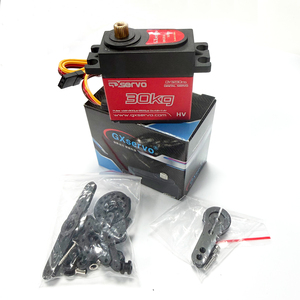
GXservo 30KG High Torque Digital Servo Motor Waterproof Metal Gear
- IP67 Waterproof Aluminum Housing
- 30 kg·cm Torque output at 7.4V
- Precision Steel & Titanium Gear Train
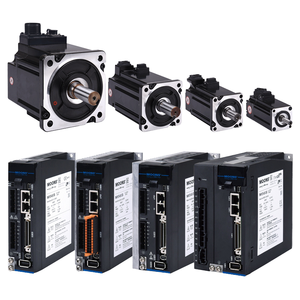
Servo Motor With Matched Driver XP 750W 220VAC 2.4N.m Kit
- Rated Power: 0.75kW @ 3000 RPM
- Includes 3m Shielded Power/Encoder Cable
- Compatible with Delta Controller Drives
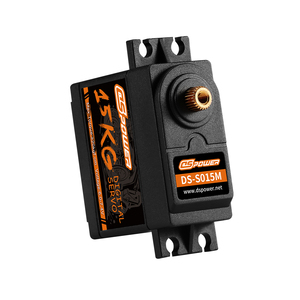
High-Speed RC Robot Motor with Position Feedback & 15kg Torque
- Integrated Magnetic Encoder Feedback
- High dynamic response for bipedal robotics
- Continuous duty heat dissipating casing
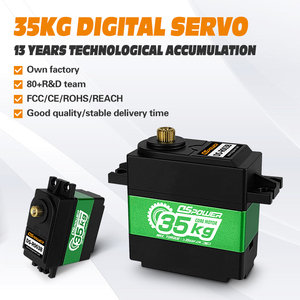
35KG Metal Micro Servo Motor High Torque Digital Actuator
- Heavy Duty Metal Gearbox & Dual Ball Bearings
- 35 kg·cm Peak Holding Torque
- Broad compatibility with CAN & PWM signals
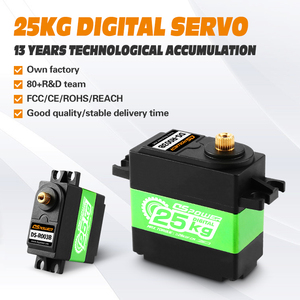
25kg Metal Gear Semi-Aluminum Case Servo for Robotic Arms
- CNC Machined Semi-Aluminum Heat-sink Body
- High-precision PWM pulse width modulation
- Optimized backlash for articulated joints
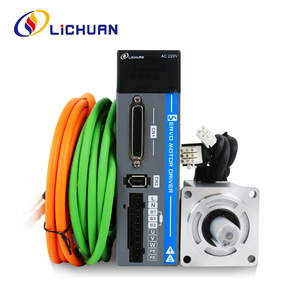
Lichuan 220V 3000RPM IP65 AC Servo Motor & Driver Kit (200W-1000W)
- IP65 Ingress Protection for Industrial Duty
- Configurable: 200W / 400W / 750W / 1000W
- Fully integrated vector control drive driver kit
Why Leading Global OEMs Partner with Telco Engineering
From Houston, Texas to our audited high-tier manufacturing facilities across East Asia, Telco Intercontinental Corp. balances American engineering oversight with agile China manufacturing scale.
Custom Electromagnetic Sizing
We do not just sell catalog part numbers. Our application engineers utilize Finite Element Analysis (FEA) to customize laminations, copper coil fill factors, and magnet skewing to eliminate cogging torque and match your exact voltage profiles.
ISO 13485 & IEC 60601 Alignment
Engineered specifically for medical device OEMs and laboratory diagnostic instruments. We enforce strict batch traceability, cleanroom-grade synthetic lubricants, low thermal signatures, and low-EMI commutation circuitry.
Turnkey Subassembly Integration
Reduce vendor count by consolidating subassemblies. Telco supplies fully validated mechatronic units combining BLDC/stepper motors, planetary gearboxes, optical/magnetic encoders, wire harnesses, and sodium-ion power packs under a single BOM.
Deep Engineering Analysis: Sourcing from Top China DC Motor Factories
Selecting a manufacturing partner among top China DC motor factories requires evaluating electromagnetic engineering capability, quality control infrastructure, raw material compliance, and total lifecycle costs. As electric automation expands rapidly into surgical robotics, autonomous mobile robots (AMRs), electric mobility, and smart industrial actuators, global original equipment manufacturers (OEMs) require transparency beyond basic catalog datasheets.
1. Electromagnetic Engineering & Customization Vectors
When engineering custom Brushless DC (BLDC), Brushed Permanent Magnet DC (PMDC), or AC Servo platforms, engineers must balance thermal limits against envelope constraints. Top-tier Chinese manufacturing operations excel at providing customized motor topologies:
A. Slotless vs. Slotted BLDC Stators: For high-speed dental drills, surgical instruments, and optical scanning systems, slotted designs introduce cogging torque due to lamination teeth interaction with rotor magnets. China's leading factories produce slotless BLDC motors utilizing self-supporting cylindrical coils. This delivers ultra-smooth operation, zero cogging, and mechanical speeds exceeding 50,000 RPM while maintaining quiet acoustic footprints.
B. High-Fill Density Automatic Winding: Modern Chinese factories have transitioned from manual winding to high-precision CNC needle winding machines. By achieving slot fill factors above 68%, winding resistance ($R_a$) is lowered, dramatically reducing $I^2R$ copper losses and allowing higher continuous torque out of smaller frame sizes (e.g., NEMA 17, 23, 34, or metric 40mm to 130mm frames).
| Motor Architecture | Efficiency Range | Cogging Torque Level | Primary Application Suitability | Customization Flexibility |
|---|---|---|---|---|
| Brushless DC (Slotted) | 85% - 92% | Moderate (0.5 - 3.0%) | AGVs, Pumps, HVAC Blowers, Power Tools | High (Winding, Shaft, Mounting) |
| Coreless / Slotless DC | 88% - 95% | Zero (0.0%) | Medical Handpieces, Robotics, Aerospace | Extremely High (Custom Coils) |
| AC Servo (IP65/67) | 90% - 96% | Ultra-Low (< 0.2%) | CNC Machinery, Industrial Robots, Packaging | High (Driver Integration & Cables) |
| Brushed PMDC | 65% - 78% | High (2.0 - 5.0%) | Automotive Actuators, Vending, Kiosks | Moderate (Brush material & Varnish) |
2. Future Procurement Trends in Precision Motion Control (2025–2030)
The strategic purchasing model for electric motors is undergoing a structural shift. Global buyers are moving away from procuring standalone motors and independently matching third-party gearboxes and drives. Sourcing directors now seek integrated mechatronic partners capable of delivering validated closed-loop systems.
Trend 1: Smart Integrated Actuation & Decentralized Drive Architecture
Traditional industrial control panels require extensive cabling runs from centralized drive cabinets to remote motors. Next-generation procurement emphasizes integrated BLDC and AC Servo units where driver electronics, magnetic encoders, and CANopen/EtherCAT communication boards are built directly onto the motor end-bell. This eliminates heavy control cabinets, reduces EMI noise pickup along long cables, and minimizes assembly labor costs during machine building.
Trend 2: Adoption of Alternative Energy Storage Systems (Sodium-Ion Integration)
For untethered mobile robots, autonomous tugs, and wearable medical devices, energy density and battery thermal safety dictate system uptime. Leading OEM motion suppliers like Telco are uniting advanced motor design with custom sodium-ion and lithium battery pack engineering. Sodium-ion chemistry offers superior low-temperature performance (-40°C operation), enhanced thermal stability, and immunity to lithium supply chain volatility, establishing a powerful competitive advantage for next-generation logistics equipment.
Trend 3: Material Traceability & Environmental Compliance
Western regulatory standards demand complete material disclosures. Top China DC motor factories now maintain robust compliance tracking for RoHS 3.0, REACH SVHC, and Conflict Minerals declarations. Furthermore, rare-earth magnet sourcing (Neodymium-Iron-Boron, Dysprosium, and Terbium additives) requires strict metallurgical auditing to ensure magnetic coercivity ($H_{cj}$) withstands operating temperatures up to 180°C without irreversible demagnetization.
3. Technology Development Dynamics & Manufacturing Engineering
China's motor manufacturing ecosystem has evolved from low-cost mass production to advanced precision engineering. The technological advancements driving today's top factories include:
Direct-Drive High Pole Count Motors: Frameless BLDC torque motors featuring high pole counts (20-pole to 50-pole configurations) allow direct coupling to rotary joints in surgical arms and collaborative robots (cobots). Eliminating traditional mechanical gearheads removes backlash, increases positioning accuracy down to arc-second levels, and improves mechanical reliability by reducing wearing components.
Advanced Insulation & Varnish Technologies: High-voltage spikes generated by fast-switching PWM VFD drivers can degrade standard magnet wire insulation. Tier-1 factories utilize Class H (180°C) and Class S (200°C) polyimide-coated wire paired with vacuum pressure impregnation (VPI) resin processes to prevent partial discharge failures and extend motor winding insulation life under harsh continuous-duty cycles.
Frequently Asked Sourcing & Engineering Questions
In-depth technical answers curated by our senior motion control application engineering team.
Ready to Engineer Your Custom Motion Control System?
Consult directly with our senior application engineering team. Send us your mechanical envelope, torque-speed curves, and project volume targets to receive an authoritative engineering proposal and cost analysis.