Industry-Grade Servos & Linear Motion Actuators
Standard, modified, and bespoke drive assemblies engineered for exact duty cycle, high rigidity, and reliable positioning accuracy.
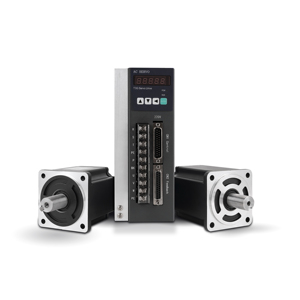
AC Servo Motor 1300W 220V Support Pulse / RS485 Control for Medical Devices High Precision High Efficiency
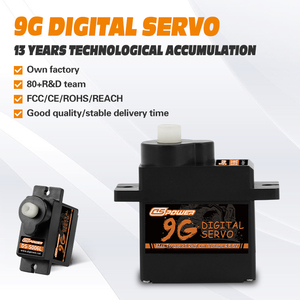
SG90 Servo Motor PWM 180° Plastic Gear, Micro Servo Motor RC Servo MG90S 9g Micro Servo Motor DSPOWER
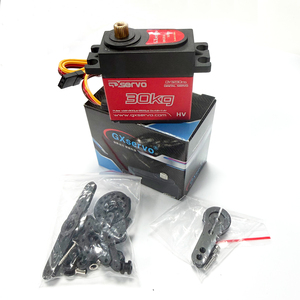
GXservo 30KG Torque Digital Servo Motor Waterproof Metal Gear RC for 1/8 1/10 Crawler Car Boat DIY
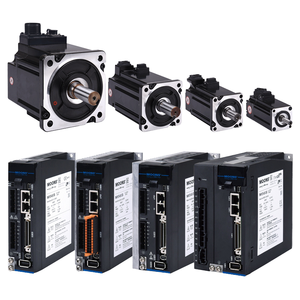
Servo Motor With Drive XP 750w 220VAC With 3m Cable 2.4N.M 0.75KW Controller Delta Drive AC Servo Motor
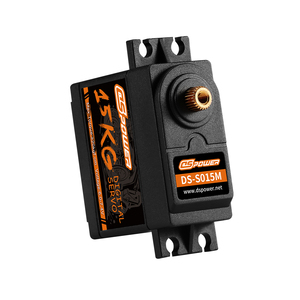
High-Speed RC Robot Motor with Position Feedback and 15kg Torque Capacity
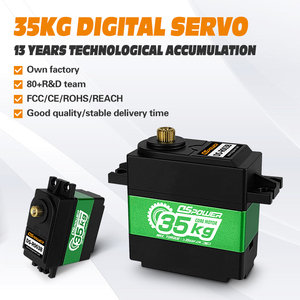
35KG Micro Servo Motor, High Torque Universal Servo Motor, Digital 25KG Metal Servo Motor, Robot Model Servo Motor
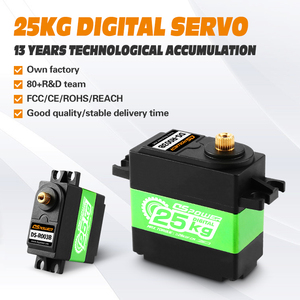
25kg Metal Gear Semi-aluminum Case Servo, Robot Robotic Arm PWM Micro Servo Motor, RC Car Servo
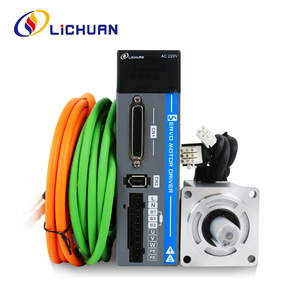
Lichuan 220V 3000RPM IP65 AC Servo Motors and Drivers A5 Series 200W–1000W AC Servo Motor Drivers Kit for Robot
Engineering High-Precision Linear Slide Systems for Global OEM Applications
In modern industrial automation, semiconductor metrology, diagnostic laboratory instruments, and robotic manufacturing, selecting a trusted linear slide supplier & exporter is no longer just a purchasing decision—it is a critical engineering milestone. Linear slides, linear actuators, and precision guidance modules form the mechanical backbone of automated multi-axis positioning stages. Achieving sub-micron repeatability, dynamic stiffness under high cantilever loads, and multi-year maintenance-free operational life requires comprehensive co-engineering between the component manufacturer and the system integrator.
Key Kinematic Components in Industrial Linear Motion Stages
Precision linear positioning assemblies integrate several tightly coupled subassemblies. Understanding the friction coefficients, resonance frequencies, and backlash characteristics of each subsystem is paramount for optimizing total machine throughput:
Recirculating Ball & Roller Bearings
Utilizing gothic-arch rail profiles and preloaded steel or ceramic balls to achieve high radial stiffness, low running friction, and zero rotational backlash across extended stroke lengths.
Integrated Drive Mechanisms
Pairing high-torque AC servo motors, hybrid steppers, or direct-drive linear motors with precision-ground ball screws or low-friction leadscrews tailored to speed-torque requirements.
Closed-Loop Feedback Sensors
Integrating optical or absolute magnetic linear scales (RS485, BiSS-C, CANopen protocols) directly onto the rail assembly to mitigate hysteresis and thermal drift.
Comparative Performance Metrics: Drive Mechanism Selection Matrix
Choosing the correct linear motion architecture depends on the trade-offs between velocity, positioning accuracy, structural payload, and capital cost. Below is an engineering comparison matrix for linear actuation designs:
| Technology Platform | Repeatability Range | Max Velocity | Dynamic Stiffness | Optimal Industry Application |
|---|---|---|---|---|
| Ground Ball Screw Linear Slide | ±0.003 mm to ±0.005 mm | 1.5 m/s | Very High | CNC Machine Tools, Heavy Automation, Robotic Gantry Systems |
| Direct-Drive Ironless Linear Motor | ±0.0005 mm to ±0.001 mm | 5.0+ m/s | Medium High | Semiconductor Inspection, Wafer Handling, High-Speed Optical Scanners |
| Belt-Driven Linear Guidance Rail | ±0.05 mm to ±0.10 mm | 3.0 to 8.0 m/s | Medium | Palletizers, Packaging Machinery, Long-Stroke Transfer Units |
| Hybrid Stepper Actuator Slide | ±0.01 mm to ±0.02 mm | 0.5 m/s | High (at hold) | Medical IVD Sample Pipetting, Syringe Pumps, Laboratory Dispensers |
Future Sourcing & Procurement Trends in Linear Motion Control (2025–2030)
The global sourcing landscape for motion control components is undergoing a structural transformation. Global OEMs in medical diagnostics, automotive electrification, and industrial robotics are moving away from fragmented vendor models—where motor, gearbox, slide rail, and drive electronics are sourced independently—toward fully integrated single-BOM subassemblies supplied by established engineering partners.
1. Shift Toward Smart Linear Actuators with Embedded IIoT Diagnostics
Procurement teams increasingly require linear motion systems equipped with integrated vibration sensors, temperature probes, and predictive wear monitoring algorithms. By embedding condition-monitoring sensors into the carriage block of linear slides, automated equipment can communicate real-time bearing degradation data back to a central PLC or cloud platform, eliminating unscheduled factory downtime through proactive maintenance.
2. Supply Chain De-risking & Dual-Sourced Precision Manufacturing
Global supply disruptions over recent years have exposed the vulnerability of single-region component manufacturing. Forward-thinking procurement managers are establishing long-term contracts with suppliers who maintain dual-source production models—combining cost-efficient volume manufacturing facilities in Asia with North American engineering, assembly, quality auditing, and buffer stocking centers (such as Telco Intercontinental Corp.’s Houston, Texas facility).
3. Decarbonization and Integrated DC Energy Systems
As manufacturing plants target net-zero carbon operations, energy efficiency in linear motion platforms has become a key procurement metric. Transitioning from legacy pneumatic actuation to high-efficiency AC/DC brushless servo-driven linear slides dramatically lowers energy consumption per cycle. Furthermore, mobile robotic platforms (AGVs and AMRs) are pairing low-voltage DC linear actuators with advanced Sodium-Ion battery energy packs to achieve longer run times, faster thermal charge cycles, and safer operational footprints than traditional lithium chemistries.
Enterprise OEM Capabilities: Why Leading Global Brands Partner with Telco
Headquartered in Houston, Texas, Telco Intercontinental Corp. (including TelcoMotion and TelcoGreen divisions) has engineered and manufactured custom motor platforms, precision linear actuators, gearmotors, drives, and energy storage solutions for OEM motion programs since 1985. Over four decades of operational excellence, Telco has built a reputation as a transparent, engineering-led manufacturing partner.
Application-First Custom Sizing
We do not push standard catalog parts. Our senior application engineers evaluate your exact speed-torque curves, axial moment loads, thermal limits, and target life hours before issuing a proposal.
ISO 13485 & Medical Alignment
Supporting medical device and laboratory automation OEMs with rigorous lot traceability, cleanroom-compatible synthetic lubricants, low-EMI drive designs, and documented revision control.
Turnkey Subassembly Kitting
Reduce your BOM management overhead. Telco supplies fully validated, ready-to-install subassemblies combining motor, slide mechanism, encoder, cabling, and custom mounting brackets.
Technology Development Trends in High-Precision Linear Motion Systems
As machine designs require higher throughputs in smaller footprints, linear slide manufacturing is advancing rapidly across mechanical design, material science, and motor integration:
1. Advanced Surface Treatments & Ceramic Hybrid Rolling Elements
To resist corrosive washdowns in food processing and chemical handling—or to prevent outgassing in vacuum cleanrooms—modern linear rails utilize advanced surface coatings such as Raydent, hard chrome plating, or black oxide finishes. When combined with silicon nitride ($Si_3N_4$) ceramic bearing balls, friction coefficients drop by up to 30%, while electrical isolation protects rolling tracks from stray motor eddy currents.
2. Nanometer-Scale Resolution via Absolute Encoder Integration
Modern micro-electronics manufacturing demands positioning accuracy in the nanometer range. Modern linear slide platforms bypass conventional rotary encoders on motor shafts (which suffer from mechanical torsional compliance and screw lead errors) in favor of high-speed linear scales mounted directly adjacent to the linear rail block. This eliminates closed-loop control delay and ensures true end-point positioning precision.
3. Low-Noise Polymer & Anti-Cage-Creeper Mechanisms
In clinical lab environments and surgical robotics, acoustic noise must remain below 45 dBA. Linear guide manufacturers achieve near-silent translation by replacing loose ball configurations with engineered polymer ball spacers (ball chains). These continuous separators eliminate metal-to-metal contact between adjacent balls, dampen high-frequency acoustic harmonics, and retain lubricant reservoirs for multi-million cycle maintenance-free lifespans.
Frequently Asked Sourcing & Engineering Questions (FAQ)
Detailed technical answers provided by our engineering team to help purchasing directors, principal mechanical engineers, and OEM product directors streamline their evaluation process.
Q1: What is the typical lead time and minimum order quantity (MOQ) for custom linear slides and actuator assemblies?
Q2: How do you calculate dynamic load capacity ($C$) versus static moment load ($M_0$) when sizing a linear slide?
Q3: How does Telco ensure quality consistency across international production sites?
Q4: Can Telco supply complete integrated subassemblies including matched linear slides, motors, controllers, and battery backup?
Q5: Which environmental protection ratings (IP65, IP67, Cleanroom) can be specified for linear slide units?
Partner with a World-Class Linear Motion OEM Specialist
Whether you require a modified standard linear slide, a custom-wound AC/DC servo actuator, or a turnkey multi-axis linear positioning assembly—our engineering team in Houston, Texas is ready to evaluate your design profile.