Recommended Industrial & Medical Motor Assemblies
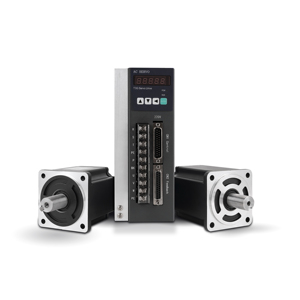
- Power: 1300W / 220VAC Voltage
- Protocol: Pulse / RS485 Bus Control
- Target: High Precision Medical Automation
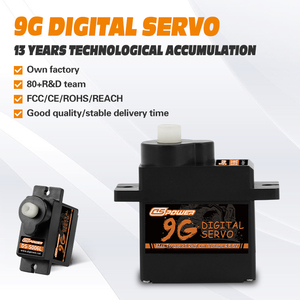
- Weight: 9g Micro Form Factor
- Control: PWM 180° Rotation
- Target: Robotics & Micro Valve Actuation
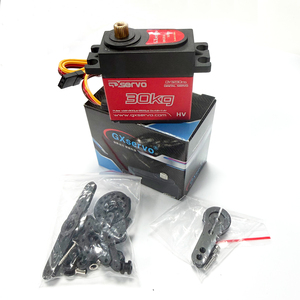
- Torque Output: 30KG Industrial Grade
- Rating: Full IP67 Waterproof Metal Gear
- Target: Heavy Duty Crawler & Autonomous Craft
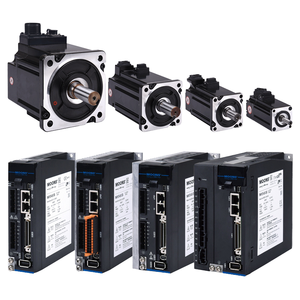
- Torque/Power: 2.4N.m / 0.75KW Controller
- Harness: 3m Industrial Shielded Cable
- Target: Precision CNC & Packaging Machinery
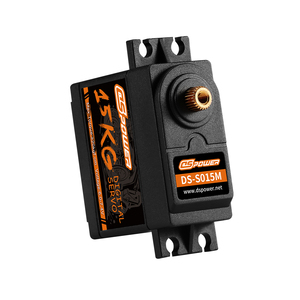
- Capacity: 15kg Dynamic Torque
- Encoder: Integrated Position Loop Feedback
- Target: Rapid Dynamic Robotic Joints
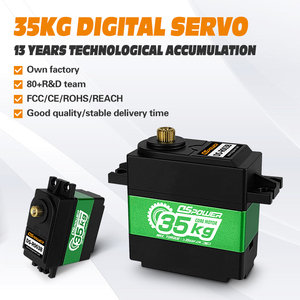
- Torque Range: 25KG to 35KG Dynamic Load
- Enclosure: Anodized Alloy Heat Dissipation
- Target: High Inertia Robotic Manipulators
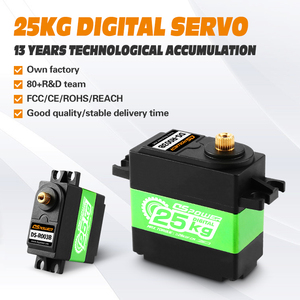
- Structure: Dual Ball Bearing Semi-Alloy Frame
- Interface: Standard PWM Control Protocol
- Target: Industrial Manipulator Arms
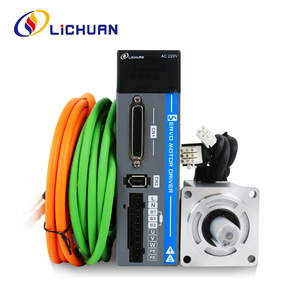
- Power Options: 200W - 1000W Scalable
- Speed & Protection: 3000RPM / IP65 Waterproof
- Target: Automated Factory Robotics
State of the Art in Tubular Motor Architecture & Servo Engineering
In modern industrial automation, medical laboratory equipment, and smart architectural shade infrastructures, selecting the optimal electromechanical drive mechanism is paramount to operational reliability, thermal stability, and acoustic mitigation. Tubular motors and direct-drive tubular servo actuators represent a major technological paradigm shift from traditional parallel-axis gearmotors. By positioning the electromagnetic stator, permanent magnet rotor, planetary speed reducer, and electronic brake co-axially within a single cylindrical housing, tubular actuation delivers unparalleled volumetric power density.
Original Equipment Manufacturers (OEMs) evaluating global tubular motor manufacturers must move beyond surface-level catalog specs (such as continuous torque or rated RPM) and examine deep electromagnetic metrics: thermal dissipation constants ($K_{th}$), magnetic flux density distributions in Rare-Earth Permanent Magnets (NdFeB), cogging torque harmonics, and total cost of ownership (TCO) across a 10-year service life.
As smart manufacturing evolves toward Industry 4.0 standards, tubular motors are no longer standalone mechanical components; they function as intelligent mechatronic nodes. Modern configurations integrate absolute optical or magnetic encoders, Modbus RS-485 or CANopen communication interfaces, and programmable microcontroller drives directly onto the motor end-cap. This eliminates extensive cabinet cabling, reduces Electromagnetic Interference (EMI), and provides real-time predictive diagnostic metrics including winding temperature, current draw anomalies, and micro-vibration signatures.
Why World-Class OEMs Partner with Telco Intercontinental Corp.
Headquartered in Houston, Texas since 1985, Telco Intercontinental Corp. (including specialized divisions TelcoMotion, Medical & Laboratory, and TelcoGreen) has spent four decades refining custom motor engineering and power integration. While catalog distributors merely ship off-the-shelf components, Telco acts as an accountable co-engineering vendor dedicated to eliminating design risk, securing single-digit week prototyping, and providing continuous supply assurance.
Dual-Source Supply Chain
We mitigate single-point production risks by maintaining fully audited, ISO 9001-certified partner manufacturing hubs in North America and Asia, combined with state-side buffer stock management in Houston.
Medical-Grade Quality Control
Our medical device motor programs strictly align with IEC 60601 electrical safety requirements and ISO 13485 design control expectations, featuring full lot traceability and cleanroom-compatible lubricants.
Power + Motion Integration
Beyond motor design, Telco engineers integrated subassemblies matching brushless DC or tubular motors with custom gearboxes, drives, wire harnesses, and advanced Sodium-Ion or Lithium energy storage packs.
Our application engineering process begins not with a price sheet, but with a deep dive into your application’s duty cycle profile—measuring peak vs. continuous torque, mechanical side-loads, ambient operating range, thermal dissipation limits, and acoustic decibel caps. This technical rigour ensures that your system avoids costly over-specifying while guaranteeing complete freedom from thermal cutouts or early gear wear during actual field operations.
Future Sourcing & Technology Trends in Tubular & Servo Actuation
Global procurement teams face complex challenges: fluctuating raw material prices (specifically NdFeB magnets and copper windings), strict ESG carbon mandates, and shortening product redesign lifecycles. Sourcing managers seeking top-tier tubular motor suppliers must monitor four core trends transforming the motion control market between 2025 and 2030:
- Consolidation into Single-BOM Subassemblies: Leading OEMs are systematically abandoning multi-vendor procurement strategies where motors, gearboxes, encoders, and drives are bought separately. Sourcing integrated mechatronic subassemblies under a single part number reduces supply chain complexity, eliminates inter-component tolerance stack-up, and assigns single-point quality accountability to the manufacturer.
- Transition to Sustainable Sodium-Ion Energy Storage: For off-grid, mobile, or solar-assisted tubular actuator installations (such as smart agricultural ventilation and autonomous perimeter shading), custom Sodium-Ion battery packs are emerging as a safer, thermally resilient, and environmentally friendly replacement for traditional Lithium-ion chemistries.
- Demand for Low-EMI & Ultra-Quiet Operation: In hospital automation, surgical positioning, and IVD analyzers, acoustic signatures below 40 dBA and zero EMI interference are becoming non-negotiable standards. Suppliers utilizing helical precision planetary gearing and sine-wave vector commutation are outpacing low-cost trapezoidal-driven alternatives.
- Agile Prototyping & Finite Element Analysis (FEA) Pre-Qualification: Traditional sample iteration cycles lasting 20–30 weeks are incompatible with fast-paced engineering schedules. High-capability suppliers now leverage FEA magnetic circuit modeling and 3D transient thermal simulation to deliver fully validated custom motor samples within 4 to 6 weeks.
By partnering with a forward-thinking motor engineering house, procurement teams secure locked pricing structures, stable raw material hedging, and guaranteed backward compatibility across decades-long product lifecycles.
Technological Milestones Reshaping Tubular Motor Performance
Electromechanically, tubular motors are evolving away from simple single-phase AC induction designs toward high-efficiency Brushless DC (BLDC) and Permanent Magnet Synchronous Motors (PMSM). This transition unlocks vital operational improvements across critical engineering metrics:
Enhanced Thermal Management & Semi-Aluminum Housings
Heat dissipation is the primary factor limiting torque density in tubular motor design. High-performance tubular motors now utilize extruded semi-aluminum alloy casings combined with specialized high-thermal-conductivity potting resins. This construction quickly draws heat away from copper windings, raising the continuous operating thermal ceiling without expanding the motor's outer diameter.
High-Precision Planetary Gearhead Integration
Traditional spur gear trains are susceptible to high backlash and premature tooth fatigue under heavy inertial loads. Modern tubular actuators incorporate multistage planetary gearboxes crafted from metal-powder metallurgy or high-temperature engineered polymers. This yields positional backlash under 15 arc-minutes, high torsional stiffness, and maximum impact resistance against sudden emergency-stop torque spikes.
Furthermore, advanced surface-mount magnetic encoders paired with 32-bit DSP controllers allow tubular servo motors to perform micro-step spatial positioning with sub-millimeter precision. Whether driving precision peristaltic pump rollers in medical diagnostic equipment or positioning heavy solar tracking arrays against high wind loads, advanced tubular architecture delivers deterministic, smooth, and cog-free motion profiles.
OEM Motion Technology Selection & Benchmark Matrix
Compare key electrical, mechanical, and environmental performance attributes across standard industrial motor topologies to determine the optimal solution for your application envelope:
| Motor Topology | Torque Density ($Nm/cm^3$) | Acoustic Noise | Positional Accuracy | Efficiency Grade | Ideal Duty Cycle | Typical OEM Application |
|---|---|---|---|---|---|---|
| Direct-Drive Tubular BLDC | Very High (0.85 - 1.15) | < 38 dBA | High (Closed Loop) | IE4 / IE5 (>90%) | Continuous / High S1 | Smart Shades, Solar Trackers, Conveyor Rollers |
| AC Industrial Servo (e.g. 750W-1300W) | Extreme (1.20 - 1.50) | < 45 dBA | Sub-Arcminute | IE4 (>92%) | S1 / S3 High Dynamic | CNC Automation, Medical Robotics, Packaging |
| Micro Digital Metal Servo (e.g. 25kg-35kg) | High (Compact Frame) | < 52 dBA | Moderate (PWM) | Standard (75-82%) | Intermittent S2/S3 | Robotic Arms, Valve Actuation, UAV Mechanisms |
| Hybrid Stepper Actuator | High Holding Torque | < 48 dBA | High (Open/Closed) | Moderate (70-80%) | Positioning / Holding | IVD Sample Handling, 3D Printers, Dispensing |
| Brushed DC Tubular Gearmotor | Moderate (0.45 - 0.65) | < 58 dBA | Low (Basic Limit) | Standard (65-75%) | Intermittent S2 | Cost-Sensitive Actuators, Commercial Doors |
*Note: Data points represent normalized averages across Telco test-bench engineering evaluations. Specific winding parameters and gear ratio tuning can be customized per project specification.
Five-Stage Customization & Mass Production Workflow
Telco Intercontinental Corp. employs a rigid, documented gate process to transition your motor project from initial concept napkin sketch to reliable high-volume production:
Duty Cycle Audit
We analyze continuous torque, peak overload durations, ambient temperature extremes, target lifespan (hours/cycles), envelope constraints, and mandatory agency approvals (UL, CE, IEC 60601).
FEA & Magnetic Design
Using 3D electromagnetic Finite Element Analysis, our engineering team optimizes slot/pole ratios, magnet skewing angles, and wire gauge fill factors to maximize torque while suppressing cogging.
Rapid Prototype Testing
Functional sample units are manufactured within 4 to 6 weeks. Physical units undergo strict dynamometer load testing, thermal rise measurement, and noise/vibration FFT spectrum analysis.
DFM & Tooling Sign-Off
Design for Manufacturing (DFM) reviews lock down die-casting molds, lamination stamping dies, custom shaft machining tolerances, wire harness strain reliefs, and final assembly inspection criteria.
Controlled Volume Release
Production runs undergo 100% automated end-of-line electrical testing. We maintain buffer inventory and manage scheduled releases to seamlessly align with your manufacturing calendar.
Zero-Defect Guarantee
Every lot is tied to clear engineering drawings and documented revision tracking, protecting your assembly lines against unexpected vendor design shifts or unapproved component substitutions.
Frequently Asked Questions Regarding Tubular Motor Sourcing
For modified standard platforms (including shaft modifications, winding re-rates, custom wire harnesses, or alternate planetary gear ratios), custom production programs typically start at 250 to 500 units annually. For completely bespoke, ground-up electromagnetic designs involving custom lamination tooling and dedicated die-cast housings, initial production batches are usually scoped at 1,000 units annually. Prototype and pilot runs are fully supported during the qualification phase so engineering teams can validate real-world performance before committing to volume production.
Tubular BLDC motors deliver dramatically higher operational efficiency (typically 88%–94%) compared to conventional single-phase AC induction tubular motors (which typically hover around 60%–70%). Because BLDC motors utilize permanent magnet rotors and electronic commutation, they eliminate brush wear and rotor copper losses. This translates to a 3x to 5x increase in operational service life, significantly reduced internal heat generation, zero thermal cutout downtime during continuous cycling, and quiet, step-free operation ideal for medical and high-end commercial automation environments.
For modified standard platforms—such as shaft dimension shifts, connector changes, custom gear ratios, or encoder mounting—functional engineering prototypes are generally delivered within 4 to 6 weeks. Completely custom ground-up designs requiring new lamination stamping dies, custom magnet molds, or unique IP-rated aluminum housings typically require 10 to 14 weeks, which encompasses full FEA modeling, DFM evaluation, prototype assembly, and dynamic lab validation testing.
To establish an accurate, right-sized motor proposal, our application engineers recommend providing a complete application duty cycle profile, including:
- Continuous and peak operating torque requirements ($Nm$ or $oz-in$)
- Target rated speed ($RPM$) and total speed adjustment range
- Input supply voltage ($12V-48VDC$ or $110V/220VAC$)
- Physical envelope dimensions & diameter restrictions
- Environmental conditions (ambient operational temperature range, IP rating, moisture/corrosion exposure)
- Required feedback protocols (incremental/absolute encoder, Hall sensors, RS485 Modbus, CANopen)
- Mandatory agency certifications (UL, CE, RoHS, REACH, ISO 13485, IEC 60601)
Telco supports medical device, diagnostic, and IVD equipment manufacturers through strict adherence to ISO 13485 supplier expectations and IEC 60601-1 electrical safety protocols. We maintain rigorous revision control, lot-traceable component tracking, cleanroom-compatible synthetic lubricants, low-EMI drive selections, and complete engineering documentation packages (including material test reports and DFMEA documentation) to ensure seamless regulatory approval processes.
Yes. Telco specializes in engineered complete motion and power subassemblies. We combine brushless tubular or servo motors with precision planetary gearheads, magnetic/optical encoders, custom drive controllers, molded wire harnesses, and dedicated power sources—including cutting-edge Sodium-Ion or Lithium-Ion battery packs. Delivering a fully integrated, factory-tested system under a single part number streamlines your bill of materials (BOM), eliminates vendor finger-pointing, and guarantees perfect system-level compatibility.
Ready to Optimize Your Machine's Motion Performance?
Consult directly with Telco’s Houston-based application engineering team. We will review your torque-speed curve, analyze thermal constraints, and deliver a fully custom motion recommendation backed by transparent pricing.
Send an Inquiry