Precision AC Induction, Servo & Drive Systems
Engineered platforms available for modified-standard or full custom production across New Zealand's industrial, agricultural, and medical sectors.
Executive Summary: Technical Dynamics of AC Induction Motors in New Zealand
New Zealand’s industrial landscape presents a highly specific set of electromechanical operational environments. From the intensive continuous processing cycles of dairy automation in the Waikato and Canterbury regions to timber sawmilling in the Bay of Plenty, and harsh coastal marine installations along the South Island, electric motors serve as the foundational prime movers of the nation's productive economy. Sourcing reliable AC induction motors, permanent magnet alternators, and integrated servo drive platforms requires a nuanced understanding of local grid standards, environmental ingress constraints, and energy efficiency mandates.
This whitepaper analyzes the manufacturing specifications, compliance parameters (including AS/NZS 1359 and MEPS thresholds), local application topologies, and global OEM supply chain integration strategies for New Zealand original equipment manufacturers (OEMs), plant engineers, and maintenance directors.
Grid Voltage Standardizations & Duty Cycle Metrics
Industrial facility power in New Zealand operates on a nominal 3-phase 400V/415V standard at 50Hz, with single-phase auxiliary systems operating at 230V 50Hz. Importing standard off-the-shelf North American (60Hz, 230V/460V) or standard Asian nominal voltage motors without winding re-engineering often leads to severe thermal derating, flux saturation anomalies, and premature insulation breakdown. OEM procurement managers must evaluate winding resistance, thermal insulation class (typically Class H or Class F with Class B temperature rise limits), and VFD (Variable Frequency Drive) compatibility under high dV/dt voltage spike conditions.
Why OEM Engineers Partner with Telco Intercontinental
Supplying high-reliability custom motion control platforms, gearmotors, and customized energy solutions to commercial, industrial, and medical equipment manufacturers globally since 1985.
We do not push static catalog SKUs. Our application engineering teams analyze your actual mechanical torque-speed curves, radial/axial shaft loadings, ambient duty cycles, and thermal profiles to recommend or wind the exact electrical configuration required.
Utilizing audited, high-precision manufacturing centers across North America and Asia, backed by centralized management from Houston, Texas. This mitigates single-region geopolitical trade risks and secures stable production releases.
Extensive experience managing documented revision control, lot tracking, cleanroom-ready lubrication options, and low-EMI drive pairings suited for critical medical automation and clean industrial facilities.
Localized Application Engineering in the New Zealand Market
Operating equipment in New Zealand demands rigorous engineering adaptation due to geographic isolation, strict biosecurity washdown routines, high power costs, and aggressive environmental exposure. Below are the primary regional application vectors for AC induction and motion systems.
New Zealand produces over 21 billion liters of milk annually. Rotary milking sheds, high-pressure milk transfer pumps, and CIP (Clean-In-Place) chemical sanitization systems expose motors to aggressive alkaline and acid spray-downs daily.
- IP Rating: IP66 / IP69K liquid-tight sealing profiles with mechanical shaft oil seals.
- Housing: Smooth-surface stainless steel or epoxy-coated cast aluminum frames to prevent caustic pooling.
- Bearings: Synthetic food-grade (NSF H1) pre-greased double-shielded deep groove ball bearings.
Radiata pine processing plants require AC induction motors capable of enduring extreme mechanical shock loads, high ambient saw-dust contamination, and continuous duty under erratic torque spikes.
- Breakdown Torque: High pull-out torque ratios (up to 300% of nominal) to prevent stalling during heavy log carriage feeds.
- Frame Integrity: Heavy cast-iron (FC200/250) end bells and frames to absorb structural vibration.
- Insulation: Class H vacuum pressure impregnated (VPI) windings resisting abrasive resin dust.
From mussel harvesting vessels in the Marlborough Sounds to ocean-going fishing trawlers out of Nelson, hydraulic power packs, winches, and refrigeration compressors operate in extreme salt-mist conditions.
- Corrosion Barrier: C4 or C5-M marine-grade multi-layer polyurethane paint systems.
- Hardware: 316 stainless steel fasteners, nameplates, and shaft extensions.
- Anti-Condensation: Integrated internal space heaters preventing stator condensation during power-down cycles.
Kiwi fruit cold stores and commercial greenhouse environmental control systems run 24/7. High energy prices in NZ mandate continuous operation at maximum electrical efficiency across partial loads.
- Efficiency Tier: Exceeding IE3 / IE4 Premium Efficiency standards under AS/NZS 1359.5.
- VFD Driven: Inverter-duty spike-resistant magnet wire insulated against micro-arcing.
- Acoustic Emission: Low-noise skew-rotor designs for urban and semi-rural packing facilities.
New Zealand Industrial Trends & Regulatory Shifts
Purchasing decisions in New Zealand are increasingly influenced by regulatory policies aimed at industrial decarbonization, lower total cost of ownership (TCO), and automated digital integration.
MEPS Compliance & Energy Policy (AS/NZS 1359)
New Zealand enforces Minimum Energy Performance Standards (MEPS) aligned with Australian joint standards (AS/NZS 1359.5). Single-speed, three-phase AC induction motors from 0.73kW to 185kW imported into New Zealand must comply with strict minimum efficiency benchmarks. Premium efficiency (IE3) and Super Premium (IE4) platforms significantly reduce lifetime operational expenditure. Given that electricity typically accounts for over 90% of an electric motor's total lifecycle cost over 10 years, choosing high-efficiency copper-rotor or optimized magnetic steel lamination stacks provides a measurable ROI for kiwi plants.
Integration of Smart Condition Monitoring (IoT)
Because New Zealand’s manufacturing centers are geographically distributed, unpredicted motor downtime incurs high logistical and maintenance costs. Modern AC induction installations increasingly specify factory-fitted tri-axial vibration sensors, RTD thermal sensors embedded in stator windings, and IO-Link communication modules. These allow real-time predictive maintenance alerts via edge gateways before bearing failure or thermal overload occurs.
Selecting the Right Prime Mover Technology
Compare mechanical characteristics, control complexity, and suited application profiles for New Zealand equipment builds.
AC Induction Motors
Best For: Continuous-duty heavy industrial processing, fans, pumps, conveyors, and sawmills.
- Direct Grid (DOL) or Simple VFD Control
- Ultra-robust, minimal maintenance
- High thermal mass & shock overload tolerance
- Lowest capital cost per kilowatt
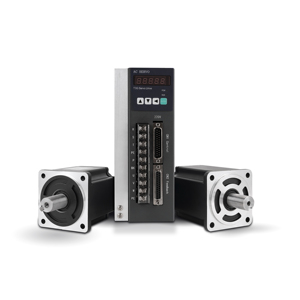
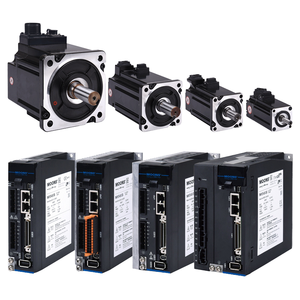
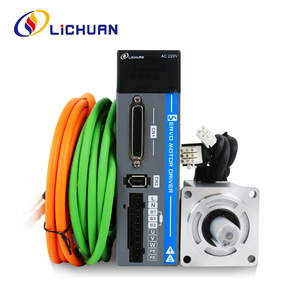
AC Servo Motors
Best For: High-speed automated packaging, robotic indexing, medical devices, and CNC machinery.
- Closed-loop positional & velocity precision
- High dynamic response & acceleration
- Pulse / RS485 / EtherCAT feedback support
- Compact footprint with high power density
Brushless DC & Gearmotors
Best For: Mobile agricultural equipment, battery-powered robotics, and precise variable-speed pumps.
- High efficiency at low DC voltages (12V-48V)
- Integrated planetary or worm gear options
- Maintenance-free brushles commutation
- Excellent torque-to-weight ratio
Frequently Asked Questions by NZ Engineers
Answers to common logistical, regulatory, and mechanical questions when specifying custom motors for New Zealand.
Q: How do you ensure motor windings are compatible with New Zealand's 400V/415V 50Hz grid?
Q: What Minimum Order Quantities (MOQs) apply for modified standard or custom motors?
Q: Can you supply AC induction motors compliant with AS/NZS 1359 MEPS energy standards?
Q: What environmental sealing options are available for dairy and marine washdown environments?
Q: How does Telco manage lead times and shipping freight to New Zealand ports?
Q: Can you provide matched motor, gearbox, drive, and encoder subassemblies under a single part number?
Ready to Engineer Your Motion System for New Zealand?
Submit your custom electrical specifications, mechanical drawing requirements, or duty cycle parameters. Our senior application engineers will provide a comprehensive engineering review and commercial quotation.