Featured Commercial & Residential Battery Storage Systems
Deploying energy storage across Sri Lanka requires robust, tropicalized battery chemistries capable of enduring elevated ambient operating temperatures, high humidity, and frequent utility grid unreliability. Below are engineered LiFePO4 battery platforms optimized for local solar integrators, commercial facilities, and residential microgrids.
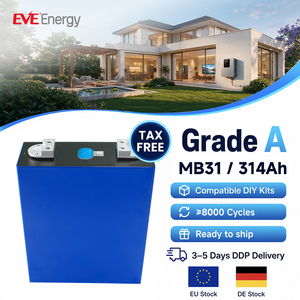
- Grade A+ High-Density LFP Chemistry
- 8,000 Cycle Life @ 0.5C Continuous Rate
- Targeted for DIY Racks & Custom Commercial Pack Assembly
- Operating Temperature: -20°C to 60°C
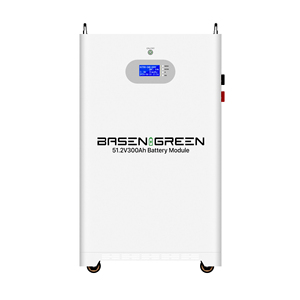
- Integrated Smart BMS with RS485 / CAN Bus
- Compatible with Victron, Growatt, Deye Inverters
- Slim Tropical Corrosion-Resistant Housing
- Plug-and-Play Parallel Expansion up to 15 Units
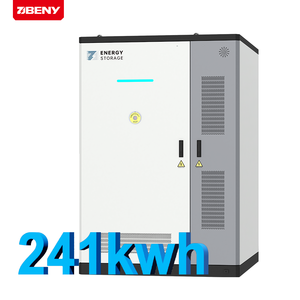
- HV DC Bus Architecture (600V - 800V)
- HVAC Liquid/Air Cooling Thermal Management
- Aerosol Fire Suppression System Integrated
- Peak Shaving & Demand Response Firmware
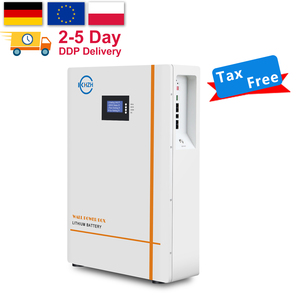
- Built-in Active Cell Balancer (2A Current)
- LCD Touch Screen Interface with Telemetry
- High-Current Discharging Capacity (100A-200A)
- Designed for Island Grid & Hybrid Solar Off-Grid
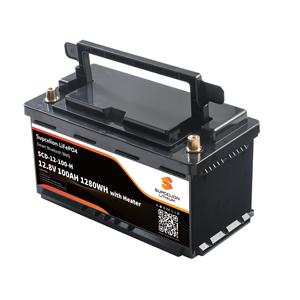
- Drop-in SLA/Lead-Acid Replacement Form Factor
- Real-time Bluetooth Smartphone App Monitoring
- IP65 Waterproof Enclosure for Marine & Mobile
- Low Self-Discharge Rate (<1.5% per Month)
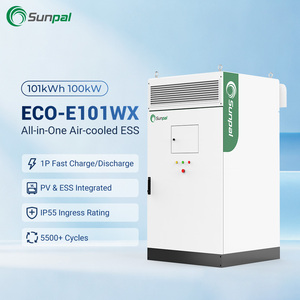
- All-in-One PCS, BMS, & STS Integration
- NEMA 3R / IP55 Outdoor Rated Anti-Salt Coating
- Black-Start Capability for Isolated Microgrids
- Automated Remote Diagnostics & Cloud Telemetry
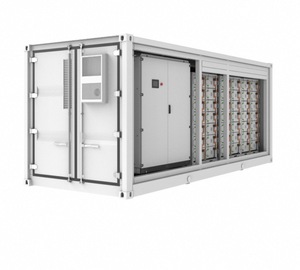
- Containerized 20ft/40ft Scalable Configuration
- Multi-Cluster Master BMS with Thermal Controls
- Zero Voltage Drop Dual Grid-Tied / Off-Grid Mode
- Tailored for Agricultural Estate Power Stabilization
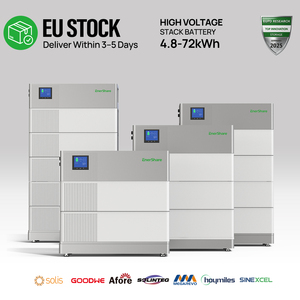
- Quick-Stack Cableless Interconnection Architecture
- 192V - 400V HV Range for Maximum Inverter Efficiency
- Compact Footprint Ideal for Urban & Commercial Spaces
- 15-Year OEM System Reliability Assurance
Energy Storage Infrastructure in Sri Lanka: Macro Market Dynamics
Sri Lanka’s commercial, industrial, and residential sectors stand at a critical energy crossroads. Following consecutive economic adjustments, escalating electricity tariffs enforced by the Ceylon Electricity Board (CEB), and persistent grid volatility across regional distribution nodes (such as Lanka Electricity Company / LECO networks), business continuity hinges directly on localized energy autonomy. The nation's ambitious target to achieve 70% renewable energy generation by 2030 under the Soorya Bala Sangramaya (Battle for Solar) program has unleashed an unprecedented demand for high-capacity Battery Energy Storage Systems (BESS).
However, importing standard off-the-shelf lithium-ion batteries into Sri Lanka without evaluating local climatic and grid degradation profiles often leads to premature capacity loss, thermal runaway risks, or invalidated warranties. Sri Lanka's ambient operating envelope—marked by elevated temperatures (consistently 30°C to 38°C in lowlands), relative humidity exceeding 85%, and heavy coastal airborne salinity (C4/C5 marine environments)—demands specialized, heavy-duty energy storage engineering.
Localized Application Scenarios across Sri Lanka’s Industrial Landscape
Energy storage systems deployed in Sri Lanka must address sector-specific operational bottlenecks. Below is an engineering breakdown of how custom OEM battery solutions deliver measurable ROI across Sri Lanka’s core economic verticals:
Tea & Plantation Processing Estates
Tea factories across Nuwara Eliya, Kandy, and the Uva province rely on continuous thermal and mechanical energy for leaves wilting, rolling, and drying. Grid blackouts force immediate switching to expensive diesel generators. Hybrid C&I BESS cabinets (100kW - 300kW) deliver seamless black-start capabilities, lowering diesel consumption by up to 65% and stabilizing frequency during heavy roller motor start-ups.
Apparel & Textile Export Factories
Major Export Processing Zones (EPZs) such as Biyagama, Katunayake, and Seethawaka host world-class garment manufacturers bound by strict international delivery deadlines and ESG net-zero mandates. High-voltage rack-mounted LiFePO4 arrays mitigate voltage sags, execute peak shaving during peak-tariff time windows (18:30 to 22:30 IST), and preserve power quality for sensitive automated laser cutting machinery.
Coastal Eco-Resorts & Hospitality
Luxury tourism along Galle, Bentota, Arugam Bay, and Trincomalee demands 24/7 silent, emissions-free power backup. Traditional loud diesel gensets spoil guest experience and incur extreme logistics costs. Stackable 15kWh-50kWh PowerWall lithium systems paired with rooftop solar store excess midday solar energy and deliver zero-noise power throughout peak evening dining and HVAC demand cycles.
Off-Grid Telecom Tower Infrastructure
Connecting remote communities across the Northern and Eastern provinces requires telecom base transceiver stations (BTS) to operate continuously. Replacing legacy lead-acid VRLA cells with 48V/51.2V 100Ah-200Ah deep-cycle LiFePO4 rack batteries cuts site replacement cycles from 2 years to 10+ years while withstanding unconditioned outdoor equipment enclosure temperatures exceeding 40°C.
Commercial Banking & Colombo CBD
High-density financial towers and datacenters in Colombo demand sub-10ms transfer speeds during utility dropouts. Modular high-voltage stackable battery units supply uninterruptible power, keeping core financial infrastructure online without micro-interruption risks or extensive floor-space consumption.
Technical Benchmark: Storage Technologies for Tropical Grid Applications
Selecting the right energy storage architecture requires an objective evaluation of levelized cost of storage (LCOS), cycle resilience, thermal tolerance, and maintenance overhead under tropical environmental stress.
| Performance Metric | Tier-1 Prismatic LiFePO4 (LFP) | Legacy VRLA / AGM Lead-Acid | Sodium-Ion (Na-Ion) Industrial |
|---|---|---|---|
| Cycle Life (80% DOD @ 30°C) | 6,000 - 8,000 Cycles | 500 - 800 Cycles | 4,000 - 5,000 Cycles |
| Round-Trip Efficiency (RTE) | 95% - 98% | 75% - 80% | 90% - 92% |
| Thermal Window (Un-cooled) | -20°C to 60°C | 15°C to 25°C (Rapid thermal decay >30°C) | -40°C to 65°C (Superior Heat Tolerance) |
| Energy Density (Wh/kg) | 140 - 180 Wh/kg | 30 - 45 Wh/kg | 100 - 130 Wh/kg |
| Maintenance & Balancing | Zero maintenance; Smart BMS active balance | Regular equalization; Acid topping (vented) | Zero maintenance; Standard BMS |
| 10-Year Levelized Cost (LCOS) | Lowest ($0.05 / kWh) | High ($0.22 / kWh due to replacement) | Moderate ($0.08 / kWh) |
Energy Storage Trends & Regulatory Landscape in Sri Lanka (2025–2030)
Navigating energy storage procurement in Sri Lanka requires alignment with local utility policies, customs regulations, and technological shifts shaping the South Asian renewable energy corridor:
1. CEB Net-Metering to Net-Billing Scheme Transition
The Sri Lankan Ministry of Power and Energy has progressively updated net-metering structures toward Net-Accounting and Net-Plus models. Commercial solar producers can no longer rely solely on using the public grid as a free unlimited virtual battery. Integrating on-site LiFePO4 battery storage allows industrial facilities to self-consume 100% of their midday solar harvest, avoiding low export tariff compensation rates while insulating operations against peak evening power costs.
2. Import Duty Concessions & Standards Compliance
The Sri Lanka Sustainable Energy Authority (SLSEA) and Customs authorities enforce stringent certification guidelines for commercial energy storage systems. BESS imports must comply with international safety standards including IEC 62619, UN38.3, and UL 1973. Commercial buyers can leverage targeted import duty reductions on clean energy storage hardware when procured directly from compliant OEM manufacturers.
3. Industrial Solar-Plus-Storage Microgrids
To secure international buyer orders, major Sri Lankan apparel exporters are compelled to achieve zero-carbon manufacturing status under global Scope 1 and Scope 2 reporting rules. Multi-megawatt containerized ESS units (such as 100kW/230kWh cabinets) integrated with existing rooftop PV are quickly replacing centralized fossil-fuel backup, serving as the cornerstone of green industrial parks.
4. Emerging Sodium-Ion (Na-Ion) Commercial Adoption
As an alternative chemistry for high-temperature tropical deployments, Sodium-Ion battery storage technology is gaining strong momentum. With exceptional safety profiles, zero reliance on scarce raw metals, and superior performance under extreme heat without intensive HVAC cooling, Na-Ion represents the next cost-reduction frontier for utility-scale energy storage in South Asia.
Deploying Commercial Energy Storage in Sri Lanka?
Get direct factory technical pricing, system sizing calculations, and comprehensive compliance documentation from our OEM engineering team.
Engineering Excellence & Factory OEM Advantages
With a legacy spanning over 40 years of precision motion control and energy engineering (established in 1985), Telco Intercontinental Corp. and its energy storage divisions deliver uncompromised quality, system integration, and global supply chain resilience. When sourcing energy storage systems for Sri Lankan project sites, our engineering partners benefit from enterprise capabilities built specifically for harsh operational environments:
Grade-A Prismatic Cells Only
We partner exclusively with top-tier cell manufacturers (such as EVE, CATL) utilizing brand-new Grade-A prismatic cells. Every cell undergoes rigorous automated impedance matching, capacity grading, and ultrasonic welding to ensure maximum battery pack lifespan and zero internal cell imbalance.
Proprietary Smart Active BMS
Our integrated BMS features high-current active cell balancing (up to 2A), dual-temperature monitoring per cell module, over-voltage/current protection, and seamless multi-protocol communication (CANbus, RS485, Modbus TCP) tailored for world-leading inverter brands.
Tropical C4 Coating & Enclosures
Outdoor battery cabinets and containerized ESS platforms are treated with industrial-grade C4 anti-corrosion powder coatings, sealed to IP55/IP65 ingress standards, and fitted with automated HVAC air conditioning to resist coastal Sri Lanka’s salt fog and extreme atmospheric humidity.
Full Modular Customization
Whether your program requires custom voltage configurations (48V to 800V DC), specific dimensional cabinet constraints, tailored wire harnesses, or private-label OEM casing, our engineering team delivers fast-turn prototype samples in 4-6 weeks.
Strict Global Quality Compliance
Our engineering and production processes operate within ISO 9001 and ISO 13485 structured management systems. Systems ship fully tested with complete UN38.3 transport safety documentation, CE mark approvals, and IEC test reports standard.
Dual-Source Supply Chain Security
With audited manufacturing networks across North America and Asia, we buffer procurement programs against single-region logistics disruptions, offering staged releases, container-load direct sea freight to Port of Colombo, and inventory buffer support.
Sri Lanka Procurement FAQ: Energy Storage Solutions
Practical guidance for electrical engineers, solar EPC contractors, and procurement managers sourcing battery systems for Sri Lankan projects.
While standard lead-acid batteries suffer severe thermal degradation above 25°C (losing up to 50% service life), high-quality prismatic LiFePO4 cells operate safely up to 55°C. For industrial ESS installations in Sri Lanka, we incorporate intelligent BMS thermal throttling alongside cabinet-level micro HVAC systems, preserving cell life up to 6,000+ cycles even under severe ambient heat.
Our smart BMS protocol comes pre-programmed with CANbus and RS485 communication profiles for major hybrid inverter brands widely installed across Sri Lanka, including Victron Energy, Deye, Growatt, Solis, GoodWe, Sunsynk, and SMA. Protocol matching can be pre-configured at the factory prior to shipment.
We offer flexible commercial shipping terms including FOB, CIF Colombo, and DDP (Delivered Duty Paid). All battery shipments are packaged in UN-certified dangerous goods (DG) crates accompanied by full MSDS, UN38.3 test summaries, and sea-freight safety documentation to guarantee swift customs clearance through Sri Lankan ports.
Yes. Our modular PCS and microgrid controller architecture supports automatic generator start/stop (ATS) hybridization. The ESS responds instantly to grid outages within milliseconds, carrying the critical facility load while instructing the diesel generator to start only when battery state-of-charge (SOC) drops below defined thresholds, minimizing diesel run-time.
Sizing depends on facility load profiles and grid outage frequency. For typical Sri Lankan C&I sites, a ratio of 1kW PV to 1.5kWh–2kWh of battery storage provides optimal peak-shaving performance and 3 to 5 hours of full-load backup during peak utility blackouts.
We provide standard 5-year to 10-year prorated warranties on LiFePO4 battery modules, supported by factory performance guarantees. Remote cloud telemetry modules enable our engineering team to monitor system health, cell voltages, and thermal trends in real-time to maintain warranty integrity.
For modified standard wall-mounted or rack battery platforms, OEM sample orders start from 5 to 10 units. Custom commercial cabinet assemblies or bespoke containerized projects are quoted on a per-project basis with sample and pilot validation support.
Request Engineering Technical Specifications & Factory Pricing
Connect directly with our application engineers to request technical datasheets, full product catalogs, and customized factory quotations for your energy storage projects in Sri Lanka.