Featured Motion & Battery Components for Japanese OEMs
Engineered to meet stringent Japanese industrial standards (JIS/JET), high torque-density constraints, and automotive reliability requirements.
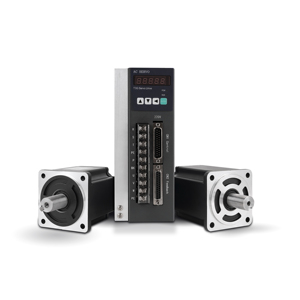
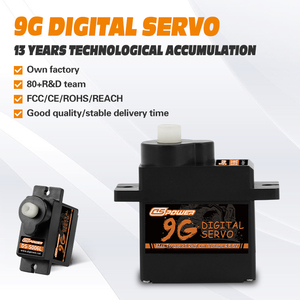
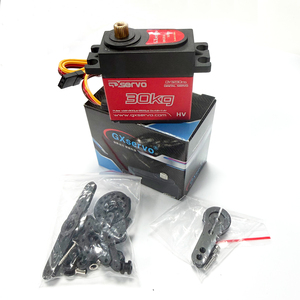
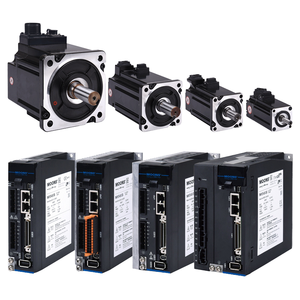
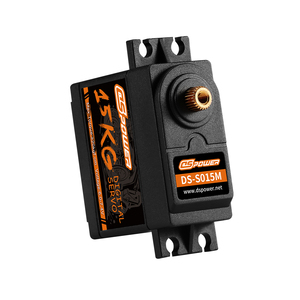
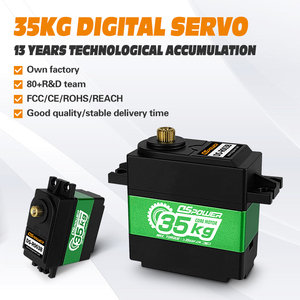
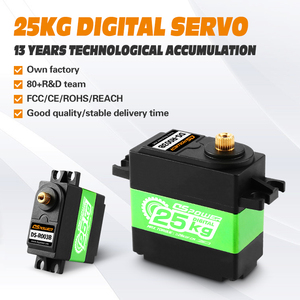
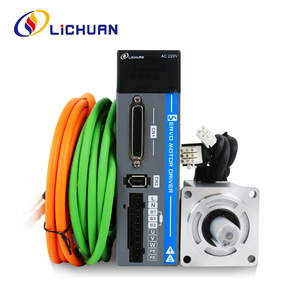
Strategic Overview: Vehicle Electrification Batteries & Motion Subsystems Serving Japan
Japan’s automotive and industrial transport sectors are undergoing a transformative transition toward clean energy electrification. As major Japanese OEMs, tier-1 automotive suppliers, and robotics integrators align with the national GX (Green Transformation) policy, the requirement for ultra-reliable energy storage and high-density electromagnetic propulsion has reached an unprecedented peak.
Navigating the technical landscape of vehicle electrification in Japan requires more than generic battery pack assembly. It demands deep material science expertise, custom Battery Management System (BMS) design, advanced thermal management, and frictionless integration with high-efficiency traction motors and digital servo actuators. Serving Japanese manufacturing hubs—from Aichi and Shizuoka to Kanagawa and Osaka—demands absolute compliance with local safety benchmarks, including JIS C 8715-2 for industrial lithium-ion applications, UN 38.3 transport safety, and strict electromagnetic compatibility (EMC) parameters.
Information Gain Perspective: Unlike conventional battery suppliers who deliver rigid off-the-shelf modules, leading Tier-1 manufacturing partners provide integrated energy-plus-motion ecosystems. By co-engineering cell chemistry (Sodium-Ion / LFP / NMC) alongside compact BLDC planetary gearmotors and digital AC servos, OEMs reduce total vehicle control complexity while achieving up to 18% higher systemic energy efficiency.
Advanced Battery Architecture: Sodium-Ion vs. Lithium-Ion for Japanese Operating Conditions
Selecting the appropriate cell chemistry and pack topology is central to vehicle range, payload capacity, safety profile, and total cost of ownership (TCO). In Japan, where extreme winter conditions affect northern regions like Hokkaido and Tohoku, cold-weather discharge characteristics become a vital OEM metric.
Sodium-Ion (Na-Ion) Batteries
Ideal for urban micro-mobility, light commercial vehicles (LCVs), and industrial AGVs in Japan. Operates efficiently down to -20°C with exceptional thermal stability, non-combustible transport safety, and zero reliance on scarce lithium or cobalt materials.
Lithium Iron Phosphate (LFP)
Engineered for high-cycle industrial forklifts and fixed-route electric buses. Offers over 3,500+ charge cycles at 80% Depth of Discharge (DoD), featuring rigid structural integrity against vibrational stress during multi-shift operations.
High-Density NMC Packs
Tailored for passenger EVs and high-performance commercial vehicles requiring maximum gravimetric energy density (Wh/kg). Pairs seamlessly with advanced Liquid-Cooling Cold Plates to ensure rapid DC charging without thermal degradation.
| Performance Characteristic | Sodium-Ion (Na-Ion) Pack | LFP Battery Module | High-Nickel NMC Pack |
|---|---|---|---|
| Nominal Cell Voltage | 2.8V - 3.1V | 3.2V - 3.3V | 3.6V - 3.7V |
| Low-Temperature Discharge (-20°C) | >88% Capacity Retention | ~60-65% Capacity Retention | ~75-80% Capacity Retention |
| Thermal Runaway Threshold | Ultra-High (>260°C) | High (~210°C) | Moderate (~150°C) |
| Target Vehicle Applications in Japan | Kei EVs, AGVs, Micro-Mobility | Forklifts, Delivery Vans, Buses | Passenger EVs, Heavy Haulers |
| Custom BMS Communication | CANbus / LIN / Modbus RS485 | CANbus 2.0B / CANopen | Automotive ISO 26262 CAN-FD |
Localized Application Scenarios across Japan’s Industrial Landscape
Vehicle electrification in Japan encompasses a vast spectrum of specialized machinery. OEM components must adapt to unique geographic, structural, and regulatory environments across Japanese municipalities:
Electrified Kei-Class Delivery Trucks
Japan’s narrow city streets rely heavily on mini trucks and vans. Compact 48V–96V Sodium-ion or LFP battery systems paired with high-torque brushless DC traction motors provide optimum power-to-weight ratios while navigating dense metropolitan routes in Tokyo and Osaka.
Autonomous Mobile Robots (AMRs) & Warehouse AGVs
Fully automated logistics hubs in Nagoya rely on continuous-duty 24V/48V battery systems combined with precision AC Servo drives. Fast-charging sodium-ion batteries enable 15-minute quick-opportunity charging during automated shift handovers.
Electric Construction Machinery & Mini-Excavators
Zero-emission urban construction equipment operating in noise-sensitive residential zones requires heavy-duty IP67 waterproof servo actuators and vibration-isolated high-voltage lithium battery modules capable of withstanding constant G-force shocks.
Japanese Electrification Trends & Regulatory Compliance Matrix
To succeed as a battery and motion supplier serving Japanese factories, manufacturing partner capabilities must rigidly mirror local standards:
Why Japanese Engineering Teams Partner with Telco Intercontinental Corp.
With four decades of global OEM motion control and power engineering expertise (since 1985), Telco Intercontinental Corp. provides a reliable dual-source manufacturing infrastructure designed to mitigate supply chain volatility for Japanese OEMs.
Application-First Customization
We do not push off-the-shelf components. Our engineers simulate your duty cycle, thermal budget, and mechanical packaging constraints to custom-wind motor stators, tune gear ratios, and design custom battery enclosure profiles.
Strict Revision Control & Traceability
Aligning with ISO 13485 and IATF 16949 supplier methodologies, every engineering change order (ECO), bill of materials (BOM), and cell batch index is locked and traceable across the entire production lifecycle.
Dual-Source Global Footprint
Audited manufacturing facilities across North America and Asia guarantee stable production capacity, allowing Japanese procurement teams to maintain Just-In-Time (JIT) stock buffers without single-region dependency risk.
Frequently Asked Questions by Japanese Procurement & Engineering Teams
Ready to Electrify Your Vehicle Platform in Japan?
Connect with our senior application engineering team to discuss your target duty cycle, mechanical envelope, battery chemistry selection, and volume timelines.
Get a Quote