Featured Motion & Precision Vibration Solutions for CDMX OEMs
Engineered to exact duty cycles, our electric motors, AC servos, and micro actuators power demanding automated systems across the Metropolitan Area of Mexico City (ZMVM).
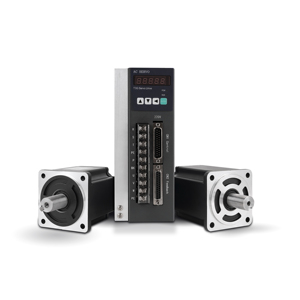
AC Servo Motor 1300W 220V Support Pulse / RS485 Control
High-precision, high-efficiency servo drive platform tailored for medical device automation, automated sifting, and high-frequency positioning.
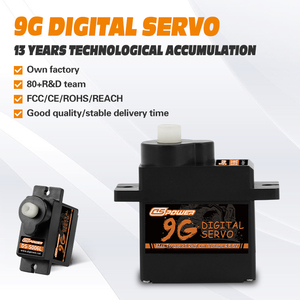
SG90 Micro Servo Motor PWM 180° Plastic & Metal Gear
Ultra-compact 9g micro servo motor engineered for rapid tactile vibration signaling, miniature robotics, and automated indexing mechanisms.
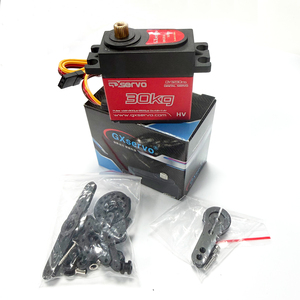
GXservo 30KG Torque Digital Servo Motor (Waterproof Metal Gear)
Heavy-duty IP67 waterproof digital servo with full metal gearing. Ideal for high-vibration environmental testing and rugged industrial robotics.
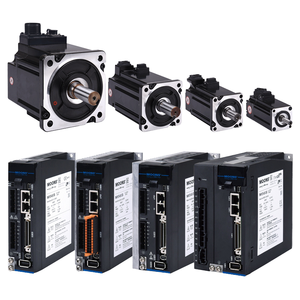
Servo Motor With Controller Drive XP 750W 220VAC (2.4N.m)
Integrated 0.75kW AC servo package with matched driver and 3m shielded cable harness. Engineered for continuous S1 industrial duty cycles.
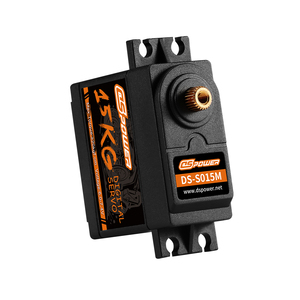
High-Speed Actuator Motor with Integrated Position Feedback
15kg torque capacity high-speed motor featuring magnetic absolute feedback for precise pulse-vibration control and closed-loop dynamic responsiveness.
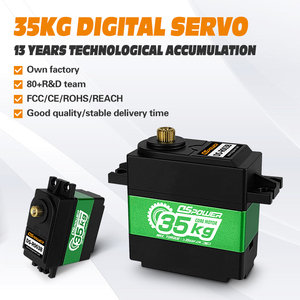
35KG Metal Gear High-Torque Universal Digital Servo Motor
Full metal geartrain design capable of absorbing extreme mechanical shock loading. Built for industrial screening and material flow agitation.
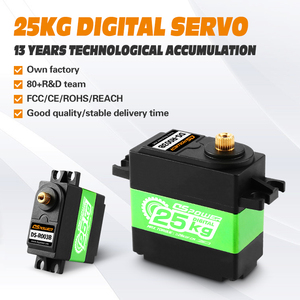
25kg Metal Gear Semi-Aluminum Case PWM Micro Servo Motor
Precision hybrid aluminum shell micro motor delivering thermal dissipation for sustained pulse modulation and high-g force mechanical agitation.
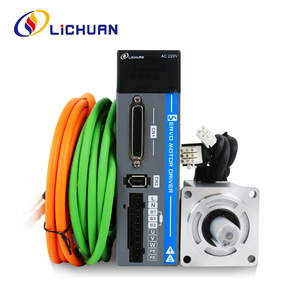
IP65 AC Servo Motor & Driver Kit (200W–1000W, 3000RPM)
Industrial-grade A5 series AC motor and driver bundle. IP65 ingress protection against moisture and airborne particulate in packaging plants.
The Mexico City Metropolitan Area: A Nexus for Advanced Industrial Motion
Analyzing supply chain re-shoring, USMCA compliance, and high-frequency vibration motor demand in central Mexico.
Valley of Mexico Nearshoring & Industrial Hubs
The Metropolitan Area of Mexico City (ZMVM)—encompassing major industrial corridors such as Industrial Vallejo, Naucalpan de Juárez, Tlalnepantla de Baz, and Cuautitlán Izcalli—represents one of Latin America's highest concentrations of manufacturing. As global manufacturing reconfigures under the United States-Mexico-Canada Agreement (USMCA / T-MEC), original equipment manufacturers (OEMs) in central Mexico require dependable regional suppliers for precision motion components.
Vibration motors—spanning ERM (Eccentric Rotating Mass), LRA (Linear Resonant Actuators), and heavy-duty 3-phase rotary vibration induction motors—are crucial across Mexico City's industrial ecosystem. From automated food processing sieves in Iztapalapa to medical device packaging in Naucalpan, precise centrifugal force and excitation frequencies dictate overall operational efficiency.
Strategic Logistics via Houston & CDMX Infrastructure
For procurement managers navigating Mexico City's supply chains, minimizing lead times and bypassing port bottlenecks is vital. Leading exporters leverage direct air freight corridors landing at Felipe Ángeles International Airport (AIFA) and Mexico City International Airport (AICM), alongside overland freight lanes originating from logistics hubs like Houston, Texas.
By pairing dual-source global manufacturing with North American application engineering, factory buyers avoid the vulnerability of single-source Asian supply chains. Components are delivered with pre-cleared customs documentation, fully compliant with Mexico's NOM-001-SCFI and NOM-024-SCFI electrical equipment regulations.
Vibration Motor Mechanics: Centrifugal Force, Frequency & Thermal Enclosures
Understanding the physics behind unbalance mass excitation to optimize machine longevity in high-altitude Mexican factory environments.
Centrifugal Force Calculation & Unbalance Tuning
Industrial rotary vibration motors rely on adjustable eccentric weights fitted to both shaft ends. The generated centrifugal force ($F$) is calculated as:
F = m · r · ω²
Where m represents eccentric mass, r is the radius of mass center, and ω is angular velocity. For OEMs in Mexico City designing vibratory screeners, hoppers, or compaction tables, matching excitation force to structural payload prevents premature mechanical fatigue and bearing breakdown.
High-Altitude Derating Factors (CDMX Elevation)
Mexico City sits at approximately 2,240 meters (7,350 feet) above sea level. At this elevation, lower ambient air density reduces natural convective cooling for electric motors. Standard motor enclosures operating in CDMX require either:
- Class H high-temperature insulation winding varnish
- Thermal derating factor (typically 5-8% current reduction)
- Heavy-duty cast iron or aluminum ribbing for enhanced heat dissipation
Ingress Protection (IP65 / IP69K) & Washdown Standards
In pharmaceutical laboratories in Naucalpan and beverage bottling facilities in Toluca, equipment undergoes rigorous high-pressure chemical washdowns. Motors supplied to these export-grade production lines utilize:
- Viton double-lip radial shaft seals
- O-ring sealed terminal box junction lids
- Anti-corrosive stainless steel (AISI 316) hardware
- Vacuum pressure impregnated (VPI) stater windings
Localized Vibration & Motion Applications in Valle de México
From industrial sorting in Tlalnepantla to automotive quality control in Toluca, discover how specialized motor configurations drive local industry.
1. Food & Pharmaceutical Powder Sieving (Industrial Vallejo & Iztapalapa)
In large-scale food manufacturing plants operating across Industrial Vallejo and Iztapalapa, bulk ingredient separation relies on multi-deck rotary vibratory separators. Using dual 2-pole or 4-pole flange-mounted vibration motors running in counter-rotation, linear vibratory forces ensure precise particle sizing for flour, sugar, active pharmaceutical ingredients (APIs), and milk powders.
Recommended Configuration: Foot-mounted or flange-mounted 220V/440V 60Hz 3-phase induction vibration motors with IP66 enclosures, non-sparking terminal covers, and easily adjustable eccentric weights.
2. Medical Device & Diagnostic Automation (Naucalpan & Tlalnepantla)
Central Mexico hosts a booming medical device cluster. Automated laboratory analyzers, blood centrifuge shakers, and microfluidic dosing pumps demand low-noise micro vibration motors and high-precision AC Servo drives (such as 1300W and 750W units with RS485 / CANopen feedback).
Recommended Configuration: Coreless DC micro-vibrators and low-cogging AC Servos featuring Class B/F insulation, compliant with IEC 60601-1 medical electrical equipment standards.
3. Automotive Components & End-of-Line Haptic Testing (Cuautitlán Izcalli & Toluca)
The OEM automotive corridor stretching through Cuautitlán Izcalli, Lerma, and Toluca produces steering assemblies, dashboard electronics, and seating controls. Automotive validation engineers utilize precision digital servo motors (25kg to 35kg torque ratings) and linear resonant actuators to simulate vehicle chassis vibration profiles and test steering feedback tactile responsiveness.
Recommended Configuration: Waterproof digital metal-gear servos (GXservo 30KG/35KG series) with position feedback magnetic encoders for repeatable duty-cycle simulation.
4. Construction Aggregates & Cement Hopper De-aeration (Edoméx & Hidalgo Border)
Heavy civil infrastructure projects surrounding Mexico City rely on aggregate screening plants and concrete pre-cast yards. Materials stored in silos and hoppers frequently suffer from bridging or rat-holing. High-impact rotary vibration motors mounted on bin walls eliminate material clogs through sustained high-G force excitation.
Recommended Configuration: Cast iron frame 6-pole electric vibrators operating at 1200 RPM, delivering up to 50 kN centrifugal force with heavy-duty spherical roller bearings.
OEM Motion Technology Selection Matrix
Compare mechanical specifications, feedback protocols, and ideal Mexico City market industrial applications.
| Motor Category | Operating Voltage / Freq | Protection / Sealing | Control / Feedback Interface | Primary CDMX Application Scene |
|---|---|---|---|---|
| High-Precision AC Servo (1300W) | 220V AC / 60Hz (3-Phase) | IP65 Dust & Splash Proof | Pulse Train / RS485 / Modbus | Pharma packaging & automated indexing in Tlalnepantla |
| Micro PWM Servo (SG90 / MG90S) | 4.8V – 6.0V DC | Standard Plastic / Metal Shell | PWM Signal (180° / 360°) | Diagnostic lab equipment & tactile haptic signaling |
| Heavy-Duty Digital Servo (30KG-35KG) | 6.0V – 8.4V DC Direct Input | IP67 Waterproof Full Metal Case | Digital PWM / Magnetic Encoder | Automotive shock testing & valve control in Toluca |
| Integrated AC Servo Kit (750W XP) | 220V AC Single/3-Phase | IP65 Enclosure + Shielded Cable | 2.4 N.m / 3000 RPM Closed Loop | High-speed vibratory feeding & conveyor sorting in Vallejo |
| High-Speed Position Feedback Motor | 12V – 24V DC Dynamic | Semi-Aluminum Alloy Frame | Absolute Magnetic Position Sensor | Precision linear vibration & sorting end-effectors |
| Lichuan A5 AC Servo Series | 220V AC (200W–1000W) | IP65 Industrial Washdown | 3000 RPM / Modbus / CANopen | Robotic automation & industrial pick-and-place systems |
Engineering Excellence & USMCA Supply Chain Security
Leveraging 40 years of global design experience, Telco Intercontinental Corp. bridges US engineering precision with direct Mexican industrial supply chains.
Application-First Customization
We do not simply sell catalog motors. Our application engineers analyze your continuous and peak torque profiles, radial/axial shaft loading, ambient operating temperatures in CDMX, and expected duty life (L10 bearing life) before recommending a motor platform.
Dual-Source Risk Mitigation
To shield OEM production lines from international trade friction, Telco operates audited manufacturing partners across North America and Asia. This dual-source capacity guarantees supply continuity for high-volume programs in central Mexico.
Rapid Prototyping (4–6 Weeks)
Modified standard platforms—including custom shaft splines, specialized winding turns for 220V/440V 60Hz Mexican grids, custom harness connectors, and tuned eccentric weights—reach initial prototype qualification in 4 to 6 weeks.
Frequently Asked Questions by Mexico City OEM Buyers
Direct answers regarding USMCA customs certificates, MOQ thresholds, lead times, and technical compliance in Mexico.
What are the minimum order quantities (MOQs) for custom vibration motor programs in Mexico?
For modified standard motors (custom windings, shaft dimensions, IP ratings, or specific lead wire terminations), program quantities typically start at 250 to 500 units annually. Fully custom ground-up mechanical designs (new lamination stacks, custom die-cast end bells, bespoke eccentric weight enclosures) start at 1,000 units per year. Prototype and pilot runs are fully supported during the qualification phase so engineering teams in CDMX can validate performance before tooling commitment.
How do you handle USMCA / T-MEC Certificates of Origin for shipments into Mexico City?
We provide complete product origin documentation, including USMCA / T-MEC Certificates of Origin, tariff classification code breakdown (HS Codes), and compliance data sheets. This enables Mexico City importers and IMMEX-registered manufacturing plants to import motors duty-free under qualifying trade rules, simplifying customs clearance via Pantaco dry port or AIFA / AICM air freight terminals.
Are your electric and vibration motors compliant with Mexican NOM safety standards?
Yes. Electric motors supplied to the Mexican industrial market meet or exceed NOM-001-SCFI (electronic apparatus and safety) and NOM-016-ENER (energy efficiency for three-phase AC induction motors). Where applicable, UL, CE, and CSA certification documentation is included to support export-bound machinery manufactured in Mexico for North American or European destination markets.
What technical parameters must an OEM engineering team provide for a quote?
To receive an accurate engineering evaluation and proposal within 48 hours, buyers should provide: 1) Desired centrifugal force (kN or lbs-force) or required vibration amplitude/frequency; 2) Supply voltage and phase (e.g., 220V 3-Phase 60Hz, 24V DC, or 110V single phase); 3) Operating duty cycle (continuous S1 vs intermittent S3); 4) Ingress protection requirements (IP65, IP67, IP69K); 5) Maximum envelope dimensions and mounting footprint constraints.
How does high altitude in Mexico City impact motor selection?
Due to lower atmospheric density in the Valley of Mexico (elevation ~2,240m), standard TEFC motor cooling efficiency drops by approximately 1% for every 100 meters above 1,000m. Our application engineering team accounts for this by specifying high-temperature Class H insulation systems, vacuum-impregnated windings, or recommending appropriate thermal current derating factors to prevent overheating during continuous operation.
Ready to Engineer Your Custom Motion Solution in Mexico?
Speak directly with our motion control application specialists. We provide engineering reviews, technical drawing packages, and competitive OEM volume pricing within 48 hours.
Contact Us